
Quick Overview
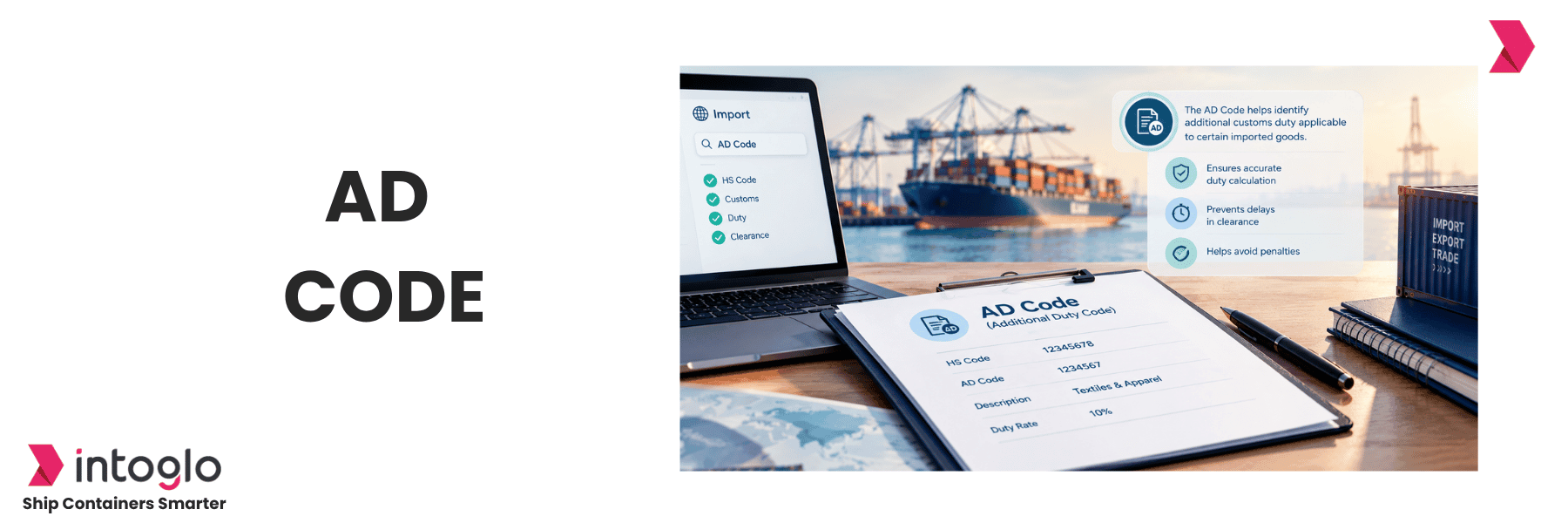
An Authorized Dealer (AD) Code is a 14-digit number issued by a bank authorized to handle foreign-exchange transactions in India. It links an exporter’s bank account with the bank through which export proceeds are handled and is registered with Customs for export-related transactions. The AD Code in India is therefore an important part of export documentation and Customs processes.
Key Facts About AD Code in India:
- AD Code is a 14-digit number linked to an authorized bank.
- Exporters register the code with Customs for export operations.
- The bank issues the AD Code letter to the exporter.
- Registration is generally handled through ICEGATE.
- Exporters should verify bank and Customs requirements before registration.
Why Is AD Code Registration Important?
AD Code registration helps establish the banking details associated with an exporter's foreign-exchange transactions.
For exporters, registration can also be important when filing Shipping Bills and accessing certain export-related benefits or processes. Therefore, having the correct bank details registered before shipping can help avoid documentation issues.
The requirement and process can vary depending on the port, export setup, and applicable Customs procedures, so exporters should check the latest ICEGATE guidance before filing.

AD Code vs IEC
AD Code and IEC serve different purposes.
| Particular | AD Code | IEC |
|---|---|---|
| Full form | Authorized Dealer Code | Importer Exporter Code |
| Issued/linked through | Authorized Dealer bank | DGFT |
| Main purpose | Identifies the exporter's authorized banking channel | Identifies the importer/exporter |
| Format | 14-digit code | 10-character code |
| Used for | Customs and foreign-exchange-related export processes | Import and export transactions |
An exporter may therefore need both an IEC and an AD Code. One does not replace the other.
How to Apply for an AD Code?
The process generally involves these steps:
1. Maintain an export-linked bank account
The exporter should have a bank account with an Authorized Dealer bank.
2. Request the AD Code letter
Approach the bank and request an AD Code letter containing the relevant banking and exporter details.
3. Log in to ICEGATE
The exporter can use its ICEGATE credentials to access the relevant registration functionality.
4. Submit the required details
Enter the AD Code, bank information, branch details, and other requested information.
5. Complete Customs registration
Submit the application for the relevant port or Customs location and monitor the registration status.
Because requirements can change, exporters should verify the current process and document requirements on ICEGATE before applying.
Documents Required for AD Code Registration
The exact document list can vary by Customs location and current procedure. Exporters may typically be asked for:
- AD Code letter issued by the bank
- IEC
- PAN
- Bank account details
- GST-related information, where applicable
- Exporter's address and business details
- Supporting authorization or registration documents, where required
The bank letter should contain accurate information that matches the exporter's Customs records.
Common AD Code Mistakes
Exporters should avoid using incorrect bank details, submitting an outdated bank letter, or entering a code that does not match the authorized bank information.
Another common issue is assuming that registration at one Customs location automatically covers every export location. Exporters should check the applicable registration requirements for each port or location they use.
Exporters should also review bank-account changes promptly because outdated banking information can create unnecessary complications during export processing.
What Happens If AD Code Details Are Incorrect?
Incorrect or incomplete AD Code information can create issues during export documentation and Customs processing. It may also require the exporter to correct or update the registration before certain transactions can proceed.
Therefore, exporters should verify the code, bank account, branch information, IEC, and other registration details before submitting the application.
How Intoglo Helps
Intoglo helps India-USA exporters coordinate FCL shipping, documentation, customs processes, U.S. drayage, warehousing, and final delivery through one workflow.
For exporters starting regular shipments to the USA, accurate export documentation and timely Customs coordination can help reduce avoidable delays.
Planning your next shipment to the USA? Get a quote from Intoglo.
Stay informed about carrier announcements, freight rates, and trade regulations by joining our free 30-minute monthly India-USA Trade Pulse webinar.
📩 contact@intoglo.com 📞 +91 84697 08714
Conclusion
The AD Code in India connects an exporter's Customs records with its authorized banking channel for foreign-exchange transactions. Before starting exports, businesses should obtain the correct bank-issued AD Code, register it through the applicable Customs process, and keep the information updated. Checking the latest ICEGATE requirements can help exporters avoid documentation and registration issues.
FAQs
What is an AD Code in India?
An Authorized Dealer bank issues this 14-digit code to support export-related banking and Customs processes.
Who issues the AD Code?
An Authorized Dealer bank provides the AD Code information to the exporter.
Is AD Code registration required for exporters?
Exporters should check the current Customs requirements applicable to their export transactions and locations.
Where is AD Code registered?
Registration generally takes place through the Customs or ICEGATE system at the applicable export location.
Can AD Code details be changed?
Yes. Exporters can update their registration when their banking information or other relevant details change, subject to the applicable procedure.