
Quick Overview
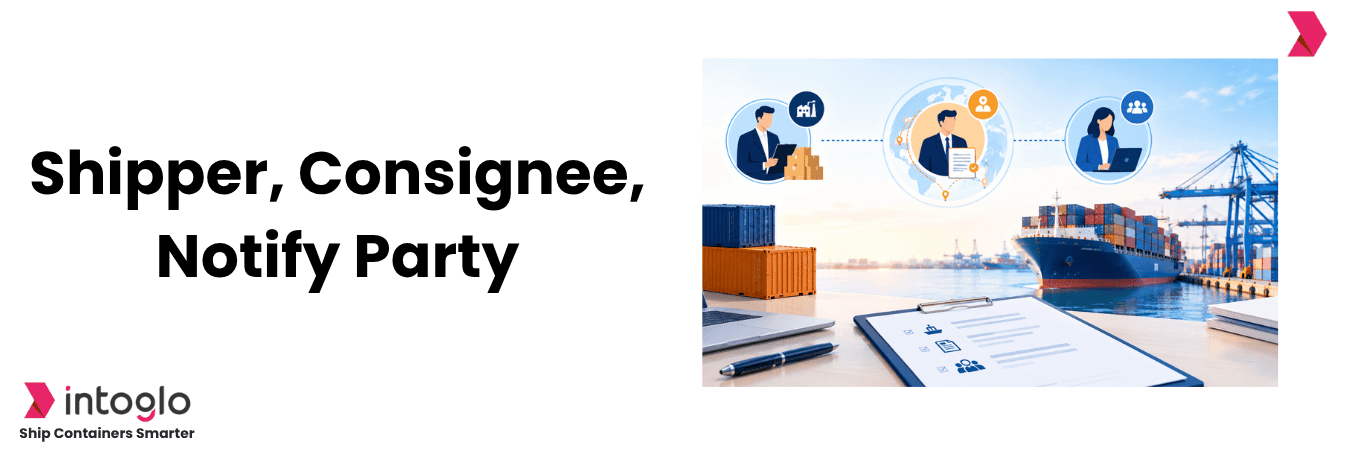
The Shipper vs Consignee vs Notify Party distinction is important in international logistics because each party has a different role in moving and receiving cargo. The shipper sends the goods and provides key shipment information, the consignee is the designated recipient, and the notify party receives shipment or arrival notifications. Although one company can sometimes perform more than one role, the parties listed on shipping documents must be identified correctly to avoid communication, clearance, and delivery problems.
Key Facts About Shipper vs Consignee vs Notify Party:
- The shipper initiates and prepares the shipment.
- The consignee is the designated recipient of the cargo.
- The notify party receives shipment or arrival information.
- One company can sometimes appear in multiple roles.
- Accurate party details help prevent clearance and delivery delays.
What Is a Shipper?
The shipper is the person or company that sends the goods. In an export transaction, the shipper typically prepares the cargo, arranges packaging, provides commercial documentation, and coordinates with the carrier or freight forwarder.
The shipper also needs to provide accurate information about the cargo, including its description, quantity, weight, dimensions, and applicable classification. Depending on the transaction and Incoterm, the shipper may also handle export formalities and transportation arrangements.
Common shipper responsibilities include:
- Preparing and packaging cargo
- Providing commercial invoices and packing lists
- Supplying accurate shipping instructions
- Booking transportation
- Meeting carrier cut-offs
- Supporting export and customs requirements
What Is a Consignee?
The consignee is the party designated to receive the shipment at destination. The consignee's responsibilities depend on the transaction structure, destination-country requirements, and agreed Incoterm.
For imports, the consignee may coordinate customs clearance, provide information to the customs broker, arrange delivery, and take possession of the goods after clearance.
However, the consignee and Importer of Record are not automatically the same party. The IOR has specific legal responsibility for the import entry and applicable customs obligations.

Consignee vs Ultimate Consignee
The ultimate consignee identifies the party that ultimately receives or uses the goods. This can differ from the consignee shown on transportation documents.
For example, a distributor may receive a shipment and later deliver the goods to a retailer. The parties involved depend on the transaction and distribution structure.
What Is a Notify Party?
The notify party is a party designated to receive information about the shipment, such as an arrival notification. Unlike the consignee, the notify party does not necessarily receive or own the goods.
A notify party may be:
- The consignee itself
- A customs broker
- A freight forwarder
- A logistics department
- Another party responsible for coordinating shipment activities
The exact role depends on the shipment arrangement and documentation.
Shipper vs Consignee vs Notify Party
| Party | Primary Role | Typical Responsibility |
| Shipper | Sends the goods | Cargo preparation and shipping documentation |
| Consignee | Receives the goods | Import coordination and receipt |
| Notify Party | Receives notifications | Shipment communication and coordination |
The three roles therefore serve different purposes. The shipper starts the shipment, the consignee receives it, and the notify party helps ensure the relevant parties receive shipment information.
Why Accurate Party Details Matter?
Incorrect company names, addresses, contact information, or party roles can create operational problems. For example, an incorrect consignee may complicate customs clearance, while an incorrect notify party can prevent the right team from receiving arrival information.
As a result, exporters should verify party details before submitting shipping instructions and issuing transportation documents.
How Intoglo Helps?
Intoglo helps Indian exporters manage India-USA FCL shipments across ocean freight, customs coordination, U.S. drayage, warehousing, and final delivery.
Planning your next shipment to the USA? Get a quote from Intoglo.
Stay informed about carrier announcements, freight rates, and trade regulations by joining our free 30-minute monthly India-USA Trade Pulse webinar.
📩 contact@intoglo.com | 📞+91 84697 08714
Conclusion
Understanding the Shipper vs Consignee vs Notify Party distinction helps exporters avoid confusion throughout the shipping process. Each party has a different function, and accurate information across the Bill of Lading and supporting documents helps keep cargo moving smoothly. For India-USA shipments, clear coordination between these parties becomes especially important when customs, transportation, and final delivery involve multiple service providers.
FAQs
Is the shipper the exporter?
Often, but the shipper and exporter can be different entities depending on the transaction.
Is the consignee the Importer of Record?
Not necessarily. The consignee and IOR can be different parties.
Does the notify party receive the goods?
Not necessarily. The notify party primarily receives shipment information.
Can the consignee and notify party be the same?
Yes. The same company can sometimes perform both roles.
Why do these details matter?
Correct information supports smoother documentation, customs clearance, and delivery coordination.