Quick Overview
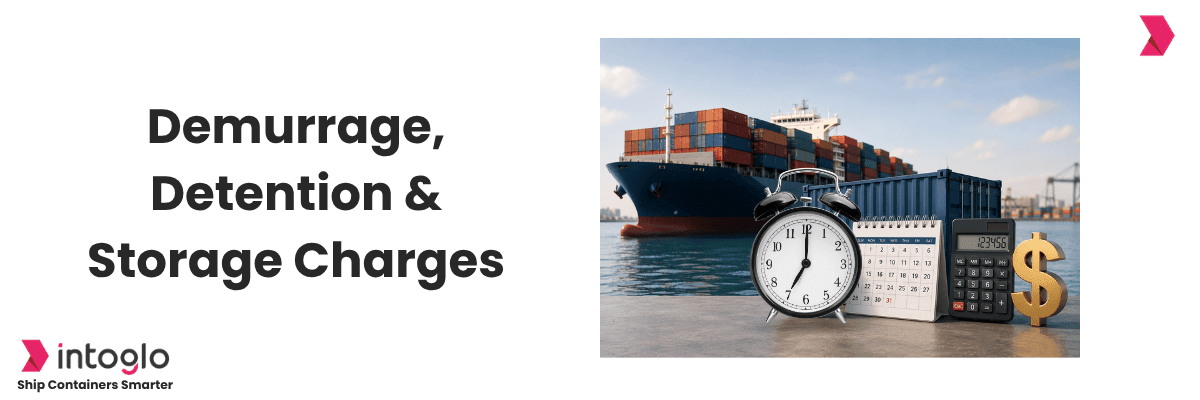
Demurrage, detention, and storage are common shipping charges that can increase logistics costs when cargo movement does not happen within the allowed free period. While these terms are often used interchangeably, each charge applies at a different stage of the shipping process and is triggered under different conditions.
Before understanding how these charges differ, here are a few important things to know:
- Demurrage applies when containers remain inside the port terminal beyond free days.
- Detention applies when containers are returned late after pickup from the terminal.
- Storage applies when cargo or containers stay at the port beyond the free storage period.
- A single shipment can incur all three charges if delays happen at multiple stages.
- These are time-based charges, so longer delays mean higher costs.
- Free periods vary by port, terminal, and shipping line.
Now that you have a quick understanding of demurrage, detention, and storage charges, let’s look at the key differences between them and understand when each charge applies during shipping.
Demurrage, Detention, & Storage Charges Difference

The table below explains the key differences between demurrage, detention, and storage in simple language, so you can control costs and avoid delays.
| Aspect | Demurrage | Detention | Storage |
| Definition | Fee for keeping containers at the terminal beyond free days. | Fee for keeping containers outside the terminal beyond free days. | Fee for storing cargo/containers at the port beyond free days. |
| Location | Port terminal/container yard. | Outside terminal (warehouse, factory, consignee). | Port storage area/terminal. |
| Responsible Party | Shipper or consignee. | Shipper or consignee. | Shipper or consignee. |
| Trigger | Container not collected on time. | Container not returned on time. | Cargo not cleared or picked up on time. |
| Free Period | Usually 3–7 days (varies by port/shipping line). | Usually 3–5 days (varies by shipping line). | Varies by port authority. |
| When Charges Apply | After the terminal free days expire. | After the return free days expire. | After the storage-free days expire. |
| Charged By | Shipping line | Shipping line | Port authority/terminal. |
| Common Causes | Customs delays, missing documents, congestion. | Delayed unloading or late container return. | Customs hold, delayed pickup. |
| Impact | Extra cost, delivery delays, customer dissatisfaction. | Extra cost, schedule disruption, and container shortage risk. | Extra cost, cargo delays, and slower logistics movement. |
| How to Avoid | Clear customs early, keep documents ready, and track free days. | Plan transport properly, unload quickly, and return the container on time. | Arrange pickup early, complete documentation, and avoid customs delays. |
Factors That Drive Charge Differences Between Ports
These charges vary because every port operates under different costs, infrastructure capacity, and local regulations.
- Port infrastructure: Faster and more automated ports usually allow fewer free days.
- Cargo volume: High-traffic ports enforce stricter timelines to reduce congestion.
- Labor and operational costs: Developed countries often have higher handling and penalty charges.
- Shipping line agreements: Free days differ based on contracts between carriers and terminals.
- Local regulations: Government policies and terminal rules influence how charges are structured.
Tips to Avoid Demurrage, Detention, & Storage Charges
These charges can often be avoided through timely planning and execution.
- Prepare documents early: Complete the Bill of Lading, invoice, packing list, and customs paperwork before vessel arrival.
- Confirm free days: Check free periods with your forwarder and monitor deadlines.
- Arrange transport in advance: Book trucks before customs clearance to avoid pickup delays.
- Keep warehouse ready: Ensure labor and equipment are available for quick unloading.
- Choose a proactive freight partner: Work with a forwarder that tracks deadlines and sends alerts.
While planning and timely execution help reduce avoidable charges, having the right logistics partner can make shipment coordination easier and improve cost control.
Intoglo helps reduce the risk of demurrage, detention, and storage charges through coordinated door-to-door digital FCL shipping between India - USA. It provides a forwarding solution for enterprise shippers, SMEs, and growing businesses by working directly with shipping lines, customs brokers, and truckers in the USA. Trusted by 200+ businesses, Intoglo offers real-time visibility, instant freight quotes, and delivery coverage across 41,000+ USA ZIP codes.
You can also download updated sailing schedules to plan shipments better and stay ahead of vessel timelines.
Reach out to the Intoglo team to move your shipment smoothly:
📩 contact@intoglo.com | 📞 +91 84697 08714
Conclusion
Demurrage, detention, and storage charges are different fees triggered at different stages of the shipping process. Understanding how they work, tracking free days carefully, and planning customs clearance and transportation in advance can help exporters avoid unnecessary delays and extra costs.
FAQs
Can Demurrage, Detention, and Storage Apply to the Same Shipment?
Yes, demurrage applies at the port, detention starts after container pickup if it is returned late, and storage is charged for cargo staying in the port yard. All three charges can apply to the same shipment.
Which of these three charges is typically the highest?
Demurrage tends to be the highest because it's charged by the shipping line and escalates quickly at busy ports like Los Angeles. Storage charges are usually lower daily, but they can accumulate over longer periods if cargo is stuck in customs.
Are demurrage and detention rates negotiable before booking?
Yes, and this is often overlooked. You can negotiate for more free days as part of your freight contract, especially if you're a high-volume shipper. Ask your freight forwarder to negotiate extended free time as part of the booking terms.
What's 'combined D&D' in shipping contracts?
Some shipping lines offer a combined demurrage and detention free period, known as combined D&D. Instead of separate free day counts for port and outside-port use, you get one shared pool of days. This can offer more flexibility but also requires careful planning.
How do I handle disputes over incorrect demurrage invoices?
Gather your container movement records, customs clearance timestamps, and port entry/exit logs. Submit a formal dispute to the shipping line with these documents. Many invoicing errors do happen, and lines will adjust if you provide evidence. Act quickly - most lines have short dispute windows.