
Quick Overview
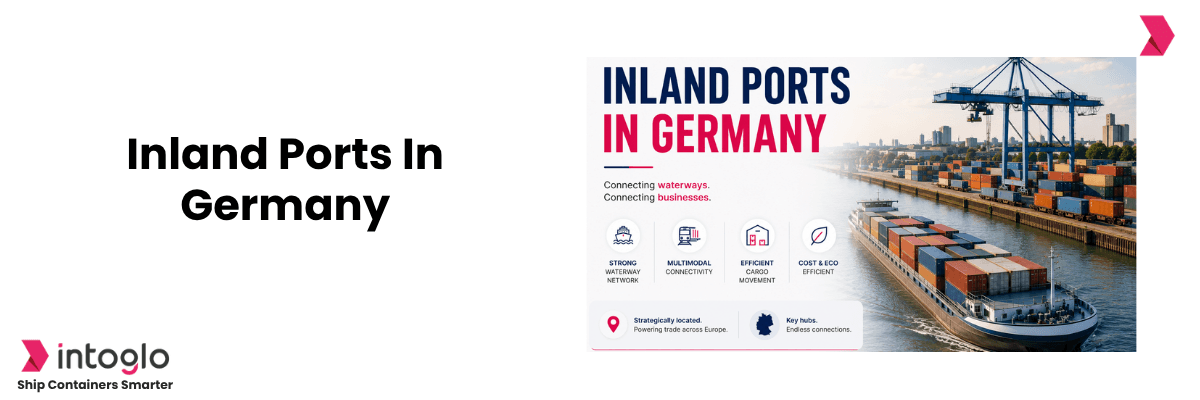
Germany has one of Europe's largest inland waterway networks. Inland ports in Germany connect factories and industrial regions with major seaports using rivers, railways, and roads. They help businesses move cargo efficiently while reducing transportation costs and road congestion.
Key facts about inland ports at a glance:
- The Rhine River is Germany's busiest inland shipping route.
- Inland ports connect seaports with factories and distribution centers.
- Most ports support transport by water, rail, and road.
- Many offer container handling, warehousing, and customs support.
- Inland waterways reduce road traffic and carbon emissions.
- Businesses benefit from faster and more cost-effective cargo movement.
How Inland Ports Support Germany's Supply Chain
Inland ports in Germany are important logistics hubs. They connect factories, warehouses, and business parks with the country's major seaports.
Cargo can move easily between barges, trains, and trucks without unnecessary delays. This makes freight transportation faster and more reliable.
By moving more cargo through inland waterways and rail, these ports also reduce pressure on busy highways and coastal ports. This helps businesses lower transportation costs while improving supply chain efficiency.
Major Inland Ports in Germany
Germany has several inland ports that serve different industries and cargo types.
| Inland Port | Location | Main Cargo |
| Duisburg | North Rhine-Westphalia | Containers, general cargo |
| Mannheim | Baden-Württemberg | Bulk cargo, industrial goods |
| Cologne | North Rhine-Westphalia | Containers, breakbulk cargo |
| Karlsruhe | Baden-Württemberg | Containers, bulk commodities |
| Magdeburg | Saxony-Anhalt | Heavy cargo, project cargo |
| Ludwigshafen | Rhineland-Palatinate | Chemicals, industrial cargo |
These inland ports in Germany are located along major rivers, making it easier to transport goods between inland cities and international seaports.

Port of Duisburg
The Port of Duisburg is the largest inland port in Germany and the largest inland port in Europe. It is located where the Rhine and Ruhr rivers meet, making it one of Europe's busiest logistics hubs.
The port handles millions of tonnes of cargo every year. It has direct connections to inland waterways, rail networks, and highways, allowing cargo to move quickly across Germany and Europe.
Duisburg also has container terminals, warehouses, logistics parks, and distribution centers. These facilities help businesses store, handle, and transport goods efficiently.
Services Offered by Inland Ports
Modern inland ports offer much more than cargo handling.
| Service | Purpose |
| Container Handling | Loading, unloading, and storing containers |
| Warehousing | Short-term and long-term cargo storage |
| Rail Freight | Fast transportation across Germany and Europe |
| Road Transport | Delivery to nearby industrial areas |
| Customs Support | Assistance with import and export documentation |
| Cargo Consolidation | Combining smaller shipments into one load |
| Distribution Services | Regional delivery and supply chain support |
These services help businesses move cargo faster while reducing handling time.
Benefits of Inland Ports for Exporters
Using inland ports in Germany offers several advantages for exporters.
Some of the biggest benefits include:
- Lower transportation costs through multimodal shipping.
- Better access to inland factories and warehouses.
- Less congestion compared to major seaports.
- Flexible transport using waterways, rail, and roads.
- Improved cargo movement during busy shipping seasons.
- Lower environmental impact by reducing road transport.
These benefits make inland ports an important part of Germany's logistics network.
How Inland Ports Support Multimodal Transport
One of the biggest advantages of inland ports in Germany is multimodal transportation.
Containers arriving at seaports can be moved by barge or train to inland ports closer to factories and warehouses. Likewise, exporters can send cargo from inland ports to major seaports before international shipping.
This transport system reduces unnecessary truck movements and improves cargo flow across long distances.
Businesses also have more flexibility to choose the best transport option based on cost, transit time, and cargo volume.
Challenges Exporters Should Know
Although inland ports offer many advantages, businesses should also understand some common challenges.
| Challenge | Solution |
| Low river water levels | Plan alternative transport routes when needed. |
| High demand during peak seasons | Book transport capacity early. |
| Coordinating different transport modes | Work with an experienced logistics provider. |
| Documentation delays | Complete all shipping documents before dispatch. |
| Delivery scheduling | Use shipment tracking to improve planning. |
Planning ahead helps businesses avoid delays and keep cargo moving smoothly.
How Intoglo Helps
While inland ports in Germany are an important part of Europe's logistics network, Indian exporters shipping to the USA need expertise tailored to the India–USA trade lane.
Intoglo provides end-to-end digital FCL freight forwarding from India to the USA, with transparent pricing, real-time shipment tracking, customs coordination, and door-to-door delivery.
Stay informed with our free 30-minute India–USA Trade Pulse webinar for the latest freight updates and trade insights.
Planning your next shipment? Get a instant freight quote from Intoglo.
📩 contact@intoglo.com 📞 +91 84697 08714
For cargo moving through Germany's coastal gateways, read our guide to major seaports in Germany.
Conclusion
Inland ports in Germany play an important role in the country's logistics network. They connect industrial regions with major seaports through waterways, rail, and road transport.
Ports such as Duisburg, Mannheim, Cologne, and Karlsruhe help businesses move cargo more efficiently by offering container handling, warehousing, customs support, and multimodal transport.
Understanding how these inland ports work can help exporters reduce transportation costs, improve cargo movement, and build stronger international supply chains.
FAQs
What are inland ports in Germany?
Inland ports in Germany are logistics hubs located along rivers and inland waterways. They handle containers, bulk cargo, and industrial goods while connecting inland regions with major seaports.
Which is the largest inland port in Germany?
The Port of Duisburg is the largest inland port in Germany and the largest inland port in Europe.
What services do inland ports provide?
Most inland ports offer container handling, warehousing, customs support, rail freight, road transport, cargo consolidation, and distribution services.
Why are inland ports important?
They connect inland businesses with international shipping routes, reduce transportation costs, and improve supply chain efficiency.
Do inland ports only handle containers?
No. They also handle bulk cargo, chemicals, agricultural products, industrial equipment, breakbulk cargo, and project cargo.