Quick Overview
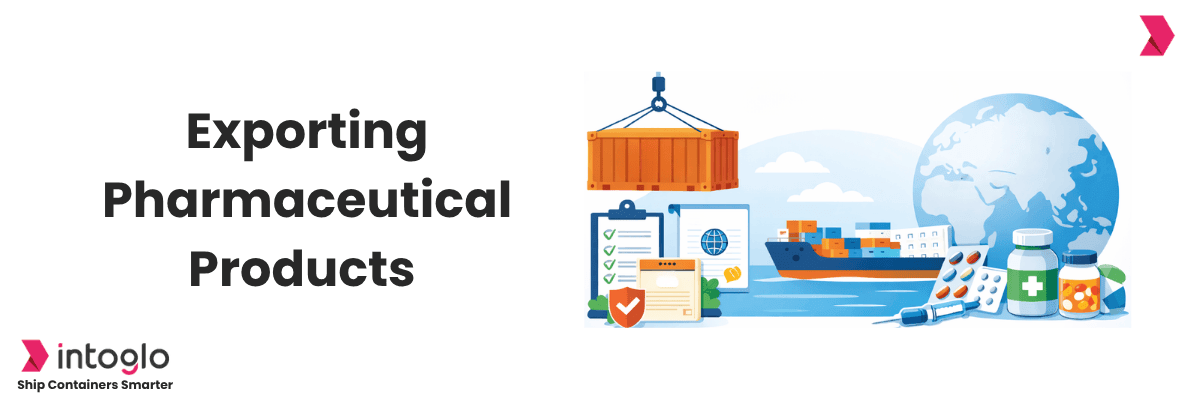
Pharmaceutical exports from India involve manufacturing or supplying medicines, vaccines, APIs, and healthcare products to international markets while meeting strict regulatory and quality standards. India is known as the “Pharmacy of the World” because of its large-scale production capacity, affordable medicines, and strong global presence across nearly 200 countries, including both regulated and emerging markets.
Here are a few key things exporters should know before entering the pharmaceutical export business:
- India exported pharmaceutical products worth over $30.5 billion in FY 2025, making pharma one of the country’s strongest export sectors.
- Generic medicines, APIs, vaccines, OTC products, and Ayurvedic formulations are among the most exported pharmaceutical categories from India.
- The USA, Europe, Africa, the Middle East, and ASEAN countries are some of the biggest markets for Indian pharmaceutical exports.
- Pharmaceutical exports are highly regulated, so approvals from authorities like CDSCO and certifications such as WHO-GMP are critical before shipping.
Now that you understand the global demand and compliance landscape of pharmaceutical exports from India, let’s explore why this sector continues to be one of the country’s biggest export opportunities.
Why Export Pharmaceutical Products from India?
India’s pharmaceutical industry is not just big - it is globally trusted, cost-efficient, and built to supply healthcare at scale.
- Cost advantage: Production costs in India are 30-40% lower than in Western markets. Skilled labour, affordable raw materials, and strong infrastructure all contribute.
- Scale: India accounts for 20% of global pharmaceutical exports by volume, the largest share of any single country.
- Vaccine dominance: India supplies over 60% of the world's vaccines. The Serum Institute alone is the world's largest vaccine manufacturer.
- Regulatory credibility: Indian plants are approved by the US FDA, WHO, EU GMP, and other major authorities. Global buyers trust Indian pharma quality.
- Government support: The Production Linked Incentive (PLI) scheme provides direct financial incentives for pharmaceutical manufacturing and R&D.
What Pharmaceutical Products Can You Export from India?

India exports a broad range of pharmaceutical products. The main categories are:
- Generic drugs: The backbone of Indian pharma exports. Affordable, high-quality alternatives to branded medicines.
- Active Pharmaceutical Ingredients (APIs): Raw chemical compounds used to manufacture finished medicines. India is a top global API supplier.
- Over-the-counter (OTC) medicines: Vitamins, supplements, and common remedies sold without a prescription.
- Vaccines: India is the world's leading vaccine exporter, supplying GAVI, UNICEF, and national immunisation programmes globally.
- Biologics and biosimilars: A growing export category as Indian manufacturers invest in complex biological therapies.
- Ayurvedic and herbal products: Regulated under AYUSH; export is growing rapidly, especially to Southeast Asia, the US, and Europe.
Top Export Destinations for Indian Pharmaceutical Products
Indian pharma exports have a strong global footprint, with demand coming from both regulated and emerging markets.
- USA: Largest market, contributing 31%+ of total exports.
- Europe (EU + UK): High-value market; the Netherlands and UK are major importers.
- Africa: Strong demand for affordable generics and vaccines.
- Middle East: Growing imports of OTC and branded generic medicines.
- ASEAN + Asia: Increasing demand for APIs and finished dosage products.
- Latin America & Caribbean: Brazil is a key destination market.
- CIS Countries: Russia and nearby nations remain consistent buyers.
Key Regulations & Certifications You Must Complete Before Exporting
Pharmaceuticals are among the most regulated products in international trade. Before you even think about booking a shipment, these are the non-negotiables:
1. Drugs and Cosmetics Act, 1940 (India): India’s main law for pharma manufacturing and exports. Your product must meet its quality and compliance standards.
2. CDSCO (Central Drugs Standard Control Organisation): India’s key drug regulatory authority. Handles export-related approvals like NOCs and regulatory compliance.
3. WHO-GMP Certification: Required by many importing countries to prove your manufacturing facility follows global quality standards.
4. Certificate of Pharmaceutical Product (CPP): Issued by CDSCO. Confirms the product is legally manufactured and approved in India, and is often required for overseas registration.
5. Importing Country Regulations: Each market has its own approval process (US FDA, EU GMP/EMA, MHRA, ANVISA, SAHPRA). Always check requirements before exporting.
Once your compliance is in place, logistics becomes the next critical step. Intoglo supports pharmaceutical exporters with door-to-door freight from India to the USA, including pickup, customs clearance, ocean freight, and last-mile delivery without intermediaries. Exporters can also use Intoglo’s HS Code Lookup and Finder to instantly identify the correct HS Code, get real-time FCL freight rates, and track shipments.
Get in touch with Intoglo for any queries or hassle-free shipping:
📩 contact@intoglo.com | 📞 +91 84697 08714
Conclusion
India's pharmaceutical export opportunity is enormous and growing. The foundation for success is simple but non-negotiable: understand what you can export, know which regulatory bodies govern your products, and get your licences and certifications in order before your first shipment. Once you have that foundation in place, the logistics piece becomes manageable.
To know how to actually export pharmaceutical products from India - USA step by step? Read our article on “Exporting Pharmaceuticals to the USA: Step-by-Step Guide.”
FAQs
Can a small or medium-sized pharmaceutical company export from India?
Yes, there is no minimum turnover or production volume requirement to become a pharmaceutical exporter. You need an IEC (Importer Exporter Code) from DGFT, the necessary drug manufacturing licences, and compliance with the importing country's regulations. MSMEs make up a significant share of India's pharma exporters.
Is WHO-GMP certification mandatory to export pharmaceuticals?
It depends on your target market. WHO-GMP is mandatory for many developing and emerging markets (Africa, ASEAN, the Middle East, CIS). The USA requires US FDA approval. The EU requires EU GMP certification. At a minimum, WHO-GMP is strongly recommended and often the baseline requirement.
What is the difference between an IEC and a drug export licence?
An IEC (Importer Exporter Code) is a general business requirement for any Indian company engaged in import/export - it is not specific to pharmaceuticals. A drug export licence, issued under the Drugs and Cosmetics Act by CDSCO or your State Drug Controller, is specific to pharmaceutical products and is required in addition to the IEC.
Do I need a separate licence to export medicines from India?
Yes. Along with an IEC, you need a valid manufacturing or wholesale drug licence. Depending on the product and destination, you may also require CDSCO NOC, approvals, and certificates like WHO-GMP or CPP.