Quick Overview
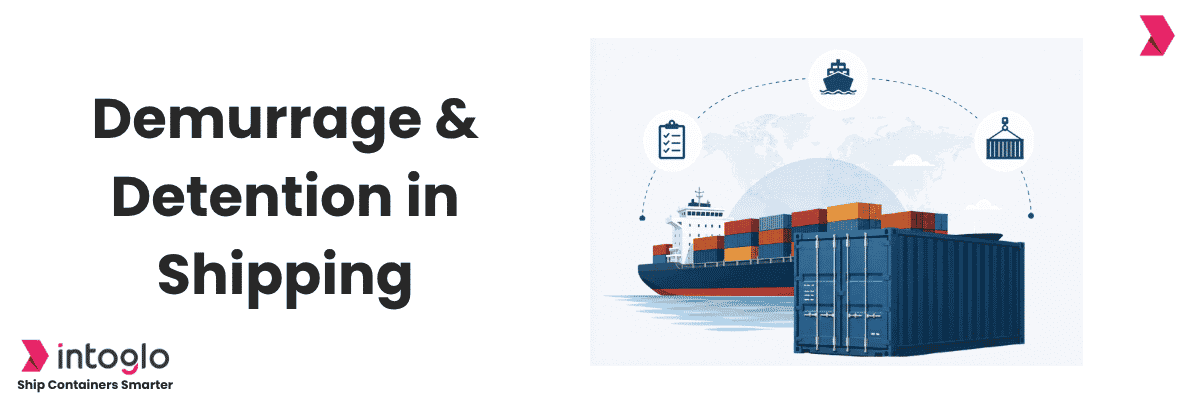
Demurrage and detention are container-related charges that increase landed costs and disrupt supply chain efficiency in international shipping, especially on high-volume India-USA trade lanes.
For enterprise shippers, destination delays increase container dwell time, landed costs, inventory delays, and working capital exposure.
- Demurrage applies when a container remains inside the port terminal beyond the allowed free days.
- Detention applies when a container is kept outside the port and not returned to the shipping line within the permitted free time.
- Both charges are calculated per container per day and can rise quickly during congestion at major US ports.
- Responsibility depends on shipment terms, carrier agreements, and operational delays.
Reducing these penalties requires faster customs clearance, coordinated drayage planning, shipment visibility, and efficient warehouse scheduling.
Enterprise logistics teams monitor container dwell time closely because delays affect inventory availability, cash flow, and delivery reliability.
What is Demurrage?

When a container arrives at a port, the shipping line allows a fixed number of free days for pickup. This is known as the free time period. If the container remains at the port beyond this period, a daily charge is applied by the shipping line. This charge is called demurrage.
In simple terms, it is like paying rent for occupying space at the terminal beyond the permitted time.
Conditions Under Which Demurrage Is Incurred
- Customs clearance delays: Shipment held for inspection or document verification.
- Port congestion: High cargo volumes slow down terminal processing.
- Incomplete documentation: Missing or incorrect paperwork delays clearance.
- Transport not arranged: Container is cleared, but no vehicle is booked to move it out.
- Terminal appointment delays: Limited truck appointment availability slows container pickup during peak congestion periods.
How Is Demurrage Calculated?
Demurrage = (Days beyond free time) × Daily Rate
Example: Free time = 5 days. The container stays for 8 days. Daily rate = $50.
Total charge: 3 × $50 = $150
Rates vary by port, container size (20-foot vs 40-foot), and shipping line. Always confirm before shipping.
Impact of Demurrage on Your Supply Chain
Demurrage increases logistics costs, delays inventory movement, and affects supply chain efficiency.
- Working Capital Lock-Up: Terminal delays prevent inventory from entering sales or production cycles.
- Higher Landed Costs: Unexpected demurrage charges increase total shipping costs and reduce margin predictability.
- Inventory Delays: Longer dwell times increase inventory-in-transit exposure.
- Delivery Disruptions: Shipment delays affect delivery schedules, warehouse planning, and retail replenishment timelines.
- Operational Inefficiency: Delays disrupt customs, trucking, warehousing, and container returns.
What is Detention?

Detention starts after the container has left the port. Once you pick up the container for unloading at your warehouse or factory, the shipping line gives you a free window of days to return it. If you exceed that window, detention charges apply.
In enterprise logistics operations, detention is often caused by delays in trucking, warehouse unloading, inland transportation, or empty container returns.
Conditions Under Which Detention Is Incurred
- Delays in unloading: Warehouse not ready, insufficient labor, or equipment issues.
- Late reloading for export: Container loaded for outbound cargo but not returned in time.
- Transportation challenges: Vehicle breakdowns or scheduling conflicts extend container use.
- Incomplete documentation: Customs or regulatory paperwork delays the return process.
- Warehouse appointment bottlenecks: Missed receiving slots delay unloading and extend container usage time.
How Is Detention Calculated?
Detention = (Days beyond free time) × Daily Rate
Example: Free time = 7 days. Container returned on day 10. Daily rate = $40.
Total charge: 3 × $40 = $120
Impact of Detention on Your Operations
Detention charges increase transportation costs, reduce container availability, and disrupt supply chain operations.
- Higher Transportation Costs: Detention fees increase overall shipping and inland transportation expenses.
- Reduced Container Availability: Frequent late container returns can affect equipment allocation and booking flexibility during peak periods.
- Drayage and Warehouse Delays: Poor coordination between trucking, warehouse unloading, and empty container returns can increase detention exposure.
- Supply Chain Disruptions: Late container returns can delay distribution schedules, warehouse planning, and final deliveries to buyers or retailers.
What is Drayage?
Drayage is the short-distance transportation of shipping containers between ports, warehouses, rail terminals, and container yards.
Why It Matters
Efficient drayage helps move containers quickly after cargo release, reducing delays, detention risk, and container dwell time across the supply chain.
- Reduces container-related penalties.
- Improves warehouse and truck coordination.
- Speeds up cargo movement.
- Helps control landed cost delays.
- Improves delivery predictability.
Drayage and Final-Mile Synchronization
Importers reduce detention risk by coordinating container pickups with warehouse schedules, truck availability, and empty container return deadlines.
Enterprise logistics operations integrate data from port terminals, drayage dispatch systems, warehouse appointment platforms, and container return networks to improve container movement after cargo release.
Freight forwarders like Intoglo coordinate between shipping lines, customs brokers, trucking partners, and warehouses to reduce delays across India–USA trade lanes. Real-time visibility into terminal releases, truck appointments, chassis availability, and return cutoffs helps teams move containers before free-day limits expire.
Companies operating across multiple US ports often use networks of 40+ drayage partners to manage congestion, chassis shortages, and terminal delays while reducing container dwell time and detention exposure.
How to Avoid Demurrage and Detention Charges
Demurrage and detention charges can usually be avoided through faster customs clearance, better transport planning, and tighter coordination between ports, truckers, and warehouses.
Predictive Visibility and Milestone Tracking
Enterprise logistics teams use visibility systems to track vessel arrivals, customs clearance, terminal releases, container pickup deadlines, and empty return schedules in real time.
Automated alerts help teams identify delays early and take corrective action before charges begin accumulating.
This helps companies reroute drayage capacity, prioritize urgent pickups, adjust warehouse schedules, and reduce container dwell time.
Reducing Demurrage Exposure
- File customs documents early before vessel arrival.
- Arrange trucks before cargo is released from the terminal.
- Track free-day deadlines closely.
- Work with experienced customs brokers to avoid documentation errors.
- Monitor terminal congestion and truck appointment availability.
- Prioritize urgent or high-value shipments for faster pickup.
Reducing Detention Exposure
- Prepare warehouse space, labor, and equipment before container delivery.
- Unload containers immediately after arrival.
- Keep customs and regulatory paperwork ready before pickup.
- Return empty containers as early as possible.
- Coordinate trucking schedules with warehouse receiving slots.
- Monitor shipping line return instructions to avoid depot delays.
To reduce container penalties and improve shipment planning, exporters increasingly use coordinated logistics across shipping lines, customs brokers, drayage providers, and warehouses.
Intoglo provides single-focused end-to-end digital FCL forwarding for India–USA enterprise shippers, SMEs & growing businesses by working directly with shipping lines, customs brokers, and truckers in USA. Trusted by 200+ businesses, we offer real-time visibility, instant freight quotes, and seamless delivery across 41,000+ USA ZIP codes. We specialize in shipping auto parts, chemicals, paper & packaging, pharmaceuticals, and other high-volume export categories.
You can also get instant freight quotes and download an updated sailing schedule for better shipment planning and improved cost predictability.
Reach out to the Intoglo team to move your shipment smoothly:
📩 contact@intoglo.com | 📞 +91 84697 08714
Conclusion
Demurrage and detention are no longer just operational penalties; they are critical indicators of supply chain efficiency and landed cost control. Enterprise exporters that actively manage container dwell time, customs coordination, drayage synchronization, and predictive shipment visibility can significantly reduce logistics cost volatility and improve operational predictability across India–USA trade lanes.
FAQs
How do enterprise shippers reduce demurrage and detention costs?
Enterprise shippers reduce demurrage and detention costs through proactive shipment visibility, faster customs clearance, coordinated drayage planning, warehouse scheduling, and optimized free-day management with shipping lines.
Who pays demurrage charges on India-to-USA shipments?
Usually, the importer (consignee) in the USA pays demurrage, since the delay is at the destination port. However, the terms in your contract can shift this responsibility. Always clarify with your buyer before the shipment departs.
Can demurrage and detention charges apply to the same shipment?
Yes, and they often do. Demurrage applies while the container waits at the port. Once you pick it up, detention begins if you're late returning it. Both can run on the same shipment, just at different stages.
How do I find out my free days for a specific shipment?
Check your Bill of Lading or confirm directly with the shipping line at booking. Free days vary by carrier, port, and container type. Your freight forwarder should give you this information before the vessel departs India.
What happens if I don't pay demurrage or detention charges?
The shipping line can withhold future bookings, add dues to your account, or place a lien on the goods. Some ports will not release cargo until outstanding demurrage is fully cleared.
Can I negotiate free days or get charges waived?
Sometimes, if the delay was caused by port congestion or a customs system failure - factors outside your control - you can request a waiver. Submit your request with documentation of the cause. Many lines will reduce or reverse charges with adequate evidence.