Quick Overview
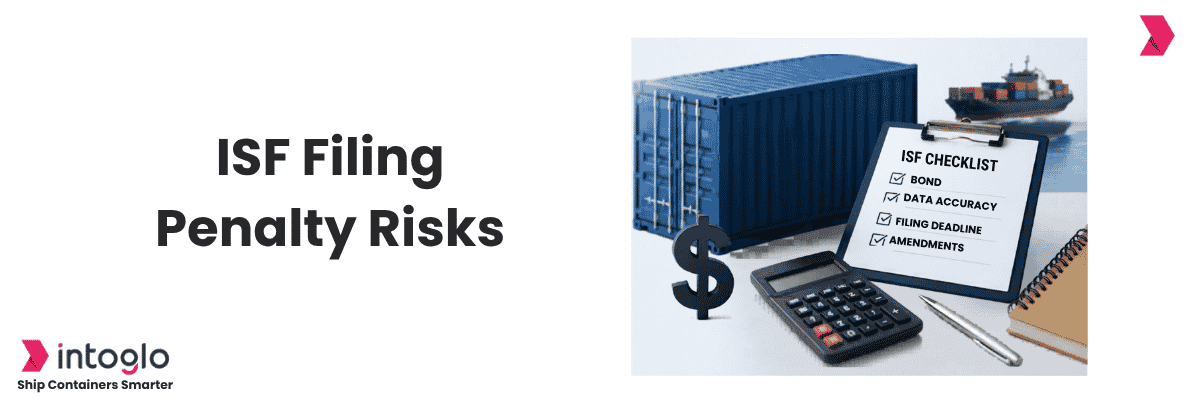
ISF (Importer Security Filing or “10+2”) is a mandatory US Customs requirement for ocean shipments before cargo is loaded onto a vessel bound for the United States.
- The ISF is filed by the US importer or their customs broker.
- It must be submitted at least 24 hours before the vessel departs from the origin port.
- The US buyer must have a valid US Customs bond on file before the ISF can be filed.
- ISF filing typically costs around $35 per Bill of Lading (BL).
- Late filing, missing details, or incorrect data can trigger a $5,000 CBP penalty per violation.
If you are new to ISF and want to understand what it is and why it matters for exporters, read our article: What is ISF Filing? A Complete Guide for Indian Exporters, before learning about the cost and penalties.
Do You Need a Customs Bond for ISF Filing?
Yes, and this is something many Indian exporters are not aware of. To file an ISF, your US buyer must have a valid US Customs bond on file with CBP. It is a financial guarantee that the importer will comply with all CBP regulations and pay any duties, taxes, or penalties owed.
There are two types of bonds relevant to ISF filing:
- Single Transaction Bond: Used for one shipment only. Suitable for occasional importers.
- Continuous Bond: Covers all shipments for 12 months. Best for frequent importers (3+ shipments per year)
The US importer (buyer) is responsible for arranging the bond through a customs broker. Exporters only need to ensure correct shipment data is shared. But if the bond lapses, the ISF cannot be filed, and your shipment will be delayed.
How Much Does ISF Filing Cost?
ISF filing costs are relatively small compared to the penalties for incorrect or late filing. The ISF filing fee charged by a customs broker or agent is typically $35 per Bill of Lading (BL), depending on the service provider and shipment requirements. This fee typically covers the preparation and electronic submission of the ISF to U.S. Customs.
What Happens If the ISF Is Late, Wrong, or Missing?
US Customs (CBP) imposes strict penalties, and multiple violations can increase total fines.
| Violation | Penalty |
| ISF was not filed at all | $5,000 |
| ISF filed late | $5,000 |
| ISF filed with incomplete information | $5,000 |
| ISF is not withdrawn when the shipment is cancelled | $5,000 |
| ISF does not match the Bill of Lading | $5,000 |
CBP can also issue a “Do Not Load” order, preventing cargo from being loaded. If already loaded, the shipment may be seized on arrival.
What If the ISF Needs to Be Updated After Filing?
Shipment details sometimes change after filing. Only the customs broker who filed the ISF can amend it.
- Amendments must be filed before cargo arrives at the US port.
- Cancelled shipments require formal ISF withdrawal.
- Failure to withdraw an ISF can trigger a $5,000 penalty.
- The amended ISF must exactly match the Bill of Lading.
Indian exporters should immediately inform their freight forwarder about any shipment changes so corrections can be filed before CBP flags the shipment.
Common ISF Mistakes Indian Exporters Make

Most ISF problems are entirely preventable. Here are the mistakes that come up most often:
- Wrong Bill of Lading numbers: Confirm House and Master BL numbers with the freight forwarder.
- Late data sharing: Send shipment details as soon as booking is confirmed.
- Wrong HTS codes: Indian HSN codes are different from US HTS codes; always verify classifications.
- Mismatched names or addresses: Consignee and ship-to details must exactly match the commercial invoice.
- Failure to update ISF: Any shipment change after filing must be reported immediately.
ISF filing depends on accurate documentation and coordination. Intoglo helps Indian exporters streamline India–USA ocean shipments through better documentation flow, shipment planning, and compliance coordination. You can also download updated sailing schedules and instant freight quotes to plan your shipments more efficiently.
To explore how Intoglo can support your India–USA shipping, connect with us:
📩 contact@intoglo.com | 📞 +91 84697 08714
Conclusion
The ISF filing itself is inexpensive, but mistakes can become costly. Understanding bond requirements, filing timelines, and amendment rules is essential for smooth US-bound shipments. For Indian exporters, the key is simple: share accurate data on time and coordinate closely with your logistics partners.
FAQs
Who files the ISF - the importer or exporter?
The US importer (buyer) or their customs broker files the ISF. The exporter does not file it.
How long does ISF filing take?
ISF filing usually takes a few hours, and in most cases within 24 hours, if all shipment details are ready.
Does my US buyer need a customs bond to file the ISF?
Yes, a US Customs bond must be on file before the ISF can be filed. Your buyer arranges this through their customs broker - you do not need to do anything.
What is the penalty for a late ISF filing?
CBP can assess $5,000 per shipment for a late filing - even if the ISF was filed just a few hours past the deadline. There is no grace period.
Can the ISF be amended after it has been filed?
Yes, but only the original filer - your buyer's customs broker - can make the amendment. You must notify your freight forwarder immediately when anything changes: container number, vessel, ship-to address, or quantities. Amendments must be made before the cargo arrives at the US port.
What happens if a shipment is cancelled after the ISF is filed?
The ISF must be formally withdrawn. If it is not, CBP can assess a $5,000 penalty for failure to withdraw. Inform your freight forwarder the moment a shipment is cancelled so they can withdraw the ISF in time.