Quick Overview
Contingent cargo insurance provides backup protection when your primary cargo coverage does not fully compensate for shipment losses. However, coverage is not automatic - exclusions, documentation requirements, and policy conditions determine whether a claim is approved.
Limitations to avoid claim issues and coverage gaps:
- Damage caused by improper packaging is usually excluded from coverage.
- War, strikes, and certain high-risk commodities may require additional protection.
- Claims are commonly rejected due to delayed reporting, incomplete documents, or excluded cargo.
- Contingent coverage applies only after the primary cargo policy has been allowed to respond.
- Exporters, carriers, and freight forwarders each play a different role in shipment protection and claims handling.
- Customising coverage based on cargo value, route, and shipment risk helps avoid coverage gaps.
If you are new to contingent cargo insurance and want to understand what it covers before learning about exclusions and policy selection, read our article: What Is Contingent Cargo Insurance & What Does It Cover?
What Contingent Cargo Insurance Does Not Cover
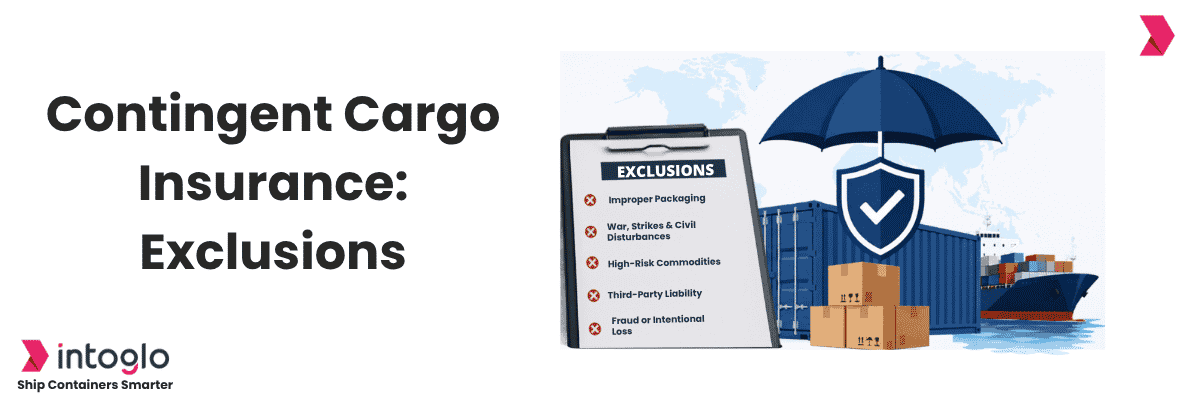
Understanding exclusions is as important as understanding coverage. Here are the most common ones:
1. Improper or Insufficient Packaging
Packaging is the exporter’s responsibility. Damage due to inadequate packaging is not covered under primary or contingent policies. Goods must meet international shipping standards (e.g., ISTA or ASTM).
2. War, Strikes, and Civil Disturbances
Losses caused by war, riots, strikes, or civil unrest are excluded. These require separate war risks or strikes coverage. If your goods transit through politically unstable regions, check your policy and buy the add-on.
3. Certain High-Risk Commodities
Perishable goods, glassware, and certain fragile commodities may not qualify for contingent coverage at standard rates or at all. Commodity eligibility must be confirmed with the insurer.
4. Third-Party Liability and Environmental Damage
Contingent cargo insurance protects your goods. It does not cover injuries to third parties, property damage, or environmental cleanup costs. That requires separate liability coverage.
5. Intentional Loss or Fraud
Losses due to fraud, misrepresentation, or intentional acts by the insured are not covered. Accurate shipment documentation (bill of lading, invoice, packing list) is required.
Common Scenarios Where Claims Get Rejected

Even with a valid policy, claims can be denied if policy conditions are not met. The table below highlights some of the most common reasons for claim rejection.
| Claim Rejection Reason | How It Affects Your Claim |
| Late reporting | Most policies require prompt notification of loss or damage. Delays can result in claim denial. |
| Documentation gaps | Missing or inaccurate bills of lading, packing lists, invoices, or inspection reports can lead to claim rejection. |
| Primary policy not exhausted | Contingent coverage applies only after the primary insurer has been allowed to respond. Claims may be denied if this process is bypassed. |
| Excluded commodity shipped | Shipping a commodity not covered under the policy can void coverage entirely. |
Key Takeaway: To improve the chances of a successful claim, ensure your cargo is properly packaged, maintain accurate shipment documentation, confirm your commodity is covered under the policy, and report any loss or damage immediately.
Who Is Involved & What Are Their Roles?
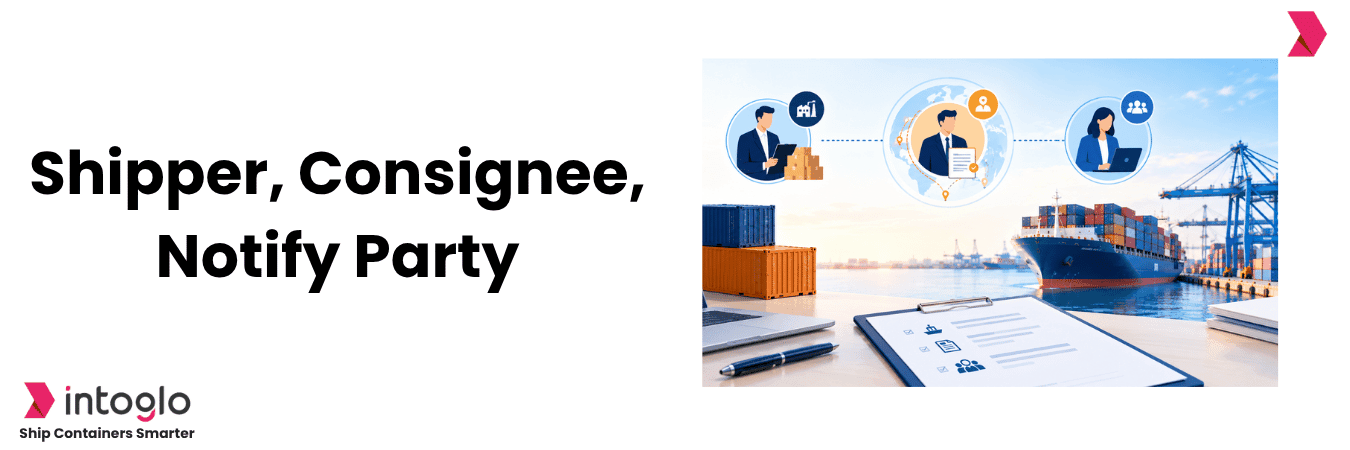
Understanding the key parties in contingent cargo insurance helps clarify responsibilities and claim flow.
The Exporter (Shipper)
The exporter is the policyholder. Your main responsibilities include accurate documentation, proper packaging, and timely reporting of loss or damage. Errors in these areas can affect claim eligibility.
The Carrier
The carrier is the shipping line or transport company moving the goods. Their liability is limited. If carrier compensation is insufficient or denied, the contingent policy is triggered to cover the shortfall.
The Freight Forwarder
The freight forwarder manages logistics, documentation, and customs clearance. They are not responsible for insurance coverage, but documentation accuracy directly impacts claim approval or delays.
For this reason, choosing a freight forwarder with strong operational visibility and documentation processes helps reduce claim issues. For exporters shipping from India to the US, Intoglo provides end-to-end shipment coordination-from pickup and customs clearance to ocean freight and final delivery. Real-time tracking and milestone updates help maintain accurate shipment records for insurance and claims.
Reach out to Intoglo for smooth India–USA export shipping support.
📩 contact@intoglo.com | 📞 +91 84697 08714
How to Tailor Your Contingent Cargo Policy?
A standard policy may not fit every shipment. Consider these checks:
1. Know your cargo's exact commercial value and ensure coverage is up to 110% of the cargo value, including potential re-shipping costs.
2. Confirm the insurer explicitly covers your commodity.
3. Verify geographic coverage for your full India–USA route, including transit zones.
4. Review the claims notification window. Most policies require notification within 30 days of discovering a loss.
5. Ask about add-ons like War risk, strikes coverage, and storage-in-transit extensions that are available for routes with higher exposure.
6. Review and update the policy annually as shipment profiles change.
For shipments above $50,000 in value, consider purchasing both a comprehensive primary all-risk policy and a contingent policy. The combined cost is still less than 1% of cargo value in most cases.
Conclusion
Contingent cargo insurance provides an additional layer of protection, but only if its exclusions, limits, and claim conditions are clearly understood. Proper packaging, accurate documentation, and the right coverage choices directly impact claim approval. Combining suitable insurance with a reliable shipping process helps reduce avoidable risks in India–USA exports.
FAQs
Why was my contingent cargo claim rejected even though I had a policy?
The most common reasons are: late reporting, missing documentation, the primary insurer was not given the opportunity to respond first, or the commodity was excluded from the policy. Always check your policy terms before shipping.
Does contingent cargo insurance cover perishable goods?
Most contingent policies exclude perishables due to high spoilage risk. If you export food products, spices, or agricultural goods from India, ask your insurer specifically about perishable cover. You may need a specialist policy.
Is packaging damage always excluded?
Yes, if damage occurs because your goods were insufficiently packed, the claim will be denied. Use international packaging standards (ISTA or ASTM) for all export shipments.
What is the claims notification period?
Most policies require you to notify the insurer within 30 days of discovering the loss. Some policies have shorter windows. Missing this deadline can void your claim entirely.
Can I add war risk coverage to my contingent policy?
Yes, war risk and strikes coverage can be added as extensions to most contingent cargo policies. This is especially relevant if your shipment transits through regions with geopolitical risk.
Do I need contingent insurance if I already have an all-risk policy?
An all-risk primary policy is broader than a standard primary policy, but it still has limits and exclusions. If your cargo value exceeds those limits, contingent cover provides the additional layer of protection you need.