
Quick Overview
Contingent cargo insurance is a secondary insurance policy that activates when your primary cargo insurance fails to pay. It was introduced in the 1980s to fill the gaps left by standard policies.
Here is what it covers at a glance:
- Contingent cargo insurance works as backup protection when primary cargo insurance is denied, cancelled, or pays less than the actual loss.
- It is useful for exporters shipping high-value goods, freight forwarders, and businesses with frequent shipments.
- Covers major risks like physical cargo damage during handling or ocean transit.
- Protects against theft or missing cargo at any stage of the shipment journey.
- Covers losses caused by carrier insurance failure, claim rejection, or insufficient carrier liability limits.
If you ship high-value goods from India to the USA, this policy is not optional - it is essential. Here is everything you need to know.
Why Do Shippers Need Insurance?
International shipping exposes cargo to risks beyond the shipper’s control. Even with reliable carriers and logistics partners, losses can still occur across the supply chain.
Shippers need cargo insurance because:
- Cargo passes through multiple points such as warehouses, trucks, ports, and vessels, increasing exposure to damage or loss.
- Ocean and air transport involve risks like rough handling, weather disruptions, and accidents.
- Theft or pilferage can occur at origin, transit hubs, or destination ports.
- Carrier liability is limited and often does not cover the full invoice value of goods.
- Claims may be denied due to documentation errors, exclusions, or policy conditions.
Without insurance, exporters must bear these losses directly, which can affect profit margins and cash flow.
This is why cargo insurance is a standard risk management tool in global trade, and contingent cargo insurance becomes an additional safeguard when primary coverage is insufficient or fails.
What is Contingent Cargo Insurance?
Contingent cargo insurance is a backup insurance policy that protects your shipment when primary cargo insurance does not fully cover the loss. Primary policies may have exclusions, limits, or claim conditions that leave part of the cargo value uninsured.
This policy does not replace primary insurance. It only activates if the primary insurer or carrier’s coverage is denied, cancelled, or pays less than the actual loss.
Typical premiums range from 0.1% to 0.5% of the cargo’s commercial invoice value, depending on cargo type and trade lane. It provides additional protection at a relatively low cost.
Who Needs Contingent Cargo Insurance?

Businesses that depend on carrier coverage or move valuable cargo regularly often use contingent insurance to reduce exposure when standard protection falls short.
It is especially relevant for:
- Indian exporters shipping high-value goods such as textiles, pharmaceuticals, electronics, or machinery to the USA
- Freight forwarders acting as intermediaries who need protection if the carrier's policy fails.
- Businesses with frequent shipments where one uninsured loss can impact margins.
- Exporters working with multiple carriers, where tracking and validating coverage across shipments becomes difficult.
What Does Contingent Cargo Insurance Cover?
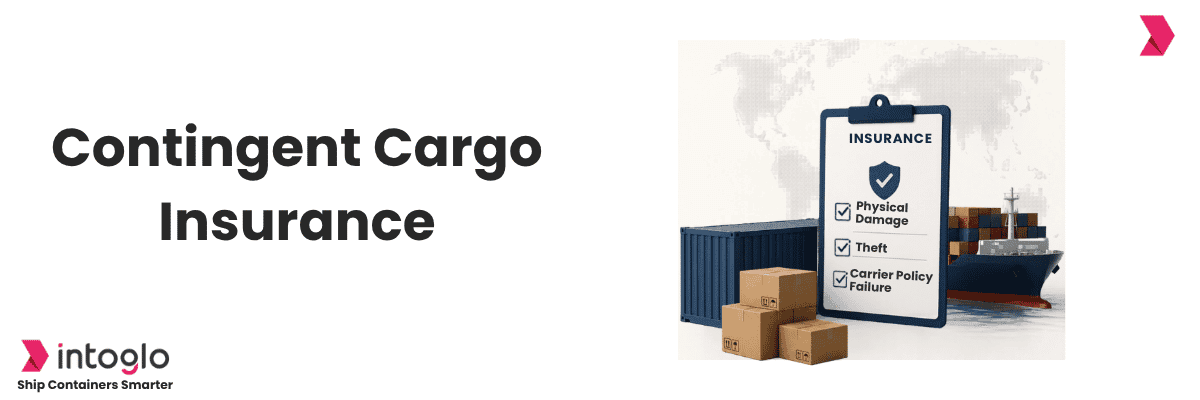
Contingent cargo insurance protects exporters when primary cargo insurance does not fully cover shipment losses due to limits, exclusions, or claim denial. It typically covers
1. Physical Damage
Covers cargo damage during loading, unloading, port handling, storage, or ocean transit when primary insurance excludes the claim or pays less than the actual loss. Relevant for high-value or fragile cargo such as electronics, glass, and ceramics.
2. Theft
Cargo theft can occur at any stage of the shipment journey, including storage, transit, port handling, or final delivery. High-value goods are often at greater risk. Contingent cargo insurance helps cover financial loss when primary cargo coverage is insufficient or denied.
3. Carrier Policy Failure
A carrier’s insurance may be cancelled, denied due to non-compliance, or have liability limits lower than your cargo value. In these situations, contingent cargo insurance provides additional protection when existing shipment coverage does not fully compensate for the loss.
As shipment value and supply chain complexity increase, insurance alone is not enough to reduce risk. Exporters also need visibility and coordination across the shipping journey. For shipments from India to the USA, Intoglo supports door-to-door movement via leading ocean carriers and provides real-time shipment tracking, helping exporters stay informed and respond faster when issues arise.
Need help with the India-USA shipment? Reach out to Intoglo.
📩 contact@intoglo.com | 📞 +91 84697 08714
How Contingent Cargo Insurance Differs from Other Coverage
Each policy covers cargo differently and applies at a different stage of a claim.
| Insurance Type | What It Covers | When It Applies | Key Limitation |
| Primary Cargo Insurance | Cargo loss or damage under policy terms. | First policy to respond after a loss. | Subject to coverage limits, exclusions, and claim conditions. |
| All-Risk Insurance | Broad protection against most physical loss or damage during transit | Responds directly to covered losses. | Higher premiums and policy exclusions still apply. |
| Contingent Cargo Insurance | Secondary protection when primary coverage is unavailable or insufficient. | Activates if primary coverage is denied, limited, or does not fully compensate for the loss. | Applies only after primary coverage. |
Contingent cargo insurance works best as an additional layer of protection rather than a substitute for primary coverage. For higher-value shipments, combining primary and contingent coverage can help reduce exposure to uninsured losses.
Conclusion
Insurance decisions in international shipping are not just about having coverage - they are about knowing where coverage stops. Contingent cargo insurance helps exporters avoid unexpected financial exposure when standard protections do not respond as expected. For businesses shipping regularly from India to the USA, it adds an extra layer of protection against uninsured losses.
FAQs
Is contingent cargo insurance mandatory for India-USA shipments?
It is not legally mandatory. But for high-value shipments, especially above $30,000, most experienced exporters carry them. A single uninsured loss can cost more than years of premiums.
Does my carrier's insurance not cover my cargo automatically?
Carriers do carry insurance, but it often has strict limits and many exclusions. If the carrier's insurer denies a claim or the payout is less than your cargo's value, you bear the loss without contingent cover.
What triggers a contingent cargo insurance claim?
The claim is triggered when your primary insurer or the carrier's insurer fails to respond to a loss. This includes denial, cancellation of the carrier's policy, or payout that falls below the actual cargo value.
Is theft at Indian origin ports covered?
Yes, contingent cargo insurance covers theft at any point in the journey - from the origin warehouse in India to the final destination in the USA - when the primary policy does not respond to the claim.
Does this policy cover FCL and LCL shipments?
Yes, it applies to both Full Container Load (FCL) and Less than Container Load (LCL) shipments. However, LCL cargo may face slightly different risk profiles, so confirm terms with your insurer.
Who buys contingent cargo insurance, the exporter or the freight forwarder?
Either party can hold the policy. Indian exporters typically buy it to protect their cargo's commercial value. Freight forwarders may also hold contingent policies to protect themselves from liability if the carrier's insurer fails to pay.