Quick Overview
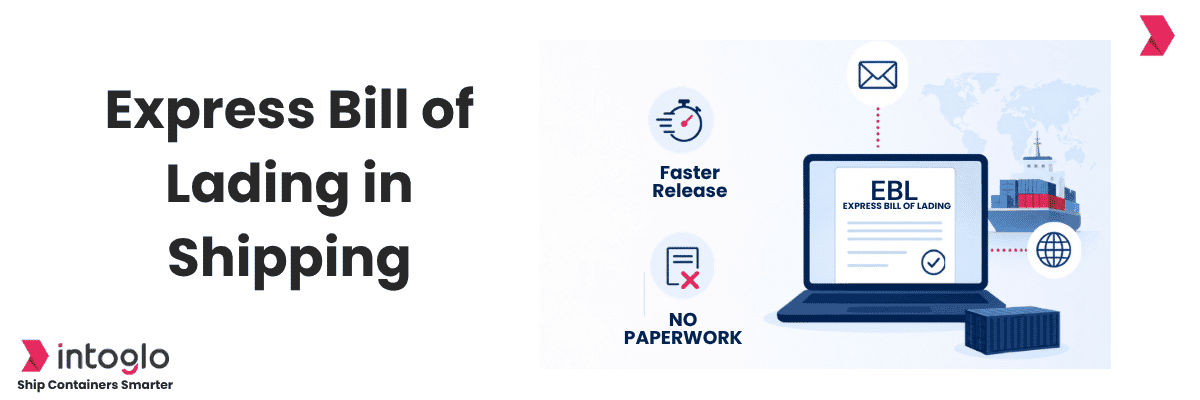
An Express Bill of Lading (EBL) is a non-negotiable shipping document that allows cargo to be released without requiring the presentation of original paper Bills of Lading. Instead of sending physical documents by courier, shipment details are transmitted electronically, helping exporters reduce paperwork and speed up cargo release.
Here are the key things exporters should know about an EBL:
- Cargo can be released without presenting the original Bills of Lading.
- Shipment details are transmitted electronically to the destination agent.
- EBLs help speed up cargo release and reduce documentation delays.
- They eliminate courier costs and the risk of lost shipping documents.
- EBLs are best suited for trusted buyers and open-account transactions.
- Most Letter of Credit (LC) shipments still require original negotiable Bills of Lading.
Now that you have a quick understanding of Express Bills of Lading, let's look at how an EBL works and when exporters should use it.
What is an Express Bill of Lading?
An Express Bill of Lading (EBL) is a non-negotiable version of a Bill of Lading that allows cargo to be released to the named consignee without presenting original paper documents. Shipment details are transmitted electronically to the carrier's destination office, eliminating the need to courier original Bills of Lading.
For a detailed explanation of the role of a Bill of Lading in international shipping, read Shipping to the US? Understand the OBL Before You Export.
How is Express Bill of Lading Different from a Traditional Bill of Lading?
The key differences between a traditional Bill of Lading and an Express Bill of Lading are shown below.
| Feature | Traditional Bill of Lading | Express Bill of Lading |
| Format | Paper document | Electronic document |
| Negotiability | Negotiable | Non-negotiable |
| Original document required for cargo release | Yes | No |
| Ownership transfer | Possible | Not possible |
| Suitable for LC transactions | Yes | Generally no |
How Does an EBL Work?

An Express Bill of Lading replaces the exchange of physical documents with the electronic transmission of shipment information. Once the consignee is verified, cargo can be released without presenting an original Bill of Lading.
1. Shipper loads cargo and provides shipment details to the carrier.
2. Carrier issues the EBL electronically - no paper originals are printed.
3. EBL details are transmitted electronically to the carrier's destination agent.
4. Consignee arrives at the destination port and is identified against the named EBL.
5. Cargo is released without requiring any physical document.
The entire cycle is faster, leaner, and significantly cheaper than waiting for courier-delivered paper documents.
Key Benefits of Using an EBL
By eliminating the need for original paper documents, an Express Bill of Lading can help exporters speed up cargo release, reduce administrative work, and lower documentation-related costs.
1. Speed of Delivery: Traditional BOLs travel by courier and can take 5–10 days to arrive after the vessel has already docked. With an EBL, there is zero document transit time. Cargo gets released the moment the vessel arrives, and formalities are complete.
2. Cost Savings: You eliminate courier charges, printing costs, and bank handling fees for document processing. For high-volume India–USA trade lanes, these savings add up quickly.
3. Reduced Risk of Document Loss: Lost or delayed original BOLs are a major cause of demurrage charges at destination ports. EBLs carry no such risk - the document exists electronically and cannot be physically misplaced.
4. Streamlined Administration: Your operations team does not need to chase couriers, coordinate with banks for document release, or manage secure physical storage of originals.
When Should Indian Exporters Use an EBL?
An Express Bill of Lading is most suitable when cargo can be released without requiring negotiable documents or proof of ownership transfer.
Exporters commonly use EBLs in the following situations:
- Established buyer relationships: You know and trust your consignee. No letter of credit is involved.
- Open account trade: Payment has already been received or is on mutually agreed terms.
- Time-sensitive shipments: Cargo like perishables, fashion goods, or seasonal items where speed is critical.
- High-value goods: Where secure, traceable, electronic documentation reduces fraud risk.
- Repeat trade lanes: Regular India–USA FCL shipments where documentation processes are already standardised.
When Should Indian Exporters Avoid Using an EBL
An Express Bill of Lading is not suitable for every shipment. Exporters should consider using a traditional Bill of Lading in the following situations:
- Shipments involving Letter of Credit (LC) payments, where banks typically require original negotiable Bills of Lading.
- Transactions with new or unverified buyers where additional control over cargo release is needed.
- Shipments that require ownership of the goods to be transferred through the Bill of Lading.
- Trade transactions where original shipping documents are required by contractual or regulatory requirements.
EBL and Customs Clearance in the USA
US Customs and Border Protection (CBP) accepts electronic shipment information through the Automated Manifest System (AMS). As a result, Express Bills of Lading can be used alongside electronic customs filing processes for India–USA shipments.
Since EBLs rely on accurate electronic documentation, exporters should ensure shipment and consignee details are correct before issuance.
For India–USA FCL shipments, Intoglo provides end-to-end digital forwarding by working directly with shipping lines, customs brokers, and truckers across the USA. Trusted by 200+ businesses, Intoglo offers real-time visibility, instant freight quotes, and delivery across 41,000+ USA ZIP codes. We specialize in shipping auto parts, chemicals, paper and packaging products, pharmaceuticals, and other high-volume export categories.
Need help with smooth India–USA shipping? Contact Intoglo:
📩 contact@intoglo.com | 📞 +91 84697 08714
Conclusion
An Express Bill of Lading eliminates the need for original paper documents, allowing cargo to be released to the named consignee through electronic instructions. It is commonly used for shipments between trusted trading partners where negotiable documents are not required. Choosing the right type of Bill of Lading can help ensure smooth cargo release and avoid documentation-related delays.
FAQs
What is the difference between an EBL and a traditional Bill of Lading?
A traditional BOL is a physical, often negotiable, document that must be presented at the destination port. An EBL is issued electronically and is non-negotiable - cargo is released to the named consignee without any paper document.
Can I use an EBL for Letter of Credit transactions?
No, most Letters of Credit require original negotiable paper BOLs. Using an EBL will likely result in a discrepancy and the bank refusing to release payment. Always confirm documentation requirements with your bank before choosing EBL.
Is an EBL accepted by US Customs (CBP)?
Yes, the US CBP's Automated Manifest System (AMS) supports electronic documentation. EBLs are compatible with AMS filing, making customs clearance smooth for India–USA shipments.
What happens if the consignee details on the EBL are wrong?
Since EBLs are non-negotiable and non-transferable, incorrect consignee details can cause serious delays. Always verify buyer details carefully before confirming the EBL with your carrier.
Can an EBL be cancelled or amended after issuance?
Amendments are possible before the vessel departs, but they require carrier approval and may attract amendment fees. Once cargo is in transit, changes become significantly harder. Ensure all details are verified before the EBL is issued.
Is there a risk of fraud with EBLs?
The risk of document fraud is lower with EBLs since there is no physical document to forge. However, email spoofing and system hacking are potential threats. Always use verified, encrypted communication channels and confirm release instructions directly with your carrier.