Quick Overview
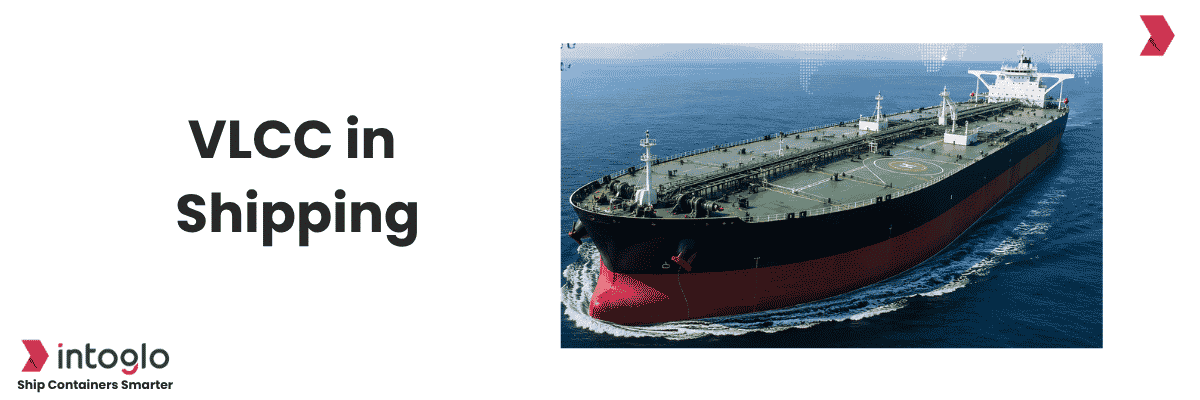
A VLCC (Very Large Crude Carrier) is a large oil tanker designed to transport crude oil between producing regions and refineries worldwide. These vessels are among the largest commercial ships and play a critical role in global energy trade.
Here are the essential facts about VLCC vessels and their role in crude oil transportation:
- Typically, it ranges from 200,000 to 320,000 DWT.
- It can carry up to 2 million barrels of crude oil in a single voyage.
- Primarily used for long-distance crude oil transportation.
- Operates on major international oil trade routes.
- Requires deep-water terminals and specialized infrastructure due to its large size and draft.
- Equipped with double-hull construction and advanced safety systems.
- Helps reduce transportation costs per barrel through economies of scale.
Understanding VLCC capacity, operations, safety features, and trade importance helps explain why these vessels remain essential to global crude oil transportation.
What is a VLCC?
A VLCC (Very Large Crude Carrier) is a specialized oil tanker designed to transport crude oil in large quantities across international trade routes.
These vessels are primarily used to move crude oil from oil-producing countries to refineries and storage terminals around the world. Their large carrying capacity allows oil companies to transport more cargo in a single voyage, making shipping more efficient and cost-effective.
Capacity & Dimensions of a VLCC

The table below highlights the typical size and cargo-carrying specifications of a VLCC.
| Specification | Typical Range |
| Deadweight Tonnage (DWT) | 200,000–320,000 tons |
| Cargo Capacity | Up to 2 million barrels |
| Length | Around 330 meters |
| Beam (Width) | Around 55-60 meters |
| Draft | Up to 23 meters |
Physical Characteristics and Port Limitations
The large dimensions of VLCCs create operational challenges. Many conventional ports do not have sufficient depth or infrastructure to handle these vessels. As a result, VLCCs often use deep-water terminals and offshore mooring facilities specifically designed for large crude carriers.
When direct access to a destination port is not possible, crude oil may be transferred to smaller tankers through ship-to-ship (STS) operations for onward transportation.
Importance of VLCCs in Global Trade
VLCCs play a key role in global crude oil transportation by moving large volumes of cargo between oil-producing regions and major refining centers. Their high carrying capacity allows more oil to be transported in a single voyage, helping reduce shipping costs and improve operational efficiency.
To ensure safe and efficient transportation, shipping companies plan VLCC routes based on several factors, including:
- Weather conditions
- Maritime traffic
- Port accessibility
- Fuel efficiency
- Geopolitical risks
Effective route planning helps minimize delays and supports the continuous flow of crude oil across international markets.
Loading and Discharging Operations in VLCC
VLCCs use specialized loading arms, pipelines, and pumping systems to transfer crude oil between the vessel and shore facilities. Because of the large cargo volumes involved, loading and discharging operations can take several hours or even days, depending on the terminal infrastructure and cargo quantity.
The process generally involves:
1. Connecting the vessel to the terminal through loading arms or hoses.
2. Pumping crude oil into designated cargo tanks while monitoring tank levels and pressure.
3. Conducting continuous checks to ensure cargo is distributed safely and evenly across the vessel.
4. Transporting the cargo to the destination port or terminal.
5. Discharging the crude oil using high-capacity pumps into storage tanks, refineries, or other receiving facilities.
Throughout the process, crews follow strict safety and environmental procedures to prevent spills, leaks, and operational incidents.
Safety and Environmental Measures
Transporting crude oil involves significant safety and environmental risks, making regulatory compliance a critical part of VLCC operations.
Modern VLCCs are equipped with several safety features, including:
- Double-hull construction.
- Oil spill prevention and containment systems.
- Advanced navigation and monitoring equipment.
- Emergency response and contingency procedures.
- Compliance with International Maritime Organization (IMO) standards.
These measures help reduce the risk of accidents, protect marine environments, and ensure safer transportation of crude oil across international waters.
Economic Benefits and Operational Challenges
VLCCs help reduce crude oil transportation costs by carrying large cargo volumes in a single voyage. This makes them an efficient option for long-distance oil transportation.
However, their operation comes with several challenges, including:
- Restricted access to many ports and terminals.
- Complex navigation and maneuvering requirements.
- High operating and maintenance costs.
- Dependence on specialized infrastructure and deep-water facilities.
To address these challenges, shipping companies rely on careful route planning, specialized facilities, and experienced vessel operators.
Simplifying India-USA Container Shipping with Intoglo
Intoglo provides single-focused, end-to-end digital FCL forwarding for India-USA enterprise shippers, SMEs, and growing businesses. By working directly with shipping lines, customs brokers, and truckers across the USA, Intoglo helps streamline international container shipping from origin to destination.
Trusted by over 200 businesses, Intoglo offers real-time shipment visibility, instant freight quotes, and seamless delivery across 41,000+ USA ZIP codes. The company specializes in supporting exporters in industries such as auto parts, chemicals, paper and packaging, pharmaceuticals, and other high-volume cargo categories.
Need help with smooth India–USA shipping? Contact Intoglo:
📩 contact@intoglo.com | 📞 +91 84697 08714
Conclusion
VLCCs are among the most important vessels in the global shipping industry. Their massive cargo capacity, cost-efficiency, and ability to transport crude oil over long distances make them indispensable to international energy trade. Despite operational challenges associated with their size, VLCCs remain a cornerstone of the global oil supply chain and continue to facilitate the movement of energy resources worldwide.
FAQs
What does VLCC stand for in shipping?
VLCC stands for Very Large Crude Carrier, a type of tanker used to transport large quantities of crude oil.
How much oil can a VLCC carry?
A VLCC can carry up to 2 million barrels of crude oil in a single voyage.
What is the typical capacity of a VLCC?
Most VLCCs have a deadweight tonnage (DWT) ranging from 160,000 to 320,000 tons.
Why can't all ports handle VLCCs?
Their large size and deep draft require specialized deep-water terminals and offshore facilities.
What is the difference between a VLCC and a ULCC?
A VLCC carries up to about 320,000 DWT, while a ULCC is larger and can carry even greater volumes of crude oil.