
Quick Overview
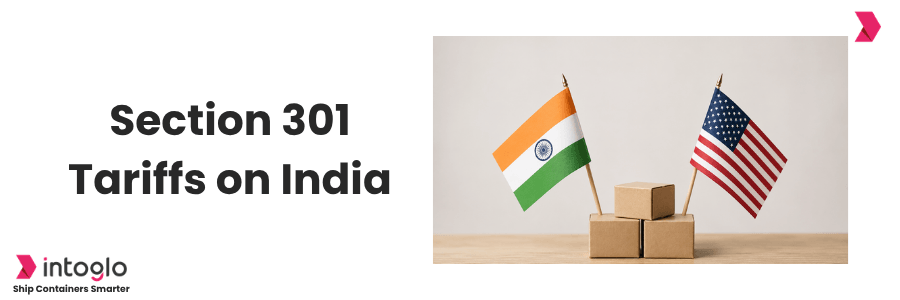
The United States has introduced additional Section 301 tariff. India will face a 10% additional tariff on most exports covered by the action, unless a product qualifies for an exemption listed in the accompanying Annex.
The Office of the United States Trade Representative (USTR) launched investigations under Section 301 of the Trade Act of 1974 to examine whether 60 economies effectively prohibit imports of goods produced with forced labor. After reviewing evidence, public comments, and testimony, the U.S. determined that the identified economies' practices burden or restrict U.S. commerce.
Why Did the U.S. Launch These Investigations?
The investigations began on March 12, 2026, covering 60 economies, including India. The objective was to determine whether each economy:
- Has a prohibition on imports made with forced labor.
- Effectively enforces that prohibition.
- Maintains policies that are reasonable and consistent with international trade obligations.
Following its review, the USTR concluded that each investigated economy had practices that were actionable under Section 301 because they burden or restrict U.S. commerce.
Why India Received a 10% Tariff Instead of 12.5%?
During the proposal stage, India was grouped with countries that would receive a 12.5% Section 301 tariff.
However, after consultations with the United States, India adopted a forced labor import prohibition before the final decision was issued. Because of this development, India was moved into the lower tariff category.
The final memorandum directs the USTR to impose a 10% Section 301 tariff on imports from India rather than the originally proposed 12.5%.

Which Countries Are Subject to the 10% Tariff?
The final order places the following economies in the 10% tariff category:
- India
- Bangladesh
- Cambodia
- Canada
- Indonesia
- Malaysia
- Mexico
- Pakistan
- Sri Lanka
- United Kingdom
- Argentina
- Ecuador
- El Salvador
- Guatemala
- Honduras
- Jordan
- Trinidad and Tobago
Other investigated economies remain subject to the higher 12.5% tariff unless otherwise specified.
Which Countries Are Affected?
The investigations cover 60 economies across Asia, Europe, the Middle East, Africa, and the Americas, including:
- Algeria
- Angola
- Argentina
- Australia
- The Bahamas
- Bahrain
- Bangladesh
- Brazil
- Cambodia
- Canada
- Chile
- China
- Colombia
- Costa Rica
- Dominican Republic
- Ecuador
- Egypt
- El Salvador
- European Union
- Guatemala
- Guyana
- Honduras
- Hong Kong
- India
- Indonesia
- Iraq
- Israel
- Japan
- Jordan
- Kazakhstan
- Kuwait
- Libya
- Malaysia
- Mexico
- Morocco
- New Zealand
- Nicaragua
- Nigeria
- Norway
- Oman
- Pakistan
- Peru
- Philippines
- Qatar
- Russia
- Saudi Arabia
- Singapore
- South Africa
- South Korea
- Sri Lanka
- Switzerland
- Taiwan
- Thailand
- Trinidad and Tobago
- Türkiye
- United Arab Emirates
- United Kingdom
- Uruguay
- Venezuela
- Vietnam
Does the Tariff Apply to Every Product?
Not necessarily.
The memorandum directs the USTR to exempt certain products from the additional tariffs. According to the document, exemptions may apply to:
- Raw materials that are important for domestic U.S. supply.
- Products whose tariffs could create economy-wide disruptions.
- Goods that cannot be produced in sufficient quantities within the United States or sourced elsewhere.
- Products where tariffs would not effectively achieve the policy objective.
- Certain country-specific products intended to encourage continued implementation and enforcement of forced labor import prohibitions.
The specific exempt products are listed separately in the Annex accompanying the memorandum.
What About Textile and Apparel Imports?
The memorandum introduces a future tariff-rate quota (TRQ) mechanism for certain textile and apparel products.
However, these TRQs apply only to:
- Bangladesh
- Cambodia
- Indonesia
- Malaysia
India is not included in this program. Until those quotas are established, the applicable Section 301 tariffs continue to apply to imports from those countries.
What Should Indian Exporters Expect?
For Indian exporters, the key implication is that most goods covered by the action will now face an additional 10%.
The old temporary Section 122 tariff has now been replaced by Section 301, but for India the rate remains in the lower tier, unless specifically exempted.
While India avoided the higher proposed tariff rate, exporters should review whether their products fall within any published exemptions and continue monitoring future USTR updates for changes to tariff treatment or implementation.
Businesses shipping to the U.S. should also evaluate how these additional duties may affect pricing, contracts, sourcing strategies, and customer relationships.
How Intoglo Helps?
Trade policy changes often require exporters to adjust logistics planning alongside pricing and compliance.
Intoglo supports India–USA exporters with digital FCL freight forwarding, customs coordination, shipment visibility, and end-to-end logistics management. Our team helps businesses stay informed about operational changes that may affect international shipments.
Stay informed about carrier announcements, freight rates, and trade regulations by joining our free 30-minute monthly India-USA Trade Pulse webinar.
Planning your next shipment to the USA? Get freight quote from Intoglo.
📩 Contact Intoglo 📞 +91 84697 08714
Conclusion
The new Section 301 measures represent a significant policy change for exporters shipping goods to the United States. India's placement in the 10% tariff category reflects changes made during the investigation process, but the additional duty still increases the landed cost for many products entering the U.S. market.
FAQs
What is Section 301?
Section 301 of the Trade Act of 1974 allows the United States to take trade action against practices that burden or restrict U.S. commerce.
Is India affected by the new action?
India was already at 10%, and the new Section 301 action keeps it at 10% while replacing the old tariff mechanism. So the headline rate stays the same, but the rule under which it is applied has changed.
Will every product be affected?
No. The memorandum provides for product-specific exemptions that will be identified separately.
Should exporters change shipping plans?
Exporters should review contracts, monitor official implementation notices, and confirm whether their products are covered before shipping.