
Quick Overview
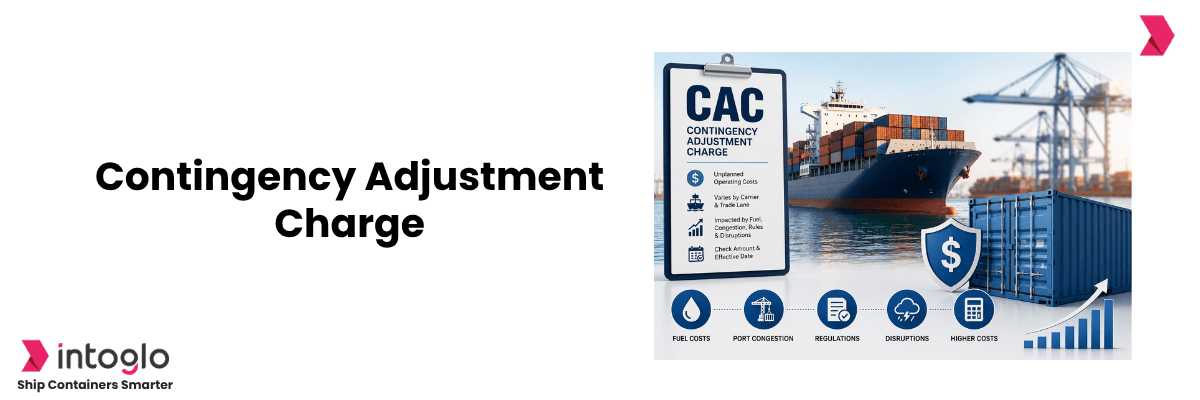
A Contingency Adjustment Charge (CAC) is a shipping surcharge that carriers may apply to recover unexpected operational costs affecting a particular trade lane. Fuel price fluctuations, port congestion, weather disruptions, regulatory changes, and other unforeseen events can increase carrier operating costs. Understanding CAC charges helps exporters and importers distinguish contingency-related surcharges from base freight, port charges, fuel surcharges, and demurrage.
Key Facts About CAC Charges at a Glance:
- CAC stands for Contingency Adjustment Charge.
- It is generally used to recover unexpected or contingency-related operating costs.
- CAC amounts and applicability can vary by carrier and trade lane.
- Fuel costs, port congestion, regulations, and disruptions can influence CAC.
- CAC is different from base ocean freight and other standard shipping charges.
- Businesses should verify the amount, effective date, scope, and equipment covered before booking.
- Negotiating contracts and monitoring carrier announcements can help reduce cost surprises.
What Are CAC Charges in Shipping?
The Contingency Adjustment Charge is an additional fee that carriers may introduce when unexpected operating conditions increase the cost of providing shipping services.
Unlike base ocean freight, which represents the primary cost of transporting cargo between ports, a CAC is generally associated with additional costs arising from changing operational conditions.
The exact calculation and application depend on the carrier, trade lane, shipment type, and circumstances that triggered the charge.
Why Do Carriers Apply CAC?
Container shipping involves several cost variables that can change quickly. A carrier may face higher expenses because of fuel price movements, port delays, route changes, additional handling, regulatory requirements, or disruptions.
A contingency surcharge allows the carrier to recover part of these additional costs rather than absorbing them entirely into the base freight rate.
For shippers, this means a quoted freight rate may not always represent the complete transportation cost. Understanding applicable surcharges is therefore important when calculating the landed cost of a shipment.

CAC vs Other Shipping Charges
| Charge | Primary Purpose | Typical Trigger |
| Ocean Freight | Base transportation cost | Movement between ports |
| CAC | Contingency-related operating costs | Unexpected cost increases |
| Fuel Surcharge | Recover fuel-related costs | Changes in fuel prices |
| Port Charges | Port and terminal services | Cargo handling and operations |
| Demurrage | Extended container use at terminal | Cargo remains beyond free time |
| Customs Duties | Government-imposed taxes | Import or export requirements |
CAC should therefore not be treated as a replacement for these charges. It is an additional component that may apply depending on the carrier and trade.
Factors That Influence CAC Charges
Fuel Costs
Fuel is a major component of vessel operating costs. When bunker prices increase significantly, carriers may introduce or adjust surcharges to recover part of the additional expense.
Port Congestion
Congested terminals can increase vessel waiting times, handling costs, equipment imbalances, and operational inefficiencies. These additional expenses can influence contingency-related charges.
Trade Regulations and Tariffs
Changes in customs requirements, tariffs, inspections, sanctions, or documentation procedures can create additional operational costs. Carriers may factor these costs into applicable surcharges.
Weather and Operational Disruptions
Severe weather, natural events, labor disruptions, or infrastructure problems can force carriers to modify schedules and routes. Longer transit times and additional operational requirements can increase shipping costs.
How CAC Affects Exporters?
CAC can make freight budgeting more difficult because the charge may change based on market conditions.
For exporters, the practical approach is to confirm:
- CAC amount per container or TEU
- Effective date
- Origin and destination scope
- Equipment covered
- Applicable commodity or service
- Whether the charge is included in the quoted freight rate
These details should be confirmed with the carrier or freight forwarder before finalizing the shipment.
How to Manage CAC-Related Costs?
Exporters can reduce uncertainty by monitoring carrier surcharge announcements and comparing the total cost of different routing options.
Long-term contracts may also provide greater rate predictability. Consolidating shipment volumes can improve negotiating leverage with carriers, while alternative ports or sailing schedules may provide cost advantages during periods of disruption.
Most importantly, businesses should evaluate the all-in logistics cost, rather than comparing only the headline ocean freight rate.
How Intoglo Helps
For India-USA FCL shipments, Intoglo helps exporters understand the complete freight cost, including ocean freight, applicable surcharges, customs coordination, inland transportation, and delivery requirements.
With carrier charges and market conditions changing, having visibility into the total shipping cost helps exporters plan budgets and avoid unexpected expenses.
Planning your next shipment to the USA? Get a quote from Intoglo.
Stay informed about carrier announcements, freight rates, and trade regulations by joining our free 30-minute monthly India-USA Trade Pulse webinar.
📩 contact@intoglo.com 📞+91 84697 08714
Conclusion
CAC charges are an important component of freight-cost management when carriers face unexpected operational expenses. Fuel prices, port congestion, regulations, weather, and other disruptions can all influence shipping costs.
For exporters, the best approach is to understand exactly when a CAC applies, what costs it covers, and whether it is included in the quoted freight rate. Monitoring carrier updates and evaluating the complete landed cost can help businesses avoid unexpected logistics expenses.
FAQs
What does CAC stand for in shipping?
CAC stands for Contingency Adjustment Charge, a surcharge that may be applied by carriers to recover unexpected operational costs.
Is CAC included in ocean freight?
Not necessarily. CAC may be charged separately from the base ocean freight rate, depending on the carrier and trade lane.
What causes CAC charges to increase?
Fuel costs, port congestion, route disruptions, regulatory changes, and other unexpected operating expenses can influence CAC charges.
Is CAC the same as a fuel surcharge?
No. A fuel surcharge specifically addresses fuel-related costs, while CAC is generally broader and can cover various contingency-related operating expenses.
How can exporters manage CAC costs?
Exporters should monitor carrier announcements, compare all-in freight costs, negotiate predictable rates where possible, and consider alternative routes or sailing options.