Quick Overview
A Container Release Order (CRO) ensures containers are handed over only after required approvals and payments are completed. This article explains how a CRO works in shipping. It outlines the release steps, related documents, its role in re-export and returns, and the difference between a CRO and a Delivery Order (DO).
International shipping is not just about moving containers; it's about keeping promises, meeting deadlines, and protecting business relationships. A small delay in documentation or container release can lead to missed schedules, extra costs, and unnecessary stress for exporters and importers alike.
If you’re new to this topic, start with our first blog on “What is a Container Release Order (CRO)? A Beginner’s Guide” to understand the basics before reading further.
How does CRO Work in Shipping?

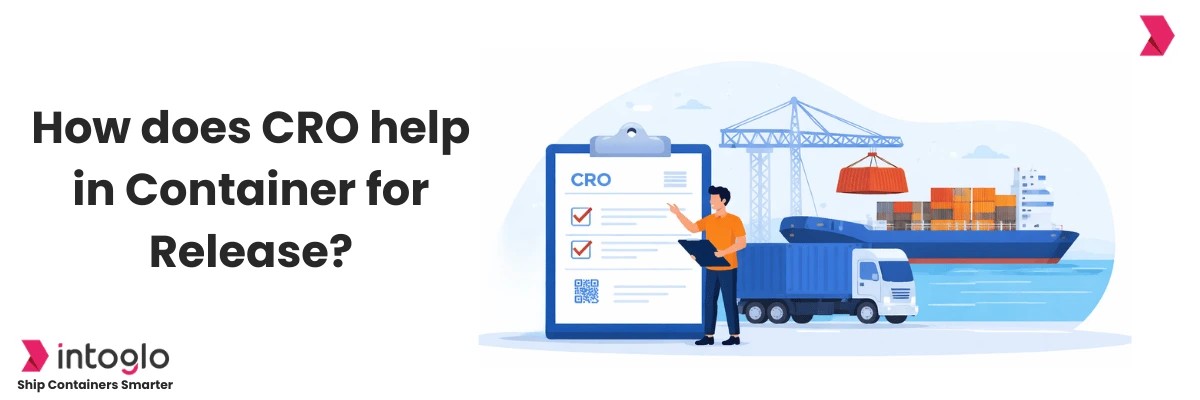
A Container Release Order (CRO) is issued after required approvals and payments are completed. It ensures containers are released only when documentation and charges are verified, helping maintain a smooth shipping container release process.
1. Container Availability: The container becomes available at the port or depot either assigned for export loading or arriving at the destination for import delivery.
2. Documentation & Clearance: Required shipping and customs documents are submitted and verified. For imports, customs clearance must be completed before release.
3. Payment of Charges: All applicable charges, such as freight, terminal handling, detention, or other fees, must be settled with the shipping line.
4. CRO Issued: Once documents and payments are cleared, the shipping line issues the CRO. This officially authorizes the container release.
5. Container Pickup: The authorized trucker presents the CRO at the terminal or depot. After verification, the container is handed over.
Timely coordination in the container release process is important. Delays in clearance or payments can result in demurrage and storage charges, increasing overall shipment costs.
Freight forwarders like Intoglo help simplify the container release process by managing bookings, documentation, and pickup coordination. With updated sailing schedules and end-to-end shipment support from India to the USA, exporters can avoid delays and plan shipments with confidence.
For shipment assistance, connect with Intoglo:
📩 contact@intoglo.com | 📞 +91 84697 08714
Shipping Documents Related to CRO
Several key shipping documents work alongside a CRO to ensure proper authorization, verification, and smooth container release.
Bill of Lading (B/L): Ownership Proof
The Bill of Lading acts as proof of cargo ownership and a contract between the shipper and the carrier. It confirms that the goods have been received for shipment and includes key details like shipper, consignee, and cargo description. The B/L is often verified before the container is released.
Shipping Order (SO): Loading Instruction
A Shipping Order is issued after booking confirmation. It provides instructions to load cargo onto a specific vessel and voyage. It includes container details, port information, and cut-off dates, helping terminals manage export operations efficiently.
Authority to Withdraw (ATW): Collection Authorization
An Authority to Withdraw authorizes a designated party, such as a trucker or agent, to collect the container or cargo from the port or depot. It ensures that only approved representatives can complete the pickup, adding control and security to the container release process.
How Does CRO Support Re-Export and Cargo Returns?

A CRO is also important in reverse logistics when cargo needs to be returned or re-exported.
- Rejected Cargo: Goods may need to be returned if there are quality issues, wrong specifications, or documentation errors.
- Re-Export Process: In such cases, fresh booking, documentation updates, and customs approvals may be required before the container can move again
- Permission to Release Container: A CRO is issued after payments and formalities are completed to allow container release.
- Coordination with Shipping Line: Close coordination with the shipping line is necessary to confirm container status, charges, and revised sailing schedules.
Proper CRO handling in reverse logistics helps avoid delays and extra storage costs.
How CRO Differs from a Delivery Order in Shipping?
Both CRO and DO are related to cargo release, but they serve different purposes at different stages of the shipment process.
| Basis | Container Release Order (CRO) | Delivery Order (DO) |
| Purpose | Authorizes container release from the port or depot | Authorizes delivery of goods to the consignee |
| Issued By | Shipping line | Shipping agent |
| Stage | Issued before container pickup | Issued at the final stage for cargo delivery |
Conclusion
Proper shipping documentation helps avoid delays and extra charges during container release. A smooth CRO process supports timely coordination between customs, carriers, and transporters, especially during import clearance. Managing release documents correctly keeps shipments on schedule and ensures efficient cargo movement.
FAQs
Who requires a Container Release Order (CRO)?
A CRO is required by the authorized transporter or clearing agent to collect the container from the port, terminal, or depot. Without it, the container cannot be legally released.
Is a CRO required for both FCL and LCL shipments?
A CRO is mainly associated with FCL (Full Container Load) shipments, where the entire container is released. In LCL shipments, cargo release procedures may differ depending on consolidation and deconsolidation arrangements.
What happens if a CRO is delayed?
If a CRO is delayed, container pickup cannot proceed. This may result in demurrage, detention, or storage charges, increasing overall shipment costs and delaying delivery schedules.
Can a Container Release Order be issued electronically?
Yes, many shipping lines now issue electronic CROs (e-CROs) to speed up documentation and reduce paperwork. However, acceptance depends on port and shipping line policies.
What is the validity period of a CRO?
The validity of a CRO depends on the shipping line and port regulations. It is usually valid for a limited period, and delays in pickup may require revalidation or additional charges.
Is a CRO transferable to another transporter?
A CRO is generally issued to a specific authorized party. If the transporter changes, an updated authorization or revised CRO may be required from the shipping line.
How is a CRO different from a Gate Pass?
A CRO authorizes container release from the shipping line, while a Gate Pass is issued by the terminal to allow the container to physically exit the port premises.