Quick Overview
Export duty is a tax imposed on certain goods when they are exported from a country. While most products exported from India do not attract export duty, some goods may be subject to duties depending on their classification and government regulations. Understanding how export duties work helps exporters estimate costs, maintain compliance, and plan shipments more effectively.
The key points below explain the different duty structures used to calculate export duties and the factors that determine the applicable rate.
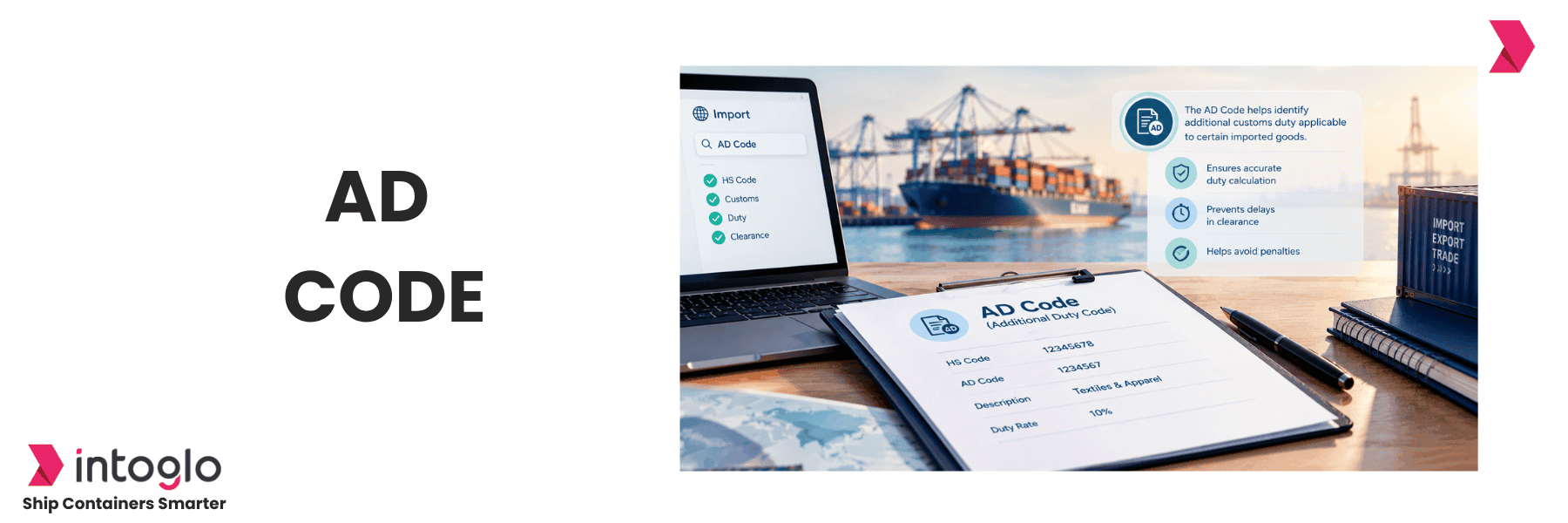
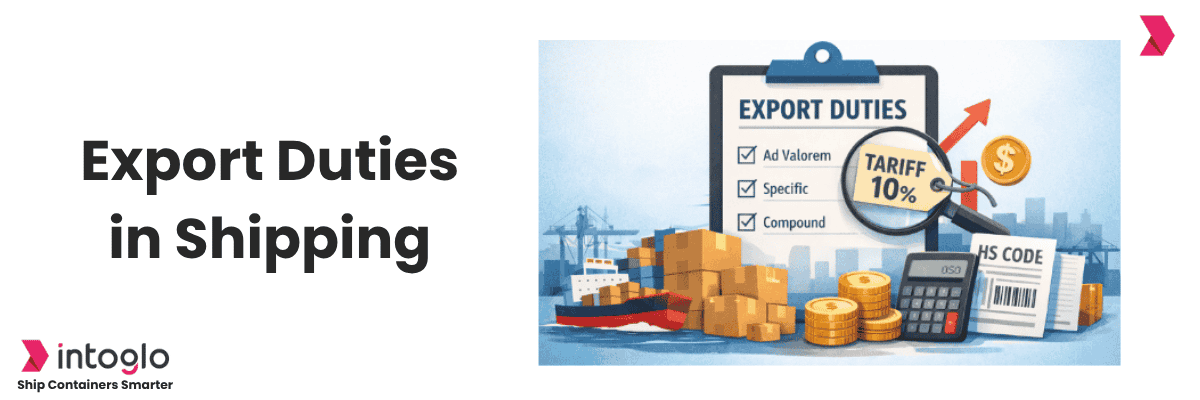
- Three duty structures are commonly used: Ad valorem duty is based on product value, specific duty is charged per unit, and compound duty combines both duties.
- HS code classification determines the applicable duty: The product's ITC-HS code identifies the relevant duty structure and rate.
- Several factors influence duty rates: Product type, customs value, government policies, trade agreements, and market conditions can affect the final duty payable.
- Duty rates vary by product category: Different goods may be subject to different duty structures and rates.
- Accurate duty planning helps control export costs: Understanding applicable duties before shipping helps avoid unexpected expenses and pricing errors.
The sections below explain what export duty is, the different duty structures used to calculate it, and the factors that determine the applicable rate.
What is Export Duty?
Export duty is a tax imposed by a government on certain goods when they are exported from the country. Governments may levy export duties to regulate the supply of specific products, support domestic industries, or achieve trade policy objectives. When applicable, the duty payable is generally calculated using one of the three duty structures explained below.
3 Types of Export Duties You Must Know
Export duties are generally calculated using one of three duty structures. The method used affects how much duty is payable and how export costs are calculated. Understanding these duty types helps exporters estimate costs accurately and avoid classification errors.
| Duty Type | How It Is Calculated | Commonly Applied To |
| Ad Valorem Duty | Charged as a percentage of the product's customs value. Higher-value shipments pay more duty. | Most manufactured and finished goods |
| Specific Duty | Charged as a fixed amount per unit, kilogram, litre, or piece, regardless of the product's value. | Agricultural products, commodities, and raw materials |
| Compound Duty | Charged using both a percentage of the product's value and a fixed amount per unit. | Products are taxed based on both value and quantity |
The applicable duty type depends on the product's HS code and the tariff schedule used by the customs authority. Since each duty structure is calculated differently, identifying the correct one is essential for accurate cost planning and customs compliance.
Factors That Determine Your Export Duty Rate

The rate you pay is not random. Seven key factors influence where your duty lands.
1. Product Type: Essential goods, luxury items, and raw materials face different rates. Strategic goods may carry higher duties to protect the domestic supply.
2. HS Code Classification: Your 8-digit ITC-HS code (or 10-digit HTSUS code for U.S. imports) determines your tariff rate directly. One wrong digit can change your duty completely.
3. Market Value of Goods: High-value items attract higher ad valorem duties. Price volatility in your category can shift your effective duty rate quarter to quarter.
4. Domestic Supply and Demand: When India faces domestic shortages, the government raises export duties to protect the local supply. Surplus goods often get lower duties to boost exports.
5. Government Policy Goals: Duties are a policy tool used to control inflation, protect industries, and regulate exports. These policy changes can happen quickly, and exporters must stay updated to avoid unexpected cost increases.
6. Trade Agreements: Bilateral trade deals and tariff negotiations can directly reduce or increase duty rates. Exporters should track new agreements and interim trade arrangements, as tariff structures may shift without much notice.
7. Global Trade Conditions: Currency fluctuations, trade disputes, and geopolitical shifts create pressure on duty rates. Tariffs can move in weeks, so staying current is essential.
Export duty is only one component of the total cost of exporting. Freight charges, inland transportation, customs clearance, and transit times also affect shipment profitability and landed costs.
With Intoglo, you can book India–USA FCL door-to-door shipping, receive an instant quote, and access updated sailing schedules to plan shipments with greater cost visibility and control.
Contact Intoglo today to ship smarter and avoid last-minute cost surprises.
📩 contact@intoglo.com | 📞 +91 84697 08714
Conclusion
Understanding which duty type applies to your product and what drives your rate is the first step in managing export costs. With India's trade environment shifting rapidly, getting this right is not optional - it is essential to staying profitable.
FAQs
What is the most common export duty type for Indian goods going to the USA?
Ad valorem duty is the most common. It is calculated as a percentage of your product's customs value and applies to a wide range of manufactured and finished goods.
How do I know which duty type applies to my product?
Your product's HS code (ITC-HS for India, HTSUS for the USA) determines the duty type and rate. Use the HTSUS schedule or Intoglo's HS Code Scanner to look up your specific code.
What is the difference between export duty and import duty?
Export duty is charged by the exporting country when goods leave its borders, while import duty is charged by the destination country when goods enter. In most cases, exporters focus more on import duties because they directly affect the landed cost in the buyer’s market.
Can the same product have different duty rates in different countries?
Yes, duty rates depend on the importing country’s tariff schedule. The same HS code product may face different rates in the USA, UK, EU, or the Middle East due to different tariff structures and trade policies
What value is used to calculate ad valorem duty?
Ad valorem duty is usually calculated on the customs value, which typically includes the product price plus insurance and freight (depending on the valuation method used). Incorrect valuation can lead to penalties or reassessments.
What is duty drawback, and how does it help exporters?
Duty drawback is a refund mechanism where exporters can recover certain duties paid on imported raw materials used in exported products. This can significantly improve margins for manufacturing exporters.