Quick Overview
Export duty calculation is the process of determining the duty payable on goods exported from one country and imported into another based on the applicable tariff classification, customs value, quantity, and duty structure.
To calculate export duty accurately for India-USA shipments, exporters must understand the key factors that influence the final duty amount:
- The correct HS/HTS code determines which duty rate applies to your product.
- Export duties may be calculated as Ad Valorem Duty, Specific Duty, or Compound Duty, depending on the tariff classification.
- Customs value and shipment quantity are the primary inputs used in duty calculations.
- Even a small error in product classification, valuation, or quantity units can lead to incorrect duty estimates and pricing issues.
- Additional charges such as Merchandise Processing Fee (MPF), Harbor Maintenance Fee (HMF), and customs clearance costs may apply beyond the calculated duty.
If you are new to export duties and want to understand the different duty types and factors that determine your rate before learning the calculation process, read Export Duties Explained: Don’t Let Hidden Tariffs Kill Profit.
How to Calculate Different Export Duties from India - US
When exporting goods from India to the USA, it’s important to understand how export duties are calculated. The U.S. customs duty structure usually falls under three main categories: Ad Valorem Duty, Specific Duty, and Compound Duty. Each one has a different method of calculation, and knowing the correct formula helps you avoid unexpected landed cost issues.
1. Calculate Ad Valorem Duty (Percentage-Based Duty)
Ad valorem duty is calculated as a percentage of your product’s customs value. This is one of the most common duty types used under the U.S. HTSUS tariff system.
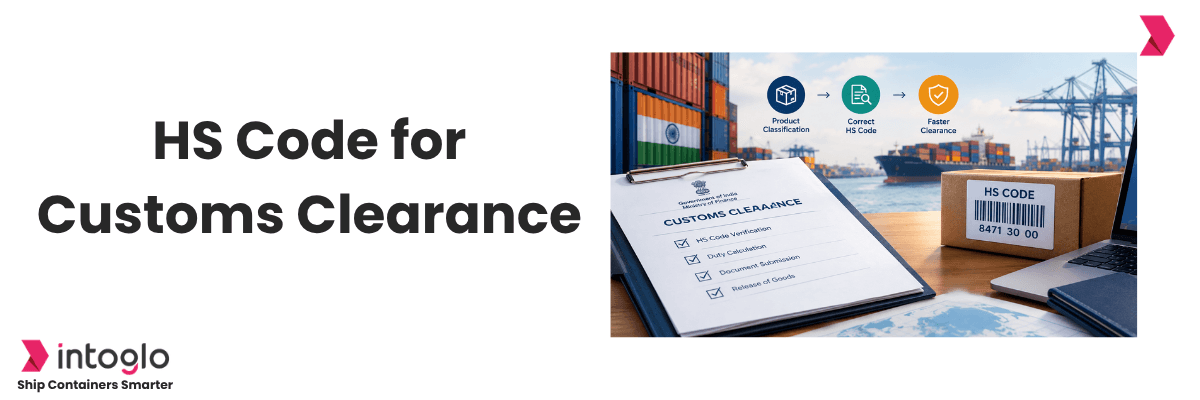
Step 1: Identify the correct HS Code
Find your product’s exact HS Code using Intoglo’s HS Code Lookup and Finder, or confirm it through your shipping agent or freight forwarder.
Example: HS Code: 6403.59.90 (Footwear Category)
Step 2: Check the U.S. HTSUS duty rate (%)
Once the HS Code is confirmed, check the duty percentage listed under the U.S. HTSUS tariff schedule using the HTSUS Search.
Example: Duty Rate: 10%
Step 3: Calculate the Customs Value
Customs value is typically the product cost, including freight and insurance (CIF value).
Example: Customs Value = $100
Step 4: Apply the Ad Valorem formula
Ad Valorem Duty = Customs Value × Duty Rate
Example Calculation: $100 × 10% = $10 duty payable
Your payable duty is $10, but additional charges may still apply (MPF, HMF, clearance charges, etc.).
2. Calculate Specific Duty (Fixed Duty per Unit)
Specific duty is a fixed charge per unit, such as per kilogram, litre, or piece. It does not depend on the market value of the goods.
Step 1: Identify the correct HS Code
Use Intoglo’s HS Code Lookup and Finder or confirm through your freight forwarder.
Example: HS Code: 1701.13.05 ( Cane Sugar)
Step 2: Check the specific duty rate under HTSUS
The U.S. tariff schedule will mention a fixed duty rate (like per kg or per unit).
Example: Specific Duty Rate = $0.02 per kg
Step 3: Confirm your shipment quantity
Duty will apply based on the quantity being exported.
Example: Quantity = 200 kg
Step 4: Apply the specific duty formula
Specific Duty = Quantity × Duty Rate
Example Calculation: 200 kg × $0.02 = $4 duty payable.
Your payable duty is $4, plus any additional import processing fees.
3. Calculate Compound Duty (Ad Valorem + Specific Duty Combined)
Compound duty includes both a percentage duty and a fixed duty per unit. In this case, you must calculate both parts separately and add them together.
Step 1: Identify the correct HS Code
Confirm the HS Code using Intoglo’s HS Code Lookup and Finder or a customs expert.
Example: HS Code: 1006.30.00 (Rice)
Step 2: Check both duty rates under HTSUS
Compound duties have two components:
- Ad Valorem rate (%)
- Specific rate (per unit)
Example:
Ad Valorem Duty Rate = 10%
Specific Duty Rate = $0.03 per kg
Step 3: Determine customs value and quantity
You will need both the shipment value and the shipment quantity.
Example:
Customs Value = $200
Quantity = 100 kg
Step 4: Calculate the Ad Valorem portion
Ad Valorem Duty = Customs Value × Duty Rate
Example Calculation: $200 × 10% = $20
Step 5: Calculate the specific portion
Specific Duty = Quantity × Duty Rate
Example Calculation: 100 kg × $0.03 = $3
Step 6: Add both duties together
Compound Duty = Ad Valorem Duty + Specific Duty
Example Calculation: $20 + $3 = $23 duty payable.
Your payable duty is $23, plus any other applicable import fees.
These step-by-step methods give exporters a clear and structured way to calculate all duties while shipping goods from India to the USA.
Customs Value Components for Duty Calculation?
Customs value is the basis on which ad valorem duty is calculated. It is usually derived from the CIF value but may vary based on valuation rules.
| Component | Included in Customs Value? | Notes |
| Product price | Yes | Invoice value |
| Freight (CIF cases) | Sometimes | Depends on the valuation method |
| Insurance | Sometimes | Often included in CIF |
| Duties & taxes | No | Calculated separately |
| Inland transport | No | Excluded |
Tips to Manage Export Duty Costs

Efficient duty management helps exporters reduce costs, avoid penalties, and ensure smooth customs clearance while shipping from India to the USA.
- Track duty rule changes: Duty rates and export rules change often. Check updates regularly so you don’t get surprise costs.
- Use export incentive schemes: Apply for schemes like RoDTEP, MEIS, and SEZ benefits to reduce or recover duty costs.
- Use trade agreements when possible: If a trade agreement applies to your product, you may get a lower duty rate. Always verify before shipping.
- Keep documents correct: Maintain clean invoices, licenses, and export proofs. Wrong or missing documents can lead to penalties or rejection of benefits.
- Improve logistics planning: Consolidate shipments and choose the best routes to reduce overall cost and avoid delays.
Export duty calculations are important, but controlling freight cost and shipment timelines is just as critical. Intoglo supports India-USA FCL door-to-door shipping with HS code identification, instant quotes, updated sailing schedules, and a smooth booking process so exporters can plan shipments with clarity and avoid unexpected cost jumps.
Contact Intoglo to simplify your India–USA shipments:
📩 contact@intoglo.com | 📞 +91 84697 08714
Conclusion
Accurate export duty calculation helps exporters estimate landed costs, price shipments correctly, and comply with customs requirements. Whether the applicable duty is ad valorem, specific, or compound, the calculation depends on the correct HS/HTS classification, customs value, quantity, and duty rate. Before shipping, verify the latest tariff rates and account for any additional import fees that may apply, as calculating duty in advance helps avoid pricing errors, unexpected costs, and clearance delays.
FAQs
What is included in customs value when calculating ad valorem duty?
Customs value typically includes the product's transaction price, international freight charges, and insurance (CIF value). Always confirm with your customs broker, as the exact definition can vary.
What is the difference between export duty and import duty when shipping from India to the USA?
Export duty is charged by the exporting country (India) on certain goods leaving India. Import duty is charged by the importing country (USA) when goods enter the U.S. In most India–USA shipments, exporters mainly deal with U.S. import duties under HTSUS, along with additional fees like MPF and HMF.
Where can I check the U.S. duty rate for my product?
You can check the duty rate using the HTSUS (Harmonised Tariff Schedule of the United States) database. Search using your 10-digit HTS code and confirm whether your product falls under ad valorem, specific, or compound duty.
Is the HS Code used in India the same as the U.S. HTS Code?
Not exactly, India uses an 8-digit ITC-HS code, while the U.S. uses a 10-digit HTSUS code. The first 6 digits are usually the same globally, but the last digits can differ. Always confirm the correct HTSUS code before calculating duty.