Quick Overview
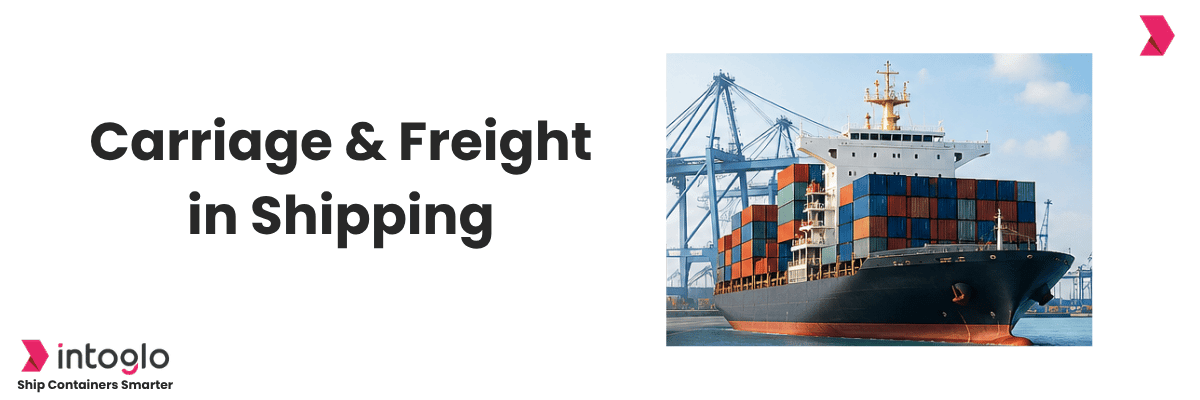
Carriage and freight are fundamental terms in shipping and export logistics, but they are often misunderstood. Carriage refers to the physical movement of goods from one place to another, while freight refers to the charge paid for transporting goods through carriers such as shipping lines, trucks, or airlines.
For exporters, the financial impact of carriage and freight depends on how these costs are classified and assigned throughout the shipment journey:
- Carriage inwards refers to transportation costs incurred to bring goods or raw materials into a business and is added to the cost of purchases (COGS).
- Carriage outwards refers to the cost of delivering finished goods to customers and is treated as a selling or distribution expense.
- Freight charges represent the actual logistics cost paid to transport goods internationally or domestically and form a major part of export pricing.
- Incoterms (EXW, FOB, CIF, etc.) determine whether the buyer or seller is responsible for paying freight and transport costs at each stage of shipment.
Understanding these distinctions helps exporters price goods correctly, manage margins effectively, and avoid unexpected logistics expenses.
What is Carriage?
Carriage is the physical movement of goods from one place to another within the supply chain. It refers to transport activities such as moving goods from supplier to warehouse, warehouse to port, or port to destination using road, rail, air, or sea.
In simple terms, carriage is the act of transportation, not the cost or goods themselves.
What is Freight?
Freight refers to the charge paid for transporting goods through a carrier such as a shipping line, airline, or transport company. In some contexts, it can also refer to the cargo being carried, but in trade and accounting, it mainly means transportation cost.
Freight is a pricing component of logistics, determined by distance, mode of transport, weight, and shipping route.
Types of Carriage and Their Accounting Treatment

In business and export accounting, carriage is classified based on where the cost is incurred in the supply chain.
1. Carriage Inwards
Carriage inwards means the cost of bringing goods into your business. For exporters, this usually includes the transport cost of raw materials or products from your supplier to your factory, warehouse, or port.
Example: If you buy goods from a supplier in another city and pay for transport to bring them to your warehouse, that cost is carriage inwards.
Accounting Treatment: This cost is added to the purchase cost and increases your COGS (Cost of Goods Sold).
Who Pays: Usually, the buyer. Under EXW, the buyer pays transport from the supplier’s location.
2. Carriage Outwards
Carriage outwards means the cost of sending goods to your customer. For exporters, this includes shipping costs from your warehouse or port to the buyer’s destination (like the USA).
Example: If you ship a container from India to the USA, the transport cost is carriage outwards.
Accounting Treatment: This is treated as a selling expense and shown under operating expenses. It does not increase COGS.
Who Pays: Depends on the Incoterm:
- Under FOB, the buyer pays after the goods are loaded on the ship.
- Under CIF, the seller pays freight and insurance up to the destination port.
Understanding these two types helps you record costs correctly and price your exports properly.
Difference Between Carriage Inwards and Carriage Outwards
Understanding this difference helps exporters calculate the correct product cost and maintain accurate profit margins.
| Aspect | Carriage Inwards | Carriage Outwards |
| Meaning | Cost of bringing goods into your business. | Cost of sending goods to your customer. |
| Purpose | Helps move raw materials or purchased goods to your facility. | Helps deliver finished goods to the buyer. |
| Type of Cost | Direct purchase-related cost. | Selling and distribution costs. |
| Accounting Treatment | Added to COGS (Cost of Goods Sold). | Recorded as an operating expense. |
| Who Pays | Usually, the buyer. | Depends on Incoterms (seller or buyer). |
| Profit Impact | Increases product cost and reduces gross profit. | Increases operating expenses and reduces net profit. |
| Example | Transport from the supplier to the warehouse/factory. | Shipping a container from India to a USA buyer. |
| Incoterms Influence | Linked to purchase terms like EXW. | Linked to trade terms like FOB, CIF, DDP. |
This clear separation helps exporters avoid misclassification of costs and ensures accurate pricing, accounting, and profitability analysis.
Why Incoterms Determine Who Pays Carriage
The Incoterm in your sales contract clearly defines who is responsible for carriage outwards costs. If this is not defined properly, you may either overcharge your buyer or end up paying unexpected shipping costs yourself.
- EXW (Ex-Works): Buyer pays for all transport costs. You only make goods available at your facility.
- FOB (Free On Board): Seller pays costs until goods are loaded onto the vessel at the Indian port. After that, the buyer takes over.
- CIF (Cost, Insurance & Freight): Seller pays for ocean freight and insurance up to the destination port.
To understand these INCOTERMS rules in detail, read our full article on "What are INCOTERMS?" A Guide to Rules & Responsibilities”, which explains each term, its responsibilities, and how they impact international shipping decisions.
Shipping smarter starts with the right partner. Intoglo offers reliable door-to-door FCL shipping on the India-USA trade lane with transparent pricing and no hidden costs. With strong partnerships across shipping lines, trucking, and customs brokers, Intoglo ensures smooth documentation and on-time container delivery.
Need smooth India–USA shipping? Reach out to Intoglo:
📩 contact@intoglo.com | 📞 +91 84697 08714
Conclusion
Carriage is the movement of goods, while freight is the cost of that movement. Carriage focuses on transportation activity, whereas freight represents the commercial charge for using transport services. Understanding this distinction helps exporters and businesses avoid confusion in pricing, accounting, and shipping decisions.
FAQs
What is the main difference between carriage and freight?
Carriage refers to the act of physically transporting goods. Freight refers to both the goods themselves and the charges for transporting them. Carriage is the action; freight is the stuff and the cost.
Who pays carriage inwards in an export transaction?
Usually, the buyer, which, in an export context, means you (the exporter) when you are sourcing materials or products to later ship abroad. Under EXW terms, you bear all inward carriage costs from your supplier.
Is carriage outwards included in COGS?
No, Carriage outwards is a selling and distribution expense. It goes under operating expenses in your P&L and does not affect your cost of goods sold (COGS). Only carriage inwards is added to COGS.
Under FOB terms, does the seller pay carriage to the USA?
No, under FOB, the seller pays carriage only until the goods are loaded on the vessel at the Indian port. From that point, the buyer assumes all freight and risk for the ocean leg to the USA.
What is CIF, and how does it affect carriage costs?
CIF stands for Cost, Insurance, and Freight. Under CIF, the seller (you) is responsible for paying ocean freight and marine insurance up to the destination port. You must factor these into your export price to stay profitable.