Quick Overview
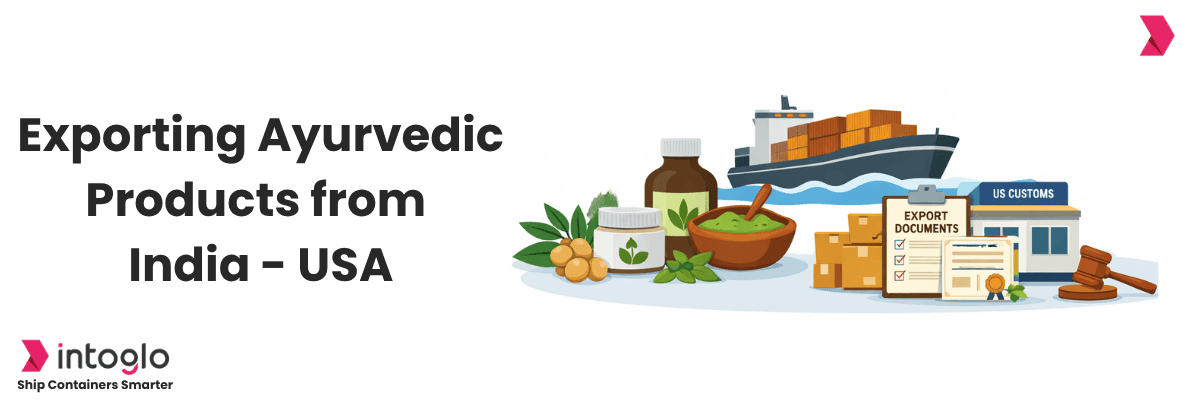
Exporting Ayurvedic products from India to the USA requires strict compliance with US FDA regulations, correct classification, and proper documentation to avoid shipment delays or rejection. This article explains the complete end-to-end process, including licences and mandatory export documents.
You may have the product ready and a confirmed buyer in the USA, but export success depends on strict compliance. The US FDA monitors Ayurvedic and herbal imports, and errors in labelling, documentation, HS codes, or filings can lead to delays, inspections, or rejection at US customs.
Before you export, make sure you're choosing the right products. Read our article on “What Are the Top Ayurvedic Products Exported from India?” to see what’s actually in demand in the US market.
Licences & Certifications You Need in India
Before your first shipment, ensure these licences are in place. Missing documentation is one of the most common reasons for export delays.
- IEC (Import Export Code): Mandatory for all exporters. Apply through the DGFT portal. Without this, you cannot export legally.
- Manufacturing Licence (Drugs and Cosmetics Act): Required if you are manufacturing Ayurvedic formulations. This is issued by the State Licensing Authority under Schedule T of the D&C Act.
- FSSAI Licence: Needed if the product is classified as food (herbal teas, supplements, edible products).
- AYUSH Premium Mark: Optional but useful for building buyer trust in international markets.
- GMP Certification: Good Manufacturing Practices certification. US buyers - especially distributors will ask for this. WHO-GMP is the standard most US buyers accept.
- RCMC (Registration Cum Membership Certificate): Required to claim export benefits under FTP. Register with CHEMEXCIL (for chemical and herbal products) or APEDA, depending on your product category.
Note: AYUSH approval in India does not mean the product is compliant in the USA. US FDA rules under DSHEA ( Dietary Supplement Health and Education Act) apply, and non-compliant products can be detained at US ports.
US FDA Requirements that Indian Exporters Must Know
The US FDA regulates Ayurvedic and herbal products entering the USA based on product classification.
Product Classification

- Dietary Supplements (DSHEA): Most capsules, powders, and extracts fall here. Disease-cure claims are not allowed; only structure-function claims (e.g., “supports immunity”) with a disclaimer are permitted.
- Cosmetics (FD&C Act): Skincare products like oils, creams, and serums, unless they make drug claims.
- Foods: Herbal teas, chyawanprash, and similar products consumed as food fall under FDA food regulations. These require Prior Notice before shipment arrives in the USA.
- Drugs: If your product claims to treat, cure, mitigate, or prevent a disease, the FDA considers it a drug. This requires a full NDA or ANDA - a very different and lengthy process. Avoid disease claims entirely.
Prior Notice of Imported Foods
Mandatory for food and supplement shipments before arrival in the USA. It includes product details, HS code, origin, manufacturer, US importer, and arrival date. Missing filing can lead to shipment holds.
Facility Registration
Required for manufacturers of food and dietary supplements exporting to the USA under FDA rules. Registration is free, done online, and must be renewed every two years.
Step-by-Step Process to Ship Ayurvedic Products
This is the operational sequence every exporter must follow. Miss a step, and you risk delays at the US port of entry.
1. Confirm product classification: Identify whether it is a dietary supplement, food, cosmetic, or drug, as this determines compliance requirements.
2. Obtain required licences: Ensure you have all necessary licences in place, including IEC, manufacturing licence, FSSAI licence (for food products), and GMP certification.
3. Register with the US FDA: Mandatory for manufacturers, packers, and exporters of food and dietary supplements. Registration is completed online and must be renewed periodically.
4. Ensure US-compliant labelling: Redesign product labels to meet US FDA requirements. This includes English-language labelling, Supplement Facts panel (for supplements), INCI names (for cosmetics), and mandatory disclaimers.
5. Select correct HS/HTS codes: Use accurate product classification codes to avoid customs delays, penalties, or misdeclaration issues.
6. Plan logistics and confirm incoterms: Finalise incoterms (DDP, FOB, CIF, etc.) with your buyer. This defines responsibility for the entire logistics chain, including origin pickup, international shipping, US customs clearance, duties, and final delivery.
7. Submit ISF (Importer Security Filing): Required for ocean shipments and must be filed at least 24 hours before vessel loading.
8. File AMS (Automated Manifest System): Submitted by the carrier or freight forwarder to US Customs before arrival.
9. Submit FDA Prior Notice: Mandatory for food and dietary supplement shipments before arrival in the USA. It includes shipment, product, and importer details.
10. Prepare export documentation: Keep all documents ready, including commercial invoice, packing list, Bill of Lading, Certificate of Origin, Certificate of Analysis (COA), and phytosanitary certificate (if applicable).
11. US customs clearance: Handled by the customs broker or importer of record at the port of entry. Ensure all filings and documents are accurate to avoid holds.
12. Execute end-to-end logistics and delivery: Coordinate the complete movement of goods from pickup at origin to international transit, US port handling, customs clearance, and final delivery to the buyer. Depending on incoterms, this may be managed by you, your logistics partner, or the US importer.
Documents Required for Every Shipment
Keep these ready before your cargo moves. Your freight forwarder will need all of them.
- Commercial Invoice: Must include product description, HS code, unit price, total value, country of origin, and buyer/seller details.
- Packing List: Detailed breakdown of cartons, weights (gross and net), and dimensions.
- Bill of Lading (B/L): Issued by the shipping line. This is the title document for your cargo.
- Certificate of Origin: Issued by an authorised body (CHEMEXCIL, Chamber of Commerce) confirming Indian origin.
- Certificate of Analysis (COA): Lab-tested analysis confirming the product composition, purity, and safety. US buyers and FDA inspectors may ask for this.
- Phytosanitary Certificate: Required for raw herbs, plant material, and unprocessed botanical products. Issued by the Plant Quarantine Authority in India.
- FDA Prior Notice: For food and supplement products. Filed electronically before the shipment arrives at the US port.
- Free Sale Certificate (if required): Some US buyers request this as proof that the product is legally sold in India.
Intoglo simplifies India–USA exports by handling key compliance steps like HS code verification, ISF/AMS filing, FDA Prior Notice, and US customs clearance coordination to avoid shipment holds. With PAN-India pickup and US warehouse delivery, we also provide updated sailing schedules, US time zone support, transparent pricing, and door-to-door shipping.
Contact Intoglo for your next India -USA shipment.
📩 contact@intoglo.com | 📞 +91 8469708714
Conclusion
Exporting Ayurvedic products from India to the USA offers strong opportunities, but success depends on strict compliance. US FDA rules, correct HS codes, proper labelling, and required filings are essential. Getting these right from the start ensures smooth shipments and long-term credibility in the market.
FAQs
Does the US FDA need to approve Ayurvedic products before they can be sold in the USA?
Most Ayurvedic products sold as dietary supplements do not need FDA pre-approval. However, the exporter must ensure safety and compliance under DSHEA. Drug claims require full FDA drug approval.
What happens if my shipment is held by US Customs or the FDA?
The shipment may be detained until missing documents or compliance issues are resolved. If not resolved, it can be refused entry and either destroyed or re-exported.
My US buyer wants DDP terms. What does that mean for me?
Under DDP, you handle US customs clearance, duties, and delivery to the buyer’s location. It increases responsibility but makes the deal easier for the buyer.