Quick Overview
ISF filing is a mandatory US Customs requirement for all ocean shipments entering the United States and must be completed before the vessel departs.
- ISF (Importer Security Filing) is also called 10+2, where 10 data elements come from the importer and 2 from the carrier.
- There are two ISF types (ISF-10 and ISF-5), depending on whether cargo is imported into the US or only transits through it.
- ISF is filed by the US importer (buyer) or their authorized customs broker.
- The deadline is 24 hours before vessel departure, but LCL shipments require earlier submission due to CFS cut-offs.
Now that you have a quick idea of why ISF filing is critical for India–USA ocean shipments, let’s understand what ISF filing actually means, which type applies to you, and what data CBP requires.
What Is ISF Filing?
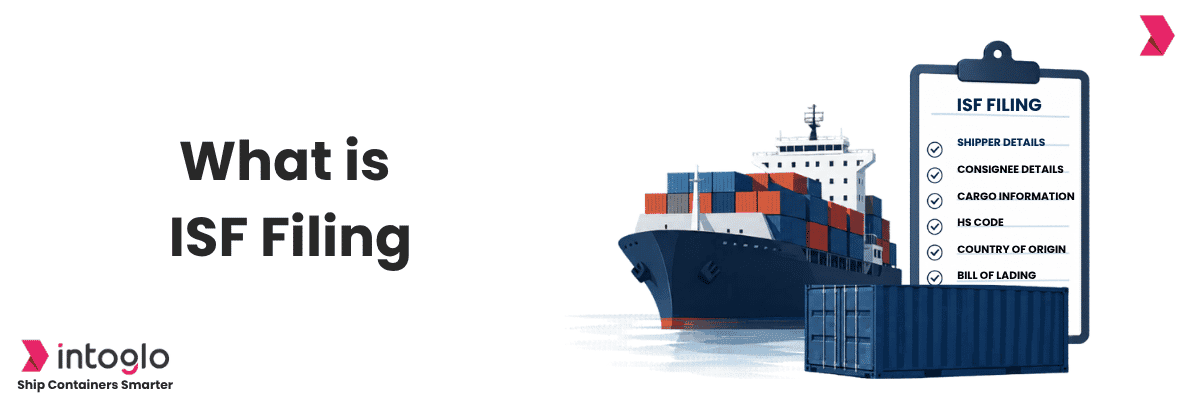
ISF stands for Importer Security Filing. It is a mandatory requirement by the US Customs and Border Protection (CBP) for every ocean shipment entering the United States.
It is also called "10+2" because the filing has two parts:
- 10 data elements provided by the importer or their customs agent.
- 2 data elements provided by the ocean carrier.
Think of ISF as a pre-arrival declaration. Before your container sails, US Customs wants to know what’s inside, who shipped it, and where it’s going. This helps CBP screen risky cargo early and clear compliant shipments faster.
Which ISF Filing Applies to You?
There are two ISF types, depending on where your cargo is going.
ISF-10 (Standard Filing)
This applies to most Indian exporters shipping goods to be sold in the US. It requires 10 importer data elements + 2 carrier elements.
ISF-5 (Transit Shipments Only)
This applies only when cargo passes through the US but is not imported for sale, such as:
- FROB (stays on vessel)
- IE (enters the US and is immediately re-exported)
- T&E (transits through the US to another country)
If you are selling to a US buyer, ISF-10 applies to you. ISF-5 is rarely relevant for Indian exporters.
Why Does ISF Matter to Indian Exporters?

ISF is filed by a US buyer (the importer), but they cannot file it without your data. They need supplier details, HS codes, packing info, and invoice data. Everything comes from your end. In most cases, the ISF is submitted through an authorized agent (customs broker or freight forwarder) on the importer’s behalf.
If you send incorrect or incomplete information:
- The ISF is filed incorrectly.
- CBP may hold or delay the shipment.
- Your buyer may face penalties.
- You risk losing future orders.
Even small errors can create major problems for your US customer.
What Data Do You Need for ISF Filing?
The ISF needs 12 data points in total. The exporter provides 10, the carrier provides 2.
Importer & Supplier Details:
1. Supplier name and address: Your company's full registered name and address.
2. Seller name and address: The selling party - usually the same as the supplier.
3. Ship-to name and address: The final delivery address in the United States.
4. Container stuffing location: Where the container was packed/loaded.
5. Consolidator name and address: The party that grouped LCL cargo (if applicable)
6. Importer of Record (IOR) number: Your US buyer's customs ID number
7. Consignee number: The official recipient of the goods in the US
8. Country of Origin: India - must match your commercial invoice exactly
9. HTS Code: US Harmonized Tariff code for each product - verify this carefully
10. Bill of Lading numbers: House Bill and Master Bill (including SCAC code).
Carrier Details:
11. Vessel stow plan: Where the container is positioned on the ship.
12. Container status messages: Real-time tracking updates during transit.
Tip: Get your HS codes right. Incorrect HTS codes are one of the most common reasons ISF filings get flagged or rejected by CBP.
When Must the ISF Be Filed?

The ISF must be submitted at least 24 hours before the vessel departs for the US. Not 24 hours before arrival.
ISF Filing Step-by-Step Process
This is how ISF filing works in real shipments:
1. Booking is confirmed with the shipping line/freight forwarder.
2. Exporter shares shipment details (invoice, packing list, HS/HTS code, shipper info, stuffing location, etc.)
3. The US importer or their customs broker prepares the ISF using this data.
4. ISF is filed with CBP 24+ hours before vessel departure.
5. Shipping line submits the stow plan and container status messages.
6. CBP reviews the filing and may clear, inspect, or flag the shipment.
LCL Shipments: The Deadline Is Tighter
For LCL cargo, goods are consolidated at a Container Freight Station (CFS) before vessel loading. So exporters must share ISF details 48–72 hours before the CFS cut-off, not just 24 hours before vessel departure.
ISF filing depends on accurate shipment details and timely coordination. Intoglo helps Indian exporters manage India–USA ocean shipments smoothly by supporting documentation flow, shipment planning, and compliance coordination - reducing last-minute hassle.
To explore how Intoglo can support your India-USA shipping, connect with us:
📩 contact@intoglo.com | 📞 +91 84697 08714
Conclusion
ISF filing is mandatory for all ocean shipments to the US. It must be filed on time and with accurate data. As an Indian exporter, your responsibility is to share complete and correct shipment details with your freight forwarder early. This helps avoid delays, penalties, and buyer disputes.
FAQs
Who actually files the ISF - exporter or US buyer?
Your US buyer (the importer) files the ISF. But they cannot do it without your data. If you provide wrong or incomplete information, the filing will be incorrect - and the delay or penalty hits your shipment, even though you did not file it yourself.
What is the difference between ISF-5 and ISF-10?
ISF-10 is for goods being imported and sold in the US - this is what most Indian exporters deal with. ISF-5 is only for transit shipments that pass through the US without being sold there. If you are exporting to a US buyer, ISF-10 applies to you
If you ship LCL. Does the 24-hour rule still apply?
loads, so you need to provide ISF data 48–72 hours before the CFS cut-off. Confirm the exact deadline with your freight forwarder at the time of booking.
Does ISF apply if I ship by air to the USA?
No, ISF only applies to ocean freight. Air shipments have different CBP requirements - ISF is not one of them.