Quick Overview
When you ship goods from India to the USA, you pay more than just ocean freight, and one charge that regularly surprises exporters is wharfage.
- Wharfage is a mandatory port charge charged by port authorities for using terminal infrastructure during the loading or unloading of cargo.
- It may appear as Cargo Dues (CD) on port invoices and can be charged at both origin and destination ports.
- It is not a single flat fee and can vary based on factors like cargo type, container size, and port location.
- Payment depends on the Incoterm: Under FOB, the exporter pays at the origin, and under EXW, the importer pays from the start.
Now that you have a quick idea of why wharfage shows up in shipping costs, let’s understand what wharfage charges actually mean and what they cover.
What Are Wharfage Charges?
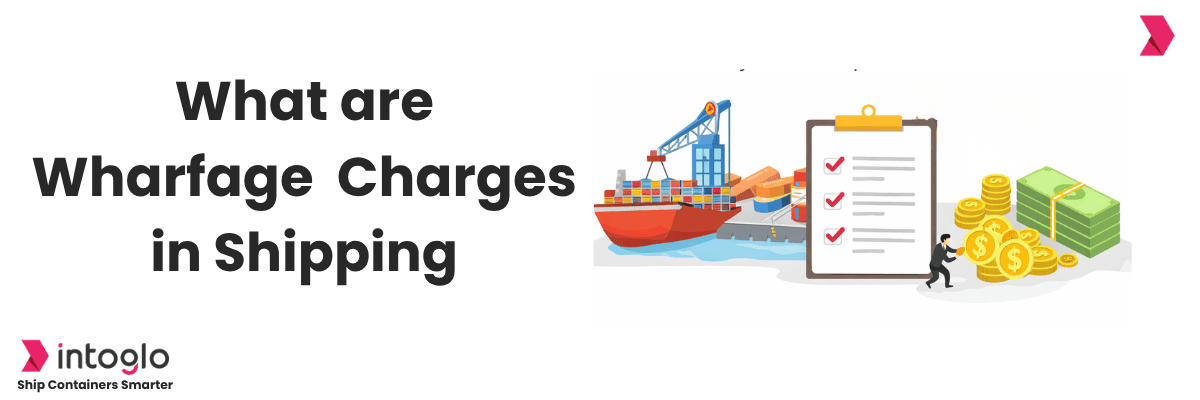
Wharfage charges are mandatory port fees imposed by port authorities for using a wharf, quay, or berth to load or unload cargo from a vessel. You are paying for access to port infrastructure - the platform, the equipment, and the operational systems that make cargo movement possible.
In many countries, these fees go by the name Cargo Dues or CD. The label changes. The purpose does not. Port cost structures published by global trade bodies like UNCTAD highlight how terminal and port charges can significantly impact overall shipping costs.
What Do Wharfage Charges Fund?
These fees are not arbitrary. They cover real, recurring costs that keep ports operational:
- Infrastructure maintenance: Repair and upkeep of docks, platforms, loading equipment, and port facilities.
- Berth scheduling: Allocation of ship berths, coordination of vessel arrivals and departures.
- Operational efficiency: Labour coordination, cargo handling logistics, and turnaround time management.
- Safety and regulatory compliance: Meeting national and international maritime safety and environmental standards.
- Cost recovery: Ports incur significant expenditure on docking services and facility upgrades. Wharfage ensures financial viability.
Efficient ports reduce turnaround times for ships, which lowers your overall shipping costs. Wharfage is the mechanism that funds this efficiency.
What Wharfage Does Not Cover
Wharfage primarily covers access to port facilities for cargo movement. These services are always charged separately:
- Cargo inspection: Customs examination or quality checks.
- Sorting and weighing: Organizing or measuring cargo at the terminal.
- Labour/stevedoring: Physically moving cargo on or off the vessel (covered by arrastre charges).
- Anchorage fees: If a ship waits at anchor before berthing, that is billed separately.
Never assume one fee covers everything. Always request a full cost breakdown from your freight forwarder.
Where Do Wharfage Charges Apply?
Wharfage is not limited to ports with traditional wharves. The same charge applies wherever a vessel berths:
- Wharves: Concrete or steel platforms where ships dock alongside.
- Quays: Walled shore structures used for mooring vessels.
- Berths: Designated mooring positions within the port.
Wharfage may apply at the loading port, the discharge port, or both, depending on the port tariff and shipment terms.
Factors That Determine Your Wharfage Rate

Wharfage is not a flat, universal fee. Several variables influence your specific charge:
- Vessel size and type: A large container ship occupies more resources and space than a smaller vessel. Bigger ships attract higher charges.
- Cargo type and quantity: Bulk grain is handled differently from electronics or machinery. The resources required to handle your goods determine the rate.
- Container size: For containerized cargo, a 40-foot container (FEU) typically attracts a higher charge than a 20-foot container (TEU).
- Port location: JNPT (Mumbai) rates differ from Mundra, Nhava Sheva, or any US destination port. Always verify port-specific tariffs.
Port authorities publish wharfage tariffs annually. Your freight forwarder should be able to provide the current rate applicable to your shipment.
Types of Wharfage Charges
Wharfage rates vary by cargo category. Here are the four main types Indian exporters need to know:
1. General Wharfage
Applies to non-containerized or irregular cargo goods that do not fit standard containers. Charged by weight or volume. Common for machinery, project cargo, or oversized items.
2. Container Wharfage
The most relevant type for Indian exporters. Applies to standard FCL (Full Container Load) shipments. Charged per container, typically a flat rate per TEU (20-foot) or FEU (40-foot). Straightforward to estimate in advance.
3. Bulk Cargo Wharfage
For large, loose shipments - grain, coal, fertilizers, iron ore. Usually charged per metric ton. Rates are set separately due to specialized handling infrastructure and equipment involved.
4. Ro-Ro Wharfage
For wheeled cargo that drives on and off the ship - cars, tractors, construction machinery. Charged by vehicle type or length. Relevant for auto exporters and heavy equipment manufacturers shipping to the USA.
Planning an FCL shipment from India to the USA? Intoglo provides door-to-door FCL shipping with complete cost transparency. No bundled surprises, every charge is broken down clearly before your shipment moves. You can also download our updated sailing schedule to plan your shipments with accurate cut-off dates and ETD/ETA timelines.
Need help with your shipment? Reach out to Intoglo:
📩 contact@intoglo.com | 📞 +91 84697 08714
Conclusion
Wharfage is a standard, unavoidable port fee, but it is not a black box. Knowing what it funds, what it excludes, and which type applies to your cargo puts you in control of your shipping costs. Container wharfage is what most Indian exporters to the USA will encounter. The rest depends on your cargo type and the ports involved.
FAQs
Is wharfage the same as port charges?
No, Port charges is a broader term covering dockage, anchorage, security, and other services. Wharfage is one specific component - the fee for using the wharf to move cargo.
Does an Indian exporter always pay wharfage?
It depends on your Incoterm. Under FOB, the exporter pays wharfage at the port of origin. Under EXW, the buyer takes responsibility from the start. Always confirm with your contract
Will wharfage appear as a line item on my invoice?
Usually not. Shipping lines bundle wharfage into Terminal Handling Charges (THC). Ask your freight forwarder for a THC breakdown to confirm what is included.
Do wharfage rates change?
Yes, Port authorities revise rates annually. Rates also vary by port - JNPT charges are different from Mundra or the Port of Los Angeles. Always verify current rates before budgeting a shipment.