Quick Overview
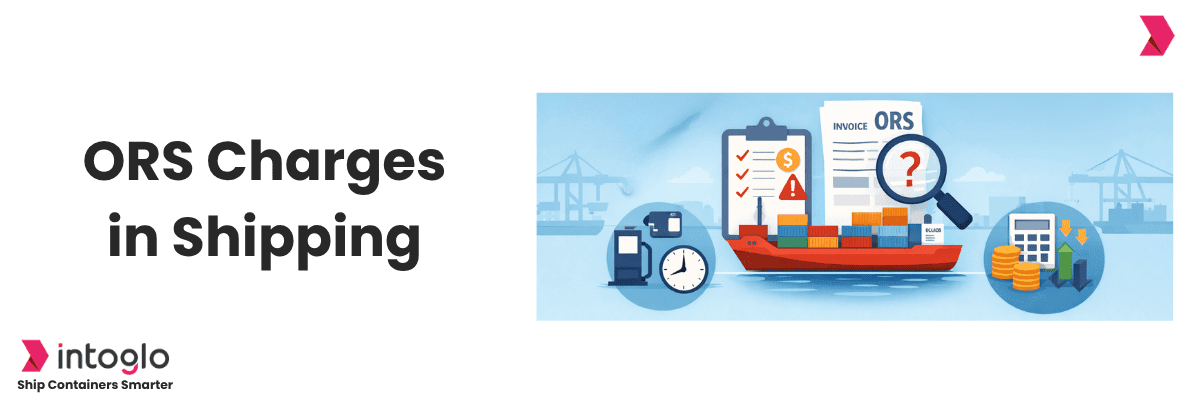
ORS (Operational Recovery Surcharge) is an additional charge that shipping lines apply to recover extra costs caused by operational disruptions.
- ORS is usually charged per container for FCL shipments, and per CBM or freight ton for LCL shipments.
- There is no standard ORS formula, so rates can vary by carrier, route, and disruption severity.
- ORS can change frequently with short notice, so always check the carrier advisory and effective dates before accepting the invoice.
- To reduce ORS impact, add a pricing buffer and avoid peak disruption periods.
Want to understand ORS basics before diving deeper? Read our article on: What Is Operational Recovery Surcharge in Shipping?
How Is ORS Calculated?
There is no single universal formula for ORS. Each shipping line calculates it using its own internal model. But most use the same core inputs:
- Container type and size: ORS is charged per container. Smaller 20’ containers (TEU) usually have the lowest rate, while 40’ containers (FEU), high-cube, and refrigerated (reefer) containers cost more due to extra handling and space requirements.
- Disruption costs: Shipping lines include additional expenses caused by disruptions, such as extra fuel consumption, port waiting fees, or costs for alternative routes.
- Cargo volume on the route: When a disruption affects many containers, the cost is spread across them, lowering the ORS per container. Fewer containers mean a higher per-container charge.
- Route-specific factors: Delays at key transshipment hubs like Colombo, Dubai, or Singapore can increase costs, and carriers adjust ORS accordingly for the affected route.
ORS for FCL vs LCL Shipments
The type of shipment you're making affects how ORS is applied.
- Full Container Load (FCL): ORS is a flat rate per container. Predictable and easy to budget.
- Less Than Container Load (LCL): ORS may be applied per CBM (cubic metre) or per freight ton. Multiple shippers share a container, so the calculation gets more complex.
For high-frequency LCL shippers, ORS variability can be a real budgeting challenge. If you're shipping LCL regularly, ask your freight forwarder for a monthly ORS outlook. A good one will provide this.
How to Identify and Dispute Wrong ORS Charges

ORS errors are common because carriers process invoices in bulk. Here's how to protect yourself:
1. Check the ORS Announcement: Ensure every ORS charge has a carrier advisory showing rate, container type, route, and effective dates.
2. Verify Container Type and Route: Confirm the ORS matches your container type and shipping route.
3. Check Effective Dates: ORS has a start date and sometimes an end date. If your shipment sailed before the ORS effective date, you should not be charged.
4. Flag Discrepancies in Writing: Email your forwarder with the invoice, advisory, and issue. Most issues are resolved at this stage. Keep a record.
5. Escalate if Needed: If the freight forwarder cannot resolve the issue, contact the shipping line with your bill of lading and documents.
Pro tip: Review invoices within 7 days to stay within dispute windows.
How to Minimise the Impact of ORS on Your Business
You may not be able to avoid ORS, but you can manage it better:
- Add ORS buffer in pricing: Keep an extra USD 100–200 per container while quoting buyers.
- Ship in stable periods: Avoid booking during high-risk disruption times like holidays, monsoons, or major global events.
- Prefer FCL over LCL: FCL ORS is usually fixed per container, while LCL ORS can vary.
- Choose a proactive forwarder: Work with a freight partner who informs you about ORS changes before booking.
- Combine shipments when possible: Consolidating orders reduces the number of times you pay ORS.
Challenges and Criticisms of ORS Charges
ORS charges often create frustration for shippers because:
- No fixed calculation method: Each shipping line sets ORS differently, even for the same disruption.
- Low transparency: Exporters are charged ORS but rarely get a clear explanation for the amount.
- Short notice: ORS is sometimes announced just a few days before it applies.
- Multiple surcharges together: ORS may be added on top of BAF, PSS, and other charges, increasing total costs.
- Unfair for small exporters: Large shippers can negotiate better rates, but smaller exporters usually cannot.
What Is the Future of ORS Charges in Shipping
ORS will likely become more structured and predictable over time. Key trends include:
- AI-based pricing: Carriers may use AI to forecast disruptions and adjust ORS earlier with better notice.
- More transparency tools: Blockchain and digital systems could improve tracking of surcharge announcements and reduce inconsistencies.
- Green compliance surcharges: ORS-like charges may increase due to carbon regulations and cleaner fuel adoption (example: EU ETS impact).
- Stronger regulatory scrutiny: Authorities in the US, EU, and India are paying closer attention to how carriers apply surcharges.
- Standardisation efforts: Industry bodies like FIATA and BIMCO are pushing for globally consistent surcharge frameworks. Progress is slow, but the direction is toward more standardisation.
ORS is not going away, but it may become more transparent and easier to plan for.
Intoglo specialises exclusively in the India to USA trade lane. We help Indian exporters manage ORS and other surcharges with transparent, itemised pricing and proactive advisory tracking. With direct carrier relationships and dedicated teams, we ensure you stay informed, avoid surprise charges, and resolve invoice disputes faster.
Need help shipping from India - USA smoothly? Reach out to Intoglo:
📩 contact@intoglo.com | 📞 +91 84697 08714
Conclusion
ORS is complex but manageable. Now that you know how it's calculated, how to verify charges, and how to minimise its impact, you're in a much stronger position as an exporter. The key is to work with a freight partner who keeps you informed, shows you every charge clearly, and fights your corner when something looks wrong.
FAQs
How often does ORS change on India-to-USA shipments?
ORS changes whenever the underlying disruption changes. Some surcharges last a few weeks; others (like those triggered by the Red Sea crisis) can last many months. Shipping lines issue advisories when rates are introduced, adjusted, or removed.
Can I claim a refund if ORS was applied incorrectly?
Yes, but you must raise the dispute quickly, ideally within 7–14 days of the invoice date. Provide the carrier advisory, your invoice, and a written explanation of the discrepancy to your freight forwarder or directly to the shipping line.
Does ORS apply to air freight from India to the USA?
ORS is primarily an ocean freight surcharge. Air freight has its own set of surcharges (fuel surcharge, security surcharge, etc.) that serve similar purposes but are calculated differently.
Will ORS go away as shipping becomes more stable?
Unlikely - but it will evolve. As long as global shipping faces disruptions (and it always will), carriers will need mechanisms to recover unexpected costs. The hope is that future ORS frameworks will be more transparent, predictable, and consistently applied across carriers.