Quick Overview
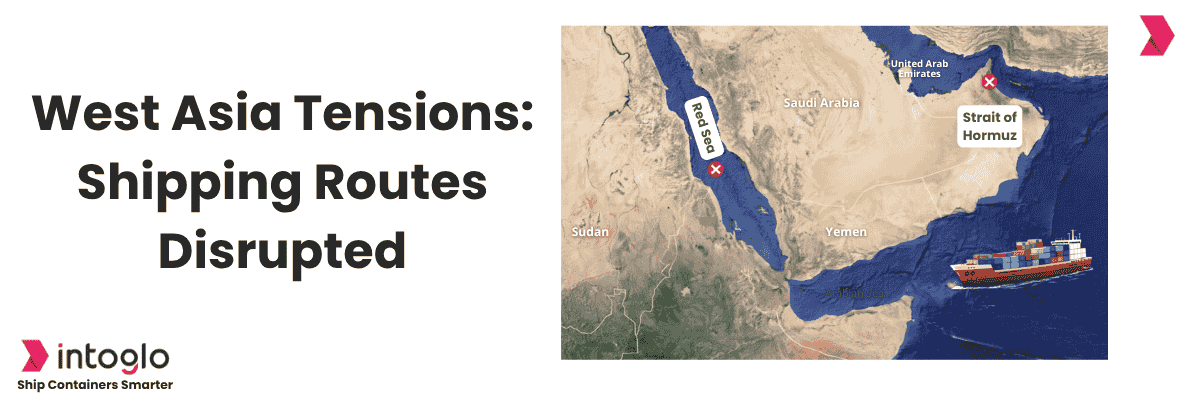
On 28 February 2026, US-Israeli strikes on Iran triggered a major shipping crisis. The Strait of Hormuz is blocked, and the Red Sea remains closed due to Houthi threats. Around 138 container ships (~470,000 TEU) are stuck in the Persian Gulf. India–USA shipments are delayed by 10–14 days, war risk insurance is up 50–100%, and freight rates are rising again.
For the first time in history, both major Middle East shipping routes - the Strait of Hormuz and the Suez Canal/Red Sea - are closed to commercial ships. All major shipping lines have stopped using these routes. Now, all shipments from India to the USA are being sent around the Cape of Good Hope, which takes a longer path.
How the Gulf Conflict Brought Shipping to a Halt
- 28 Feb 2026: US and Israeli forces struck Iranian targets. Iran responded with missile and drone attacks across the Gulf.
- 1 Mar 2026: MSC suspended Middle East bookings. Maersk paused Trans-Suez sailings through Bab el-Mandeb, and major carriers stopped Hormuz transits within 48 hours.
- Early Mar 2026: 138 container ships (~470,000 TEU) were stranded in the Persian Gulf. Kuwait evacuated vessels, and Bahrain suspended port operations. Qatar suspended all maritime navigation. A fire broke out at Jebel Ali's berths from aerial interception debris.
- 11 Mar 2026: A cargo vessel was struck by an unknown projectile in the Strait of Hormuz, causing a fire and crew evacuation. Bulk carrier transits through Hormuz dropped 44% from pre-conflict levels.
- 24 March 2026: The US Federal Maritime Commission (FMC) rejected carrier requests to shorten the 30-day notice period for new conflict-related surcharges.
- 27 March 2026: The crisis entered its fourth week with no ceasefire. Cape of Good Hope routing is now the global standard. Approximately 10.7% of the global container fleet is directly impacted.
Current Status of Key Shipping Chokepoints

Here’s a quick snapshot of the main shipping routes in the Middle East and how the ongoing conflict is affecting India–USA shipments:
| Chokepoint | Current Status | Impact on India–USA |
| Suez Canal / Red Sea | Avoided due to ongoing conflict; not officially closed | Transit times increased by 10–14 days; ME11/MECL services rerouted via Cape of Good Hope |
| Strait of Hormuz | Effectively restricted; most commercial traffic suspended | Gulf port cargo stranded; 138 ships (~470,000 TEU) trapped |
| Bab el‑Mandeb | High risk; Iran has warned it could threaten the strait in case of further escalation, but has not officially closed it. | No official closure, but carriers are avoiding the area, which adds pressure on rerouting via the Cape of Good Hope. |
| Cape of Good Hope | Open but heavily congested | Default alternative route; longer transit and higher freight costs |
How the Crisis Is Affecting India–USA Shipments?
The ongoing West Asia crisis is directly affecting shipping between India and the USA.
1. US East Coast Services - Rerouted via Cape of Good Hope
Due to escalating security risks in the Strait of Hormuz and the Red Sea, all major shipping lines operating India-USA East Coast services are now rerouting via the Cape of Good Hope, avoiding the Suez Canal and key Middle East chokepoints.
This shift impacts major carrier networks, including Maersk and CMA CGM (including OOCL/COSCO-linked services). Several carriers have also announced operational disruptions, such as blank sailings, further tightening capacity on the East Coast trade lane.
2. Transit Times - What to Expect
- India to US East Coast (via Cape): 35–40 days (previously 25–30 days via Suez)
- India to US West Coast (via Cape): 28–35 days (largely unchanged; this route doesn’t use Suez)
- Additional transit time added by Cape rerouting: 10–14 days
3. Freight Rates - Rising Again
Spot rates had been softening through early 2026 as carriers prepared to return to Suez. That trend has now reversed.
- War risk insurance premiums: Up 50-100%. Some marine insurers called Protection & Indemnity (P&I) clubs have stopped providing coverage for ships operating in the Gulf region.
- Emergency Bunker Surcharges (EBS): Being applied by multiple carriers across India–USA lanes
- Spot rate direction: Rates expected to continue softening on most lanes, but will not fall as sharply as anticipated - fewer Suez returns mean tighter effective capacity
- Peak Season Surcharge (PSS): Higher chance of enforcement as peak season approaches.
4. Gulf Port Cargo - Stranded Shipments
Indian exporters with cargo transiting through Gulf ports - Dubai (Jebel Ali), Sharjah, Abu Dhabi - face disruption to both connections and transshipment
- 138 container ships (~470,000 TEU) trapped in the Persian Gulf as of early March
- Jebel Ali Port: Jebel Ali is operational but under strain, with a fire caused by debris from aerial interception at one berth, and congestion is rising.
- Port of Salalah (Oman): Maersk temporarily suspended operations at Salalah after an Iranian drone attack on 28 March, increasing transshipment disruption risk for Gulf-routed cargo.
- Other transshipment hubs (Singapore, Tanjung Pelepas, Port Klang): Risk of bottlenecks for Gulf-bound cargo diverted away from Hormuz.
What Indian Exporters Should Do Right Now
With major routes disrupted and transit times increasing, Indian exporters should take immediate steps to avoid delays, unexpected costs, and missed delivery commitments.
- Confirm your shipping route with your freight forwarder. India–USA East Coast cargo is moving via the Cape of Good Hope, adding 10–14 extra days.
- Inform your US buyers about delays and update delivery timelines. Keep written proof of disruptions in case you need to justify delays.
- Check your marine insurance as war risk premiums have increased 50–100%. Make sure Cape routing is covered.
- Avoid Gulf transshipment hubs like Jebel Ali and Khalifa Port until the situation improves.
- Book freight rates early because spot rates and surcharges are changing quickly.
- Monitor Federal Maritime Commission (FMC) surcharge updates, as major carriers have applied for new surcharge types.
Intoglo can support Indian exporters during this disruption by helping with rerouting shipments, sharing updated sailing schedules, and providing instant freight quotes to help you book faster and avoid sudden rate hikes.
📩 Need help rerouting your India–USA shipment? Contact Intoglo:
📩 contact@intoglo.com | 📞 +91 84697 08714
Conclusion
With the Suez Canal and Strait of Hormuz closed, shipments from India to the USA will take longer and cost more. The only route is via the Cape of Good Hope. Exporters should coordinate with freight forwarders, check insurance, and update US buyers.
FAQs
Is the Suez Canal completely closed for India–USA shipments?
Yes, effectively. All major carriers - Maersk, CMA CGM, Hapag-Lloyd, MSC, and others - have suspended Suez Canal transits. All India–USA East Coast services are now routing via the Cape of Good Hope, adding 10–14 days to transit times.
What is happening to cargo that was already in the Gulf?
Approximately 138 container ships carrying around 470,000 TEU are trapped in the Persian Gulf. Carriers are working to reroute these vessels, but delays of several weeks are expected for affected cargo. Contact your freight forwarder immediately if your cargo was booked through a Gulf hub.
Will freight rates increase for India–USA shipments?
Yes, war risk surcharges, Emergency Bunker Surcharges, and general rate increases are already being implemented by multiple carriers. The FMC rejected requests to shorten the 30-day notice period for new surcharges on 24 March - giving exporters a window to book before new charges take effect.
How long will this disruption last?
No reliable timeline is available. Industry analysts expect Cape of Good Hope routing to remain the standard through at least Q2 2026. A return to Suez Canal transits in 2026 is now considered unlikely. Intoglo is monitoring the situation daily and will update exporters as developments occur.
Can I still ship from India to the USA during this crisis?
Yes, shipping is still possible, but most India–USA East Coast shipments are now moving via the Cape of Good Hope, which increases transit time and cost.
Will shipments through Dubai or Gulf transshipment hubs face delays?
Yes, cargo routed through Gulf hubs like Jebel Ali, Abu Dhabi, and Sharjah may face delays due to congestion and limited vessel movement. Exporters should avoid Gulf transshipment routes until the situation improves.