Quick Overview
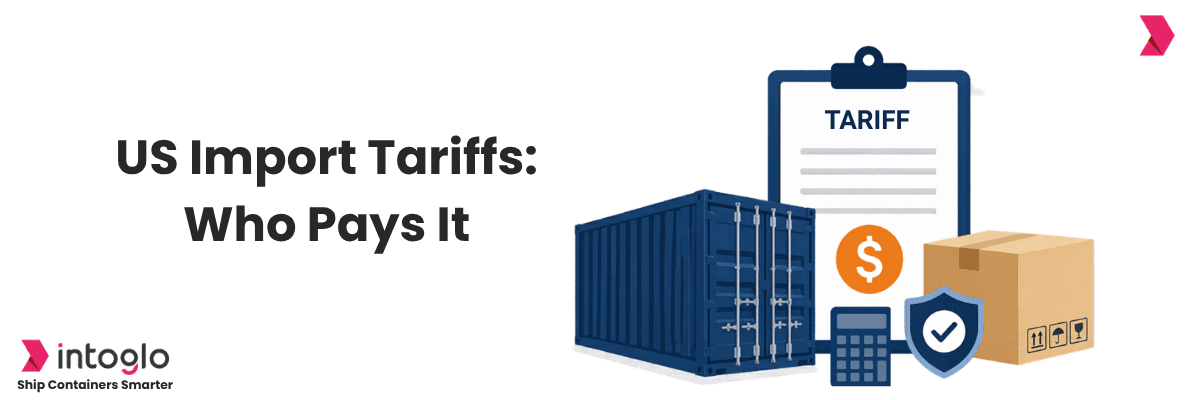
US import tariffs are customs duties charged by the US government on goods entering the United States.
- Tariffs are collected by the US Customs and Border Protection (CBP) at the time of import.
- These tariffs are paid by the US Importer of Record, usually the US buyer or their customs broker.
- Duty rates depend on the HS code, declared customs value, and country of origin.
- Incoterms like FOB, CIF, and DAP usually mean the importer pays duties, while DDP means the exporter pays them.
Now that you have a quick idea of how US import tariffs work, let’s see who really pays them when goods enter the United States.
What Are Tariffs and How Are They Applied?
A tariff is a tax imposed by a government on imported goods. In the US, tariffs are collected by the US Customs and Border Protection when goods enter the country.
Tariffs are generally applied in two main ways:
- Ad valorem tariff: A percentage of the declared product value (example: 10% duty on $100 = $10).
- Specific tariff: A fixed amount based on quantity (example: $2 per unit).
Tariff rates depend mainly on the HS code and country of origin, so exporters must ensure accurate classification and invoice details to avoid disputes and clearance delays.
Who Pays Tariffs on US Imports?
Legally, tariffs are paid by the US Importer of Record, usually your US buyer or their customs broker. The Indian exporter does not pay tariffs directly to the US government. The importer pays the tariff during customs clearance before the shipment is released.
Who Ultimately Bears the Cost of Tariffs?
Even though the importer pays the tariff legally, the cost may be passed back through price negotiations. If your product is easily replaceable, buyers may demand discounts to keep their landed cost competitive. That’s why tariffs impact exporters even when they don’t pay duty directly.
How Tariffs Are Collected in the US?

Understanding the import process helps you avoid documentation mistakes. Here’s what happens when your cargo reaches the US:
1. The importer or broker files an entry with CBP.
2. CBP checks product details and HS codes.
3. CBP calculates duties and tariffs.
4. The importer pays the amount due.
5. CBP releases the shipment for delivery.
The documents used include:
- Commercial invoice
- Packing list
- Bill of lading
- HS code and product description
- Country of origin
If any of these are inaccurate, clearance may be delayed, and the buyer may face additional charges.
How Incoterms Decide Tariff Responsibility
Tariff responsibility depends heavily on Incoterms, which define who handles freight, insurance, and customs responsibilities.
- EXW: Importer handles transport and import duties.
- FOB: Exporter loads cargo; importer pays duties in the US.
- CIF: Exporter pays freight/insurance; importer pays duties.
- DAP: Exporter delivers to the destination; importer pays import duties.
- DDP: The exporter is responsible for duties and tariffs.
For Indian exporters, the biggest risk is DDP because tariff increases can directly reduce their profit. Avoid DDP unless you fully understand US customs costs and have protection in pricing.
What Indian Exporters Should Do Before Shipping
Before confirming an India–USA shipment, ensure tariff responsibility is clear, and documentation is accurate.
- Clearly mention the agreed Incoterm in the contract and invoice.
- Clarify the Importer of Record.
- Verify the HS code.
- Use clear invoice descriptions.
- Align with the buyer on the expected duty impact.
To make this process easier, freight forwarders like Intoglo support Indian exporters with India–USA FCL shipping, documentation checks, and smoother coordination for customs clearance and delivery.
Need help with your shipment? Reach out to Intoglo:
📩 contact@intoglo.com| 📞 +91 84697 08714
Conclusion
US tariffs are paid by the US importer, but exporters still feel the impact through price negotiations. Incoterms and contracts decide whether tariffs stay with the buyer or shift back to you. Clear documentation and correct trade terms protect your margins.
FAQs
Who pays tariffs when importing into the USA?
The US Importer of Record pays tariffs directly to US Customs and Border Protection (CBP) at the time the shipment enters the US
Do Indian exporters ever pay US import duty?
Not directly, however, if you ship under DDP (Delivered Duty Paid) terms or sign a contract clause that shifts duty responsibility, you may end up covering the tariff cost.
Can tariffs be passed back to the exporter?
Yes, even if the importer pays duty legally, they may ask you to reduce product prices so their landed cost remains competitive.
What is the biggest tariff mistake exporters make?
The biggest mistake is using the wrong HS code or writing unclear invoice descriptions, which can lead to higher duty rates, customs delays, and disputes with the buyer.
Does the shipping Incoterm decide who pays US import tariffs?
Yes, Incoterms strongly influence tariff responsibility. Under terms like FOB, CIF, and DAP, the buyer usually pays duties. Under DDP, the exporter becomes responsible for import duties and tariffs.
What happens if US Customs finds the declared value or HS code is incorrect?
CBP can delay clearance, reclassify the goods, demand additional duty, and even impose penalties. In serious cases, shipments may be held for inspection, which increases storage and demurrage costs.