
Quick Overview
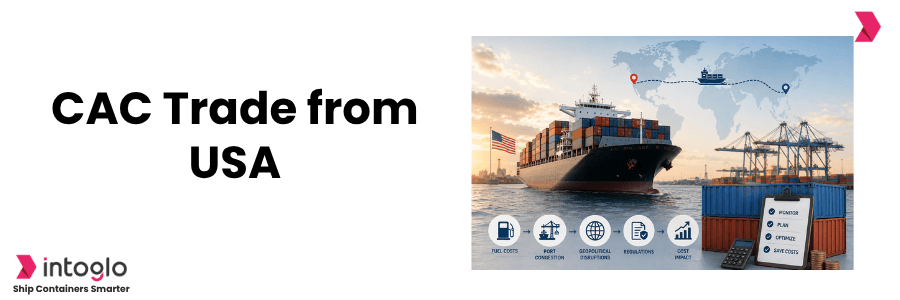
The CAC trade from the USA to Far East ports connects major U.S. export markets with ports across East and Southeast Asia. On this trade lane, contingency-related costs can be influenced by fuel prices, port congestion, geopolitical disruptions, environmental regulations, currency movements, and changing trade policies. Understanding these factors helps exporters anticipate freight-cost changes and make better routing and budgeting decisions.
Key Facts About the USA-Far East CAC Trade:
- CAC can affect shipping costs on specific USA-Far East trade lanes.
- Fuel prices remain an important driver of vessel operating costs.
- Port congestion can increase operational expenses and delays.
- Geopolitical events can force carriers to modify routes.
- Environmental regulations can increase compliance and operating costs.
- Currency and economic fluctuations can complicate freight budgeting.
- Route diversification and proactive cost planning can reduce exposure to unexpected increases.
Major Challenges Affecting the CAC Trade
Geopolitical Disruptions
Geopolitical tensions can significantly affect international shipping routes. Conflicts, sanctions, trade disputes, and regional instability may force carriers to divert vessels or modify schedules.
Longer routes can increase fuel consumption, vessel operating costs, and transit times. These changes can contribute to higher contingency-related costs for shippers.
Port Congestion
Port congestion is another important factor affecting the USA–Far East trade. When terminals experience congestion, vessels may face longer waiting times while containers can experience extended dwell periods.
Additional handling, storage, equipment repositioning, and schedule changes can increase the overall cost of moving cargo. Exporters should therefore consider port performance when selecting an origin port and sailing schedule..
Environmental Regulations
The shipping industry is facing increasing environmental requirements. Carriers are investing in cleaner fuels, more efficient vessels, and technologies designed to reduce emissions.
While these measures support long-term sustainability, compliance can increase operating expenses in the short term. These additional costs may influence freight rates and applicable surcharges.
Economic and Currency Fluctuations
International shipping is closely connected to global economic conditions. Inflation, changes in demand, exchange-rate movements, and shifts in trade policy can all affect freight economics. For businesses moving cargo from the USA to Asian markets, currency volatility can make logistics budgets less predictable.

Strategies for Managing CAC-Related Costs
Negotiate With Carriers
Businesses with consistent shipping volumes can negotiate more predictable pricing structures with carriers. Long-term contracts, volume commitments, and regular rate reviews may provide greater visibility into future logistics costs.
Monitor Carrier Announcements
CAC and other surcharges can change based on market conditions. Exporters should monitor carrier advisories and verify the effective date and scope of any new surcharge before booking. This is especially important when shipping during periods of significant disruption.
Evaluate Alternative Routes
A congested port or disrupted service does not always mean the shipment must be delayed. Exporters can compare alternative ports, carriers, vessel schedules, and inland transportation options. A slightly different route may sometimes provide better reliability or lower total logistics costs.
Build a Contingency Budget
Businesses should avoid budgeting only for the quoted base freight rate. A contingency allowance can provide protection against unexpected surcharge changes, port delays, additional handling, and other operational costs.
Use Technology for Shipment Planning
Digital freight platforms and shipment visibility tools can help businesses monitor schedules, identify disruptions, compare routing options, and improve cost forecasting.
Better visibility allows exporters to react earlier instead of making expensive decisions after a disruption has already occurred.
Managing USA-Far East Shipping Costs
The key is to evaluate the total transportation cost, not just the CAC or base ocean freight rate.
An effective comparison should consider:
| Cost Factor | What to Evaluate |
| Ocean Freight | Base rate and contract terms |
| CAC | Amount, scope, and effective date |
| Port Costs | Handling and terminal charges |
| Inland Transportation | Truck or rail costs |
| Transit Time | Planned and potential delays |
| Storage | Possible additional dwell costs |
| Route | Direct vs alternative routing |
This approach gives exporters a more realistic picture of their shipping cost and service reliability.
Future Outlook for CAC Trade
The USA–Far East shipping environment will continue to be influenced by geopolitical developments, environmental requirements, technology, trade policies, and changes in carrier network strategies.
Route changes and disruptions can quickly affect vessel capacity and operating costs. At the same time, digital tools and improved shipment visibility can help businesses respond faster.
For exporters, flexibility will become increasingly important. Having alternative ports, carriers, and sailing schedules available can reduce dependence on a single shipping option.
How Intoglo Helps
For India-USA FCL shipments, Intoglo helps exporters understand the complete freight cost, including ocean freight, applicable surcharges, customs coordination, inland transportation, and delivery requirements.
Shipping on the USA–Far East lane? Get a quote from Intoglo.
Stay informed about carrier announcements, freight rates, and trade regulations by joining our free 30-minute monthly India-USA Trade Pulse webinar.
📩 contact@intoglo.com 📞+91 84697 08714
Conclusion
CAC-related costs on the USA–Far East trade can be influenced by factors far beyond the control of individual exporters. Fuel prices, port congestion, geopolitical events, regulations, and economic conditions can all affect the cost of moving cargo.
The most effective strategy is to monitor carrier updates, negotiate predictable rates where possible, evaluate alternative routes, and maintain a contingency budget.
For businesses shipping internationally, freight planning should focus on total landed logistics cost and reliability rather than the headline ocean freight rate alone.
FAQs
What is CAC in the USA–Far East trade?
CAC refers to a Contingency Adjustment Charge that carriers may apply to recover unexpected operating costs on a particular trade lane.
What factors affect CAC on the USA–Far East route?
Fuel costs, port congestion, geopolitical disruptions, regulatory requirements, economic conditions, and route changes can influence contingency-related charges.
Can geopolitical events affect CAC?
Yes. Route diversions, longer voyages, port disruptions, and additional operational requirements can increase carrier costs.
How can exporters reduce the impact of CAC?
Exporters can negotiate predictable rates, monitor carrier announcements, compare alternative routes, and maintain a contingency allowance in their logistics budget.
Should exporters focus only on CAC when comparing shipping rates?
No. Businesses should compare the complete logistics cost, including base freight, surcharges, port charges, inland transportation, storage, and potential delay-related costs.