
Quick Overview
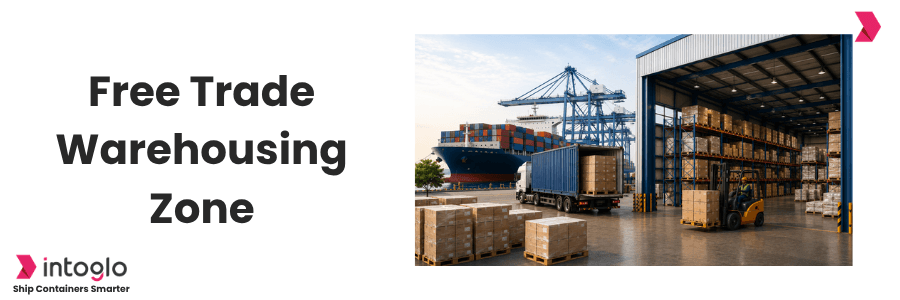
Free Trade Warehousing Zones (FTWZs) are specialized zones within India's Special Economic Zone (SEZ) framework that support international trade, warehousing, and re-export activities. They allow businesses to store, handle, consolidate, and undertake permitted value-added activities on goods while benefiting from the applicable customs and SEZ framework.
For Indian exporters and businesses managing international supply chains, an FTWZ can provide greater inventory flexibility, streamlined cargo handling, and better control over export planning.
Key Facts at a Glance Free Trade Warehousing Zones:
- Free Trade Warehousing Zones operate within India's SEZ framework.
- They are designed primarily for trade and warehousing activities.
- Goods can be stored before re-export or other permitted transactions.
- Permitted activities can include packing, labeling, sorting, and grading.
- FTWZs can support consolidation and deconsolidation of cargo.
- Customs and documentation requirements still apply.
- FTWZs can be useful for businesses managing international inventory.
What is a Free Trade Warehousing Zone?
An FTWZ (Free Trade Warehousing Zone) is a designated warehousing zone established under India's SEZ framework to facilitate international trade and supply-chain operations.
Unlike a conventional warehouse, an FTWZ is structured around international trading and warehousing requirements. Depending on applicable permissions, businesses can receive goods, store inventory, consolidate shipments, deconsolidate cargo, and undertake permitted value-added activities.
A simplified flow is:
Supplier → FTWZ → Storage / Handling → Export or Re-export
This can give businesses more flexibility when goods do not need to enter India's domestic market immediately.

How Does an FTWZ Work?
A business can move eligible goods into an Free Trade Warehousing Zones and hold them there while planning the next stage of the supply chain.
For example, a company receiving goods from multiple suppliers may consolidate them at an FTWZ before exporting a larger shipment. Similarly, imported goods may be stored and subsequently re-exported, subject to applicable customs and SEZ procedures.
The exact customs treatment depends on the nature of the transaction, goods, and applicable regulations.
FTWZ vs Regular Warehouse
| Feature | FTWZ | Regular Warehouse |
| Framework | SEZ framework | Standard warehousing framework |
| Primary use | International trade and warehousing | Storage and distribution |
| Re-export operations | Strong focus | Possible under applicable procedures |
| Value-added activities | Permitted activities subject to rules | Depends on facility |
| Customs treatment | Special SEZ/customs framework | Standard customs framework |
| International inventory | Well suited | Depends on business model |
Benefits of FTWZs for Exporters
1. Flexible Inventory Management
Businesses can hold goods strategically before export, helping them respond to changing customer demand and shipment schedules.
2. Cargo Consolidation
Goods from multiple suppliers can potentially be consolidated before export, improving shipment planning and container utilization.
3. Re-Export Support
FTWZs are designed to facilitate international trading and re-export operations, subject to applicable regulations.
4. Value-Added Handling
Depending on permissions, activities such as packing, labeling, sorting, grading, and other handling operations can be carried out within the zone.
5. Supply-Chain Efficiency
An FTWZ can function as an inventory hub between suppliers, ports, transport providers, and overseas customers.
Who Can Use an FTWZ?
FTWZs can be relevant for:
- International traders
- Manufacturers with global supply chains
- Importers and re-exporters
- E-commerce businesses
- Automotive companies
- Electronics businesses
- Engineering goods exporters
- Companies managing multi-country inventory
The actual benefit depends on shipment volume, product type, inventory cycle, destination, and operating costs.
Documents and Compliance
Using an FTWZ does not remove the need for proper documentation.
| Category | Examples |
| Commercial | Invoice, purchase order, packing list |
| Customs | Bill of Entry, Shipping Bill, declarations |
| Transport | Bill of Lading, delivery documents |
| Regulatory | Product-specific certificates or licenses |
| Inventory | Warehouse and stock records |
Exporters should confirm transaction-specific requirements with the FTWZ operator, customs broker, and relevant authorities.
What Should Exporters Check Before Choosing an FTWZ?
Consider:
- Location and port connectivity
- Storage and handling charges
- Transportation costs
- Minimum volume requirements
- Permitted activities
- Customs procedures
- Re-export requirements
- Documentation support
- Inventory turnover
- Overall cost per shipment
The right decision should be based on the total logistics cost and operational benefit, not simply the availability of customs or tax advantages.
How Intoglo Helps
Whether you are consolidating cargo, planning an FCL export, or moving inventory from an FTWZ to the USA, Intoglo helps connect the different stages of the shipment so exporters can plan their logistics more efficiently.
Planning your next shipment to the USA? Get a quote from Intoglo.
Stay informed about carrier announcements, freight rates, and trade regulations by joining our free 30-minute monthly India-USA Trade Pulse webinar.
📩 contact@intoglo.com 📞 +91 84697 08714
Conclusion
Free Trade Warehousing Zones provide Indian businesses with specialized infrastructure for international warehousing, inventory management, and re-export operations. For exporters, they can offer greater flexibility in consolidating cargo and planning shipments while operating within India's SEZ framework.
Before choosing an FTWZ, exporters should evaluate its location, permitted activities, customs procedures, handling costs, and overall impact on their supply chain. For India–USA exporters, the right FTWZ strategy can help make inventory and FCL export planning more efficient.
FAQs
What is an FTWZ in India?
An FTWZ is a specialized warehousing zone operating within India's SEZ framework to facilitate international trade, storage, handling, and re-export activities.
Is an FTWZ the same as a normal warehouse?
No. An FTWZ operates under a specialized SEZ and customs framework and is specifically designed to support international trade and warehousing.
Can goods be re-exported from an FTWZ?
Yes. Re-export and international trading activities are key functions of FTWZs, subject to applicable customs and SEZ regulations.
Can goods be stored in an FTWZ before export?
Yes, eligible goods can be stored in an FTWZ while the business plans subsequent export or other permitted transactions.
Is an FTWZ useful for India–USA shipments?
It can be useful for exporters that need consolidation, inventory storage, value-added handling, or greater flexibility in export scheduling. The benefit depends on the individual supply chain.