
Quick Overview
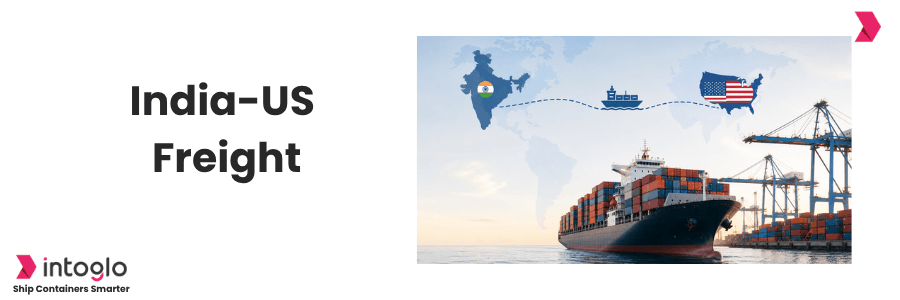
The India-USA trade lane connects one of the world's fastest-growing export economies with its largest consumer market. India US ocean freight rates on this lane are shaped by fuel prices, port congestion, geopolitical rerouting, tariff and duty policy, and vessel capacity constraints. Understanding these factors helps exporters anticipate rate changes and plan bookings more effectively.
Key Facts About India-USA Freight Rates:
- Rerouting around the Cape of Good Hope is adding roughly 1-2 weeks to India-US East Coast transit times.
- West Coast US routings are comparatively more stable and less affected by current rerouting.
- Port congestion at Nhava Sheva (JNPT) and Mundra can drive up detention and demurrage costs independent of the quoted freight rate.
- Ongoing US tariff and duty refund policy adds a second, connected layer of cost uncertainty for exporters.
- Lower export volume versus China means Indian shippers, especially SMBs, have less leverage to negotiate directly with carriers.
- Carrier surcharge advisories should be monitored directly, since contingency-related charges can change with little notice.
- Booking 2-3 weeks ahead of the required ship date helps reduce exposure to last-minute spot-rate spikes.
Why India-US Freight Rates Are Moving Differently
India US ocean freight rates are diverging from global trends because Indian exporters face a distinct combination of rerouting exposure, port congestion, and lower negotiating volume compared to China-origin shippers.
Global ocean freight has been volatile through 2026 due to two overlapping disruptions: continued rerouting around the Red Sea and Strait of Hormuz, and a US import peak season that has run longer than carriers expected. However, India doesn't experience these pressures the same way China does, since routing, port infrastructure, and shipper leverage all differ by origin.

Strategies for Managing Freight Costs
Port congestion at Nhava Sheva (JNPT) and Mundra has been a bigger swing factor for India US ocean freight rates than the headline rate index suggests. Even a few days of backup at origin can cascade into missed vessel connections and additional detention costs.
As carriers reshuffle schedules to avoid high-risk routes, congestion at these ports has become less predictable. Consequently, exporters who only track published rates - without watching berth availability and vessel rollovers - are often surprised by costs that never show up in a rate quote.
Transit Time Impact on the India-US Lane
Transit times matter more for India-origin cargo because vessels avoiding the Red Sea now typically reroute around the Cape of Good Hope, adding one to two weeks to India-US East Coast routings specifically.
West Coast US routings via the Pacific are comparatively less affected. As a result, some exporters are shifting preference toward West Coast entry points to protect delivery schedules, even where the quoted freight rate is similar.
India-US vs China-US: A Quick Comparison
The table below summarizes how the two lanes differ heading into the second half of 2026.
| Factor | India-US Lane | China-US Lane |
| Primary disruption | Red Sea/Hormuz rerouting via Cape of Good Hope | Extended transpacific peak season |
| Rate trend (mid-2026) | Volatile, lane-specific swings | Steady increases via monthly GRIs |
| Origin congestion risk | Higher (Nhava Sheva, Mundra) | Lower, more predictable scheduling |
| Shipper negotiating leverage | Limited for SMB exporters | Higher due to volume scale |
| East Coast transit impact | +1-2 weeks via Cape routing | Minimal change |
| Tariff/refund complexity | Active, evolving duty refund questions | Also active, but larger compliance teams absorb it |
Practical Steps for India-US Exporters
Exporters should book earlier, compare coastal routing options, and treat tariff exposure as part of freight cost planning rather than a separate line item.
Book Earlier Than Usual
With capacity tight and peak season stretching longer than normal, last-minute bookings are getting hit hardest by spot-rate spikes. Booking two to three weeks ahead gives more room to secure space before rates move.
Compare East Coast vs West Coast Routings
Given longer transit times on East Coast-bound cargo via the Cape route, West Coast entry points may offer both faster transit and more rate stability right now. This is worth reassessing even for shippers with an established East Coast routing.
Watch Origin Port Congestion, Not Just Ocean Rates
A quote that looks competitive can still get eaten up by demurrage and detention if cargo sits at Nhava Sheva or Mundra waiting for a vessel slot. Building in buffer time at origin reduces this risk.
Plan Tariffs and Freight Together
Landed cost planning needs to account for both freight rate volatility and duty or refund exposure at the same time. Treating them as separate conversations is a common way exporters get surprised at final settlement.
Common Mistakes Exporters Make on This Lane
- Relying on global or China-focused freight news to plan India-specific shipments
- Booking based on rate alone, without checking origin port congestion
- Assuming East Coast routing is still fastest without checking current Cape of Good Hope transit adjustments
- Treating tariff/duty refund questions as a separate process from freight budgeting
How Intoglo Helps
For India-USA FCL shipments, Intoglo helps exporters understand the complete freight cost, including ocean freight, applicable surcharges, customs coordination, inland transportation, and delivery requirements.
Need help with your India–USA shipments? Get a quote from Intoglo.
Stay informed about carrier announcements, freight rates, and trade regulations by joining our free 30-minute monthly India-USA Trade Pulse webinar.
📩 contact@intoglo.com | 📞 +91 84697 08714
Conclusion
Global rate commentary is useful context, but it isn't a substitute for lane-specific visibility. The India-US corridor in 2026 is shaped by its own mix of Cape of Good Hope rerouting adding 1-2 weeks to East Coast transit, congestion at Nhava Sheva and Mundra, and evolving tariff and duty refund questions. Exporters who track India-specific data - not global averages - and book 2-3 weeks ahead are better positioned to avoid last-minute rate spikes and margin surprises.
FAQs
Why are India US ocean freight rates different from China-US rates?
Different rerouting exposure, port congestion, and shipper volume - even though both lanes face the same global disruptions.
How much longer is transit time due to Red Sea rerouting?
India-US East Coast shipments are typically seeing one to two weeks of added transit time due to rerouting around the Cape of Good Hope.
Is West Coast routing faster than East Coast right now?
For many India-origin shipments, yes - West Coast US routings via the Pacific are less affected by current rerouting than East Coast routings.
Which Indian ports are seeing the most congestion?
Nhava Sheva (JNPT) and Mundra have both experienced periods of congestion in 2026 as carriers adjust schedules around high-risk routes.
How far in advance should I book India-US shipments?
Booking two to three weeks ahead of your required ship date is a reasonable buffer given current capacity constraints and rate volatility.
Do US tariff changes affect ocean freight budgeting?
Yes. Duty and refund exposure should be planned alongside freight rates rather than treated as a separate cost, since both affect total landed cost.
Where can I track India-US freight rates specifically?
Most public freight indices report on global or China-centric lanes. Lane-specific tracking, such as a weekly India-US freight briefing, gives more relevant visibility for Indian exporters.