Quick Overview
Most Indian exporters use the House Bill of Lading (HBL), but even small mistakes can cause delays, payment problems, or cargo holds. Understanding how HBL works helps you manage shipments better and reduce risk. This article covers what HBL is, how it works, key details, and common mistakes to avoid.
When a freight forwarder ships your cargo from India to the USA, they usually issue a House Bill of Lading (HBL). Exporters use it for LC documentation, sharing with the buyer, and tracking responsibility in case of issues. Since most exporters receive an HBL (not an MBL), misunderstanding it often leads to delays and costly mistakes.
Want the complete picture? Read What Is Master Bill of Lading (MBL): A Complete Guide for Indian Exporters to understand how carriers control your shipment and define transport terms.
What is a House Bill of Lading (HBL)?
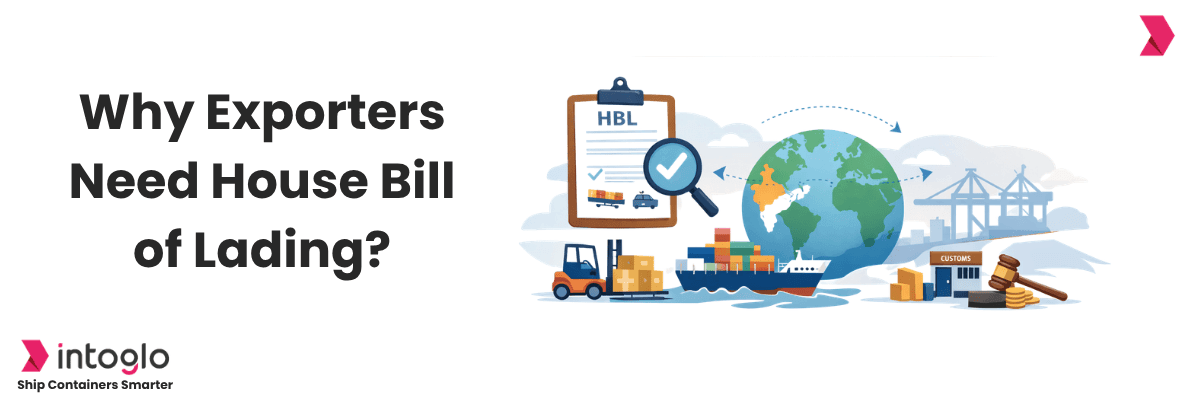
A House Bill of Lading (HBL) is a shipping document issued by a freight forwarder or NVOCC to the exporter (shipper). It confirms that the forwarder has received the goods and will arrange their transportation to the destination.
In the shipping process, the shipper hands over the goods to the forwarder, who then books space with the carrier. The carrier issues a Master Bill of Lading (MBL) to the forwarder, while the forwarder issues the HBL to the shipper.
The HBL performs three functions:
- Contract of Carriage: It is an agreement between the shipper and the freight forwarder, defining how the goods will be handled and transported.
- Receipt of Goods: It acts as proof that the forwarder has received the cargo in the stated condition and quantity.
- Document of Title: It represents ownership of the goods, allowing the holder to claim the cargo at the destination.
What Information is Included in HBL?
A House Bill of Lading (HBL) includes key details required to identify the shipment and ensure smooth handling.
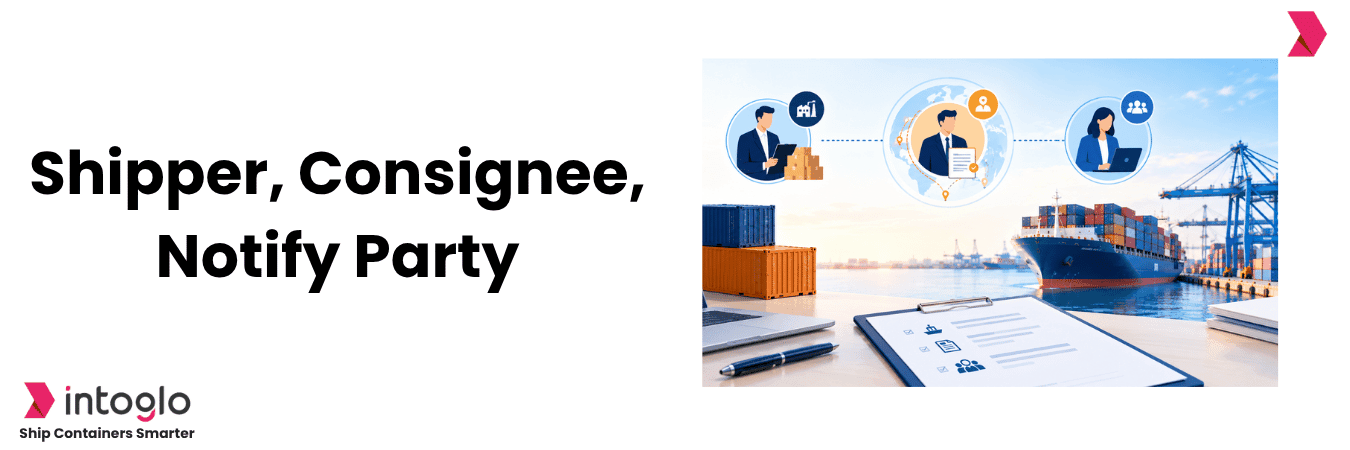
- Shipper details: Full name and address of the exporter (you).
- Consignee details: Full name and address of the receiver in the USA.
- Notify party: Person or company to be informed when cargo arrives at the destination port.
- Cargo description: Type of goods, weight, volume, and packaging details.
- Ports of loading and discharge: Origin and destination ports
- Freight details: Charges, payment terms, and freight conditions
- Forwarder’s signature: Validates the document. Without this, the HBL is not legally binding.
How Does HBL Work in the Shipping Process?
The HBL flows through a clear, step-by-step process. As an Indian exporter, here is exactly what happens:
1. Shipper hands over goods: You deliver your cargo to the freight forwarder at the origin port in India.
2. HBL is issued: The forwarder issues the HBL to you as proof of receipt and commitment to transport your goods.
3. Booking with the carrier: The forwarder books space with the shipping line. The carrier issues the MBL to the forwarder - you will not hold the MBL directly.
4. Cargo tracking and release: Your HBL is used to track the shipment in transit. At the US destination port, the consignee presents the HBL to claim the cargo.
What are the Responsibilities of the Freight Forwarder?
The freight forwarder plays a key role in managing the shipment and ensuring smooth coordination throughout the process.
- Booking cargo with the carrier: Arranges and secures space with the shipping line for your consignment.
- Documentation handling: Prepares and manages all required shipping documents, including the HBL, packing list, and commercial invoice alignment.
- Cargo consolidation (LCL): For Less than Container Load shipments, it combines multiple shipper consignments into one container and issues separate HBLs for each.
- Coordination: Acts as the central link between you (the shipper) and the carrier, ensuring timely movement and communication at every stage.
How to Fill Out a House Bill of Lading

Getting the HBL right the first time saves time, money, and cargo headaches. Follow these steps carefully when working with your forwarder:
1. Enter shipper and consignee details: Add the correct legal names and full addresses of both sender and receiver. Match these exactly with your commercial invoice.
2. Add cargo details: Include the complete description of goods, gross weight, volume, and type of packaging (cartons, pallets, drums, etc.).
3. Mention ports: State the port of loading and the destination port clearly.
4. Include freight terms: Specify whether freight is prepaid (paid by shipper) or collect (paid by consignee). This must match your commercial agreement.
5. Verify all details: Cross-check every field against your commercial invoice, packing list, and letter of credit (if applicable) before the forwarder signs and issues the HBL.
Common Mistakes to Avoid in HBL
Errors in the HBL can lead to delays, cargo hold-ups, and compliance issues. Avoid these common mistakes to ensure smooth shipment handling:
- Incorrect shipper or consignee details: Even a minor spelling error or wrong address can delay cargo release and create disputes at the destination.
- Mismatch with MBL or commercial invoice: Differences between the HBL and supporting documents trigger US customs examinations and cause serious delays.
- Wrong cargo details: Incorrect goods description, weight, or packaging information can affect customs clearance and insurance claims.
- Missing forwarder signature: An unsigned HBL is not a valid document. The cargo cannot be released without it.
Intoglo specialises in India–USA freight forwarding and manages your end-to-end documentation from HBL issuance to final cargo delivery in the United States. Our team carefully verifies shipment documents to prevent documentation errors that can delay cargo release or payments.
Reach out to the Intoglo team to move your shipment smoothly:
📩 contact@intoglo.com | 📞 +91 84697 08714
Conclusion
The House Bill of Lading is not just paperwork - it is your proof of ownership and the key to releasing your cargo in the USA. Indian exporters who understand the HBL process avoid costly errors, customs hold-ups, and payment disputes.
FAQs
What is the difference between an HBL and an MBL?
The HBL is issued by the freight forwarder to the shipper (exporter). The MBL is issued by the shipping line (carrier) to the freight forwarder. As an Indian exporter, you deal with the HBL. The forwarder manages the MBL relationship with the carrier.
Can I export from India to the USA without an HBL?
If you are using a freight forwarder or NVOCC for your shipment, you will receive an HBL. If you book directly with a shipping line (as the named shipper on the MBL), the carrier issues you an MBL directly. Most Indian exporters, especially for LCL cargo, use a forwarder and therefore receive an HBL.
Who holds the original HBL, and when should it be surrendered?
The exporter (shipper) holds the original negotiable HBL and sends it to the buyer (consignee) via courier or through a bank under a Letter of Credit arrangement. The consignee presents the original HBL at the destination port to take delivery. For non-negotiable (surrendered) HBLs, the forwarder releases cargo without requiring the original at destination - common for trusted trade partners.
How long does it take for a forwarder to issue the HBL after cargo pickup?
Typically, the HBL is issued within 24-48 hours after the cargo is loaded onto the vessel and the forwarder receives the Bill of Lading from the carrier. This timeline varies depending on the port, forwarder efficiency, and completeness of your shipping instructions. With Intoglo, Indian exporters receive their HBL documentation promptly, with all details verified against your commercial documents before issuance.
Is an HBL negotiable or non-negotiable?
An HBL can be either negotiable (original required for cargo release) or non-negotiable (telex release/surrendered). The type depends on your payment terms and agreement with the buyer.