Quick Overview
Tariff reductions to 18% are easing costs for Indian exporters and restoring confidence among US buyers. This article explains how Indian exporters benefit through better margins, competitive pricing, and resuming paused shipments, and what they should do to monitor tariffs and plan shipments effectively.
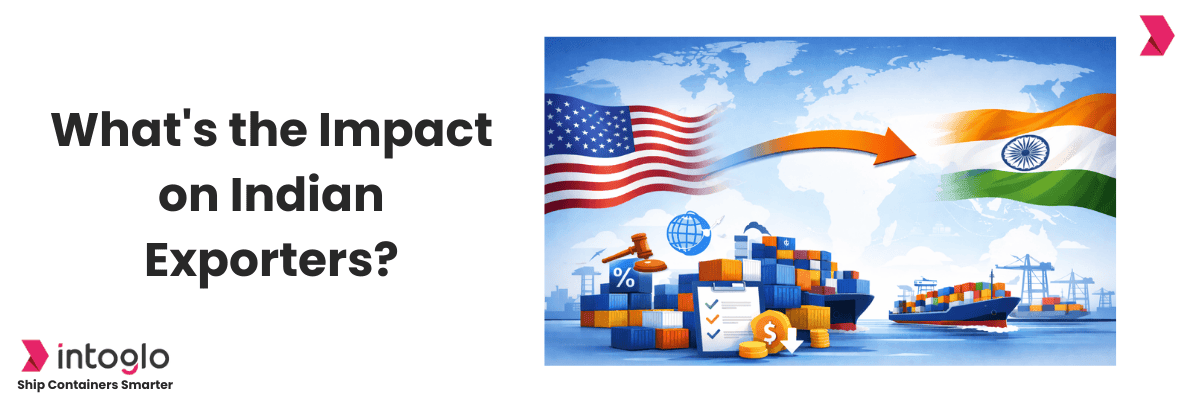
The February 2026 India–US trade deal brings long-awaited relief for Indian exporters, cutting tariffs from the 50% levels imposed in August under the Trump administration to 18% and restoring confidence among US buyers.
For Indian exporters, this shift directly affects export viability, pricing strategies, and logistics planning at a time when US sourcing decisions are being revisited.
What has Changed in the India–US Trade Deal?

The February 2026 trade agreement introduces key tariff changes that directly impact Indian exporters shipping to the US market.
- Reciprocal tariffs on Indian goods have been reduced from 25% to 18%.
- A separate 25% punitive tariff linked to India’s Russian oil purchases is removed.
- India has agreed to stop buying Russian oil, a key condition of the deal.
- The earlier tariff dispute had cut India’s exports to the US East Coast by over 30%.
- The agreement breaks a months-long trade deadlock.
- Helps restore confidence among US buyers who had paused or diverted sourcing.
For a detailed look at the latest India–US trade announcements, expected impacts, and strategic gains, check out our India–US Trade Deal 2026: Latest Announcement & Expected Impact. This article also covers immediate market and economic impacts, key sectors, and potential risks for exporters.
When Will the New Tariffs Apply?
The U.S.- India Joint Statement has been officially released. However, the trade deal will be applied only after the CBP updates the HTSUS tariff tables.
As the CBP website has not yet been updated, customs cannot implement the new tariffs at this time, and existing rules continue to apply. The revised tariff tables and new rules are expected to be reflected on the CBP website in a couple of weeks.
Which Indian Exporters Benefit the Most?
The benefits of the India–US trade deal differ based on how exporters managed US shipments during the high-tariff period.
- Exporters who paused US shipments can re-enter the market with more competitive pricing.
- Opportunity to restart negotiations with US buyers who had delayed or cancelled orders.
- Greater tariff clarity helps restore buyer confidence and long-term sourcing commitments.
- Exporters who continued shipping despite higher tariffs gain immediate margin improvement.
- Flexibility to reduce prices, increase volumes, or offer better commercial terms.
- The deal strengthens the China+1 sourcing strategy, making India a preferred alternative to China for US buyers seeking supply chain diversification.
Where Does India Stand Now?
India’s trade position with the U.S. has improved following the Interim Trade Agreement and tariff reduction to 18%. While not the lowest tariff destination, India is now more competitive than several Asian peers and is gaining renewed attention as a preferred China+1 sourcing alternative for U.S. buyers.

Products Still Facing Higher Tariffs
Section 232 duties remain unchanged unless the US issues a separate notification. The 2026 trade deal does not override national security tariffs.
- Passenger vehicles and auto components continue to attract a 25% duty.
- Steel and steel-derivative products remain subject to tariffs of up to 50%.
- Mixed-material products will face blended duties, calculated based on the steel or aluminium content.
- Non-steel and non-aluminium components within such products will now benefit from the lower reciprocal tariff, reduced from 50% to 18%.
Impact on Freight Rates and US Shipping Costs
Freight rates on the India–U.S. route may rise as export volumes recover, particularly to the U.S. East Coast.
Early signs include spot rate increases and a higher likelihood of Peak Season Surcharge (PSS) enforcement by shipping lines. Exporters should include possible freight cost increases while fixing prices and contracts to avoid margin losses.
With PSS likely to be enforced, exporters should plan sailings carefully, keep buffer time, and ensure containers are gated in on time, as missed cut-offs and vessel rollovers may attract PSS on subsequent sailings.
What Indian Exporters Should Do Next
To make the most of the India–US trade deal, exporters need to take proactive steps in pricing, shipments, and buyer engagement:
- Recalculate US landed costs and pricing.
- Resume discussions with paused US buyers.
- Monitor official tariff notifications.
- Plan shipments considering freight and PSS risks.
- Take action to gain market share as US sourcing resumes.
Work with freight forwarders like Intoglo to navigate vessel schedules, tariffs, and logistics efficiently.
You can also download the Monthly Updated India to USA Sailing Schedule, listing all India–USA vessels with ports in one place so that you can plan sailings without chasing multiple liner sites or endless follow-ups.
To explore how Intoglo can transform your India-US FCL shipping, connect with us :
📩 contact@intoglo.com | 📞 +91 84697 08714
Conclusion
The India–US trade deal opens a clear path for exporters to regain competitiveness and strengthen US market presence. Timely monitoring of tariffs and freight conditions will be key to maximizing benefits. Strategic action now can secure long-term growth and market share.
FAQs
What is the key change in the India–US trade deal for Indian exporters?
The main change is the reduction of reciprocal tariffs on Indian goods to 18%, along with the removal of the 25% punitive tariff linked to Russian oil purchases. This reduces costs and makes Indian exports more competitive in the US market.
Which Indian exporters benefit the most from the new trade deal?
Exporters who had paused shipments to the US can now re-enter the market with competitive pricing, while those who continued shipping benefit from immediate margin improvement. The deal also strengthens India’s position as a China+1 sourcing alternative for US buyers.
From where can exporters get updated information on tariffs and trade notifications?
Exporters should monitor the US Customs and Border Protection (CBP) website, the US Federal Register, and official trade notices from the Ministry of Commerce, India. Freight forwarders also provide monthly updated India–USA sailing schedules and tariff alerts.
Are there any financial support programs for exporters under this deal?
While the trade deal itself does not provide direct subsidies, Indian exporters can explore schemes like MEIS/SEIS replacements, export credit facilities from EXIM Bank, and government logistics support programs to optimize costs and competitiveness.
Does the deal affect only containerized shipments, or also bulk and project cargo?
The tariff changes apply to all export categories unless specifically exempted. Exporters shipping bulk commodities, project cargo, or mixed-material goods must account for blended duties and ensure correct customs documentation.
How does this trade deal influence India’s position in global supply chains?
By reducing tariffs and strengthening buyer confidence, the deal supports the China+1 strategy, making India a more attractive sourcing hub for US importers seeking alternatives to China.