Quick Overview
Marine cargo insurance premiums are calculated based on the insured value and insurance rate. This article explains the CIF method, the 110% rule, and a practical example, along with the key inputs required to calculate insurance costs accurately for better planning and cost control.
Marine cargo insurance is a type of insurance that protects goods against loss, damage, or theft during transit by sea, air, road, or rail. It covers shipments against various risks involved in transportation.
International shipping involves multiple handling stages and route risks, making proper coverage necessary. Understanding premium calculation helps businesses choose accurate coverage, control costs, and reduce financial risk.
How Exporters Calculate Marine Cargo Insurance Cost?
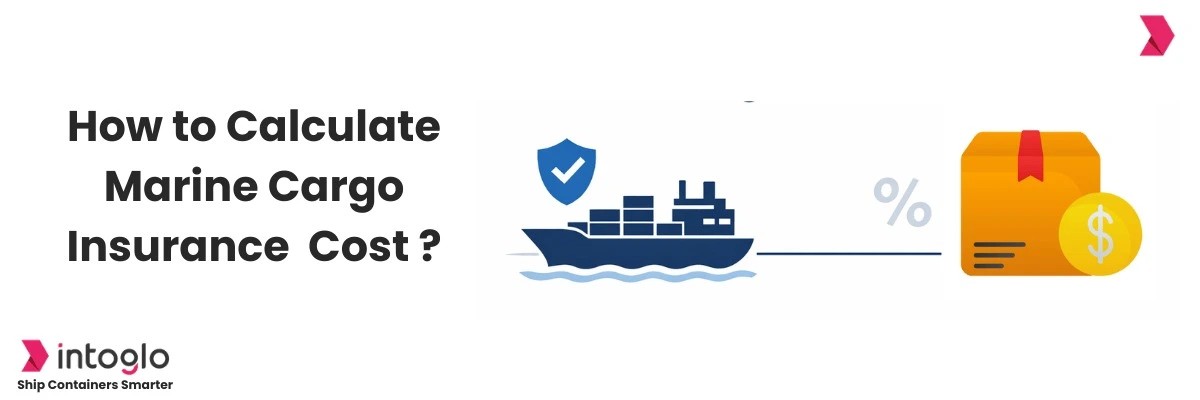
Marine cargo insurance is generally calculated as a percentage of the total insured value of the shipment.
Basic formula: Marine Cargo Insurance Cost = Insured Value × Insurance Rate
Step 1: Calculate the Insured Value (CIF Value)
The insured value is usually determined using the CIF (Cost, Insurance, and Freight) method. This includes:
- Cost of the goods (C)
- Freight or shipping charges (F)
- Insurance component (I)
In practice, many insurers apply the “110% rule,” where an additional 10% is added to the total of goods and freight to account for potential losses, incidental costs, or profit margins.
Formula: Insured Value = (Cost of Goods + Freight) × 110%
Example:
If the cost of goods is $10,000 and freight charges are $2,000:
Insured Value = ($10,000 + $2,000) × 1.10 = $13,200
Step 2: Identify the Insurance Rate
The insurance rate is set by the insurer and varies depending on several risk-related factors, such as:
- Nature of the goods (fragile or hazardous items may attract higher rates)
- Shipping route (high-risk routes can increase premiums)
- Mode of transport (air or sea freight)
- Packaging standards and overall risk exposure
For example, assume the insurance rate is 0.5% (0.005).
Step 3: Compute the Premium
Once you know the insured value and the applicable rate, calculating the premium is straightforward.
Formula: Premium = Insured Value × Insurance Rate
Using the example above:
Premium = $13,200 × 0.005 = $66
Based on this calculation, the total insurance cost for the shipment would be $66.
Alternative Approach
While using a cargo insurance cost calculator provides a quick estimate, it is always advisable to consult directly with your insurance provider. Cross-border logistics experts can offer customized recommendations and ensure you select the most suitable coverage for your shipment.
What Do You Need to Calculate Marine Cargo Insurance?

To accurately estimate your marine cargo insurance cost, you need a few key shipment details. Having this information ready helps you determine the correct premium.
1. Shipment Value: The total value of the goods being transported.
2. Freight Charges: The cost of shipping is required to calculate the insured (CIF) value.
3. Shipping Route: The origin and destination (for example, India–USA), as different routes carry different levels of risk.
4. Type of Goods: Whether the cargo is general merchandise, fragile, hazardous, perishable, or high-value, as this affects the insurance rate.
5. Coverage Type: The level of protection required-basic coverage or additional protection for risks such as war, strikes, or natural disasters.
Having these details ensures a more accurate insurance calculation and helps avoid underinsurance or overpaying.
While estimates can be calculated manually, it is always advisable to consult your freight forwarder or insurance provider for precise premium calculation and suitable coverage based on your shipment requirements.
Why Accurate Marine Cargo Insurance Calculation Matters
Accurate calculation of your marine cargo insurance premium is critical for financial protection and cost control.
- Prevents Underinsurance: Declaring a lower value can result in partial claim settlement and financial loss.
- Avoids Overpaying: Overstating cargo value increases premiums without added benefit.
- Improves Financial Planning: Precise insurance costs help you budget shipping expenses accurately.
- Protects Profit Margins: Proper coverage prevents unexpected transit losses from affecting profitability.
Intoglo specializes in India-USA FCL shipments and helps exporters ship to the USA with clarity and confidence. It also supports exporters by facilitating smoother coordination with insurers for marine cargo insurance. With better visibility into freight costs and updated sailing schedules, businesses can accurately determine insured value and plan marine cargo insurance more efficiently without tracking multiple carrier websites or constant follow-ups.
To explore how Intoglo can transform your India–US FCL shipping, connect with us:
📩 contact@intoglo.com | 📞 +91 84697 08714
Conclusion
Accurate marine cargo insurance calculation ensures proper coverage without unnecessary cost. Determining the correct insured value and applying the right rate helps control expenses and protect goods during transit. For better risk assessment and suitable coverage selection, consult your freight forwarder.
FAQs
Is marine cargo insurance mandatory for international shipments?
Marine cargo insurance is not legally mandatory in most countries. However, it may be contractually required under trade agreements or Incoterms. Even when optional, it is strongly recommended to protect against financial losses during transit.
How do Incoterms affect marine cargo insurance responsibility?
Incoterms determine who is responsible for arranging insurance. For example, under CIF (Cost, Insurance, and Freight), the seller must provide insurance, while under FOB (Free on Board), the buyer typically arranges coverage.
What is the difference between a single shipment and an open marine policy?
A single shipment policy covers one specific consignment. An open marine policy provides continuous coverage for multiple shipments over a defined period, making it suitable for regular exporters and importers.
Does marine cargo insurance cover customs delays or regulatory issues?
Generally, marine cargo insurance does not cover losses caused by customs clearance delays, regulatory violations, or improper documentation unless specifically included in the policy terms.
How is compensation calculated in case of partial damage?
Compensation is typically calculated based on the proportion of damage relative to the insured value, after deducting any applicable excess or deductible mentioned in the policy.
What is a deductible or excess in marine cargo insurance?
A deductible (or excess) is the amount the insured party must bear before the insurer pays the claim. Higher deductibles usually reduce the premium amount.
How does seasonal or geopolitical risk impact insurance premiums?
Premiums may increase during high-risk seasons (such as monsoons or cyclone periods) or when shipping through politically unstable regions due to higher risk exposure.