Quick Overview
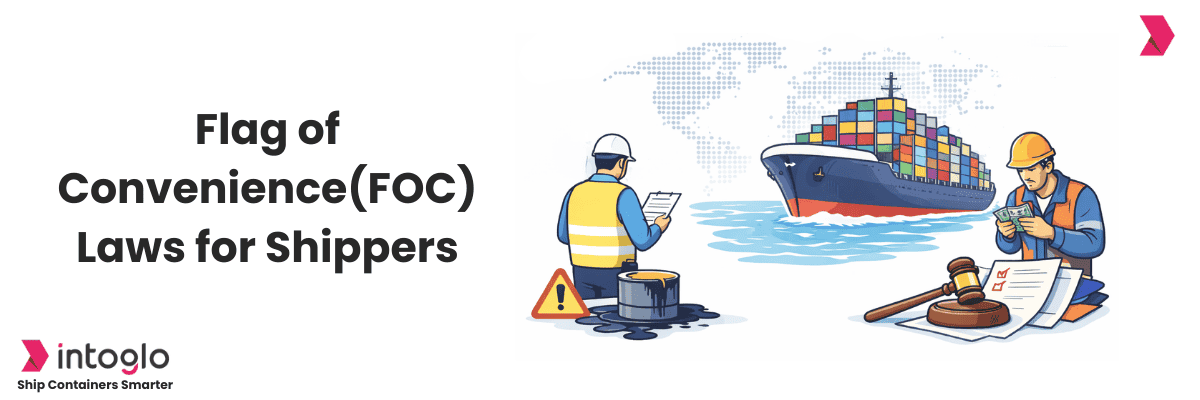
Flag of Convenience (FOC) registration allows shipowners to reduce costs by registering vessels in foreign countries, but these ships remain subject to international maritime laws and inspections. This article explains the legal framework, the role of Port State Control (PSC), key risks, and global shipping trends shaping FOC operations.
The Flag of Convenience (FOC) allows shipowners to register vessels in foreign countries. While it improves operational flexibility in global trade, it also raises concerns related to legal control, labour standards, and environmental compliance.
If you want to understand the basics of FOC, check out our article on The Concept of Flag of Convenience (FOC) in Shipping.
How are FOC Ships Regulated?
Even when a ship is registered under a FOC, it does not operate outside the law. International treaties and maritime organizations require flag states to monitor their vessels and ensure they follow global safety, labour, and environmental regulations.
1. International Laws
The United Nations Convention on the Law of the Sea (UNCLOS) requires flag states to effectively exercise jurisdiction and control over ships flying their flag.
The Geneva Convention on the High Seas also establishes that ships must have a genuine link with the flag state, ensuring legal accountability and regulatory oversight.
2. IMO & ILO Oversight
The International Maritime Organization (IMO) sets global standards for maritime safety, ship construction, pollution prevention, and navigation.
The International Labour Organization (ILO) regulates seafarers’ working conditions through conventions covering wages, safety, and welfare.
3. UNCTAD Guidelines
The United Nations Conference on Trade and Development (UNCTAD) monitors global shipping trends and promotes transparency in ship registration systems. It encourages accountability and improved reporting standards within open registries.
How does PSC Strengthen FOC Ship Compliance?
Even though flag states are responsible for regulating ships, enforcement does not stop there. Port State Control (PSC) provides an additional layer of inspection and accountability.
What is PSC?
Port State Control (PSC) refers to inspections conducted by maritime authorities on foreign ships visiting their ports. These inspections verify compliance with international safety, labour, and environmental standards.
Key PSC Agreements
The Paris Memorandum of Understanding on Port State Control (Paris MoU) coordinates ship inspections across European countries to improve maritime safety.
The Tokyo Memorandum of Understanding on Port State Control (Tokyo MoU) operates in the Asia-Pacific region and follows similar inspection and enforcement procedures.
Role in FOC Compliance
PSC acts as a secondary enforcement mechanism for FOC ships. If serious deficiencies are found, vessels can be detained until issues are resolved. This ensures that ships, regardless of their flag, meet global safety, labour, and environmental requirements.
Economic and Social Challenges
Flag of Convenience registration can create certain risks despite its cost benefits.
- Impact on Seafarers: FOC ships often employ international crew at lower wages. In weakly regulated cases, this can result in poor working conditions, delayed pay, or limited legal protection.
- Environmental Concerns: Some FOC vessels may not strictly follow pollution and safety rules, increasing the risk of spills, emissions violations, or improper waste handling.
- Legal Loopholes: Many FOC ships are owned through multi-country corporate structures, making it harder to assign responsibility in cases of accidents, disputes, or environmental damage.
The Role of FOC Registries in Global Shipping
The shipping industry continues to evolve, with Flag of Convenience (FOC) registries playing a major role in global fleet operations.
- Around 50% of the world’s merchant fleet operates under Flag of Convenience (FOC) registries.
- Open registries continue to expand, with Panama, Liberia, and the Marshall Islands remaining dominant.
- Demand for cost-efficient and flexible shipping continues to drive the use of FOCs.
- Port State Control authorities and international conventions are increasing inspections and compliance checks on FOC vessels.
How Can Risks in FOC Shipping Be Reduced?
Reducing the risks linked to Flag of Convenience (FOC) ships requires stronger oversight and responsible operations across the industry.
- Stronger rules and constant checks: Flag states should have clear regulations and regularly monitor ships to make sure they follow the rules.
- Frequent inspections: Ships should be checked often through Port State Control (PSC) inspections and independent audits.
- Fair treatment and care: Crews should be hired ethically, and operators must follow strict environmental practices to protect people and the planet.
Professional freight forwarders play a key role in ensuring smooth and compliant operations. For instance, Intoglo handles India–USA FCL shipments with complete documentation, customs clearance, warehousing, trucking, updated sailing schedules, and instant quotes, guaranteeing reliable and fully compliant cargo movement.
Planning your upcoming India-USA shipment? Get in touch with Intoglo:
📩 contact@intoglo.com | 📞 +91 84697 08714
Conclusion
FOC registries dominate global shipping but operate under international laws and Port State Control inspections. Strong compliance and responsible logistics practices are essential to ensure safe and regulated international trade.
FAQs
Is Flag of Convenience (FOC) registration legal?
Yes, Flag of Convenience registration is completely legal under international maritime law. Countries are allowed to register foreign-owned ships under their flag as long as they comply with global conventions related to safety, pollution control, and labour standards. However, the effectiveness of regulation depends on how strictly the flag state enforces these international obligations
Why do shipowners choose Flag of Convenience registries?
Shipowners choose FOC registries mainly to reduce operational costs and administrative burdens. Benefits may include lower corporate taxes, flexible labour laws, simplified reporting requirements, and faster vessel registration. These cost efficiencies help shipping companies remain competitive in a global market where freight rates are highly price-sensitive.
What is the difference between an open registry and a national registry?
An open registry allows shipowners from any country to register their vessels without nationality restrictions. In contrast, a national (or closed) registry typically requires the shipowner or company to have citizenship, residency, or operational ties to the country.
What happens if a ship fails a Port State Control inspection?
If inspectors find serious deficiencies related to safety equipment, crew welfare, or environmental compliance, the vessel can be detained until the issues are corrected. Repeated violations may result in increased inspection frequency, penalties, or blacklisting under regional agreements.
Do FOC ships pay taxes in the countries where they operate?
In most cases, ships are taxed according to the laws of the flag state rather than the countries where they trade. Many open registries offer low or zero corporate tax systems, which is a key reason why shipowners choose them.