Quick Overview
ARO (After Receipt of Order) sets a clear starting point for payment and shipping timelines in business transactions. This article explains what ARO means, how it works step-by-step in shipping, and how it is written in purchase orders. Its advantages and disadvantages for buyers and sellers, and common mistakes to avoid when using ARO in contracts.
ARO (After Receipt of Order) is a common term in shipping and business contracts. The timeline begins only when the seller receives and confirms the order not when the buyer sends it.
It is widely used in logistics, manufacturing, payment terms, and trade agreements to define a clear starting point. This helps both parties avoid confusion and reduces payment or delivery disputes.
How ARO Works in Shipping

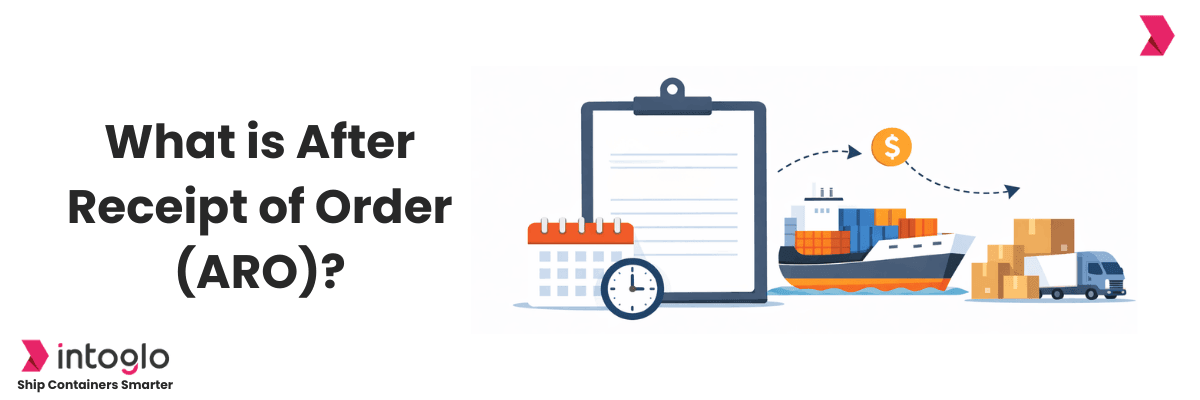
ARO in shipping follows a clear and structured process. Here’s a simple step-by-step explanation of how it works.
Step 1 Buyer Sends Purchase Order: The buyer sends a purchase order (PO) to the seller. This includes quantity, price, and agreed terms.
Step 2 Seller Receives and Confirms: The seller checks stock, pricing, and details.
Once approved, the seller confirms the order.
Step 3 Timeline Starts: The ARO countdown begins from the confirmation date.
Not from the day the buyer sent the order.
Step 4 Payment or Shipping Happens: Payment or shipment takes place based on the agreed ARO term.
Examples:
- “Shipping 5 Days ARO”
The seller will ship the goods 5 days after confirming the order. - “Payment 30 Days ARO”
The buyer must make payment within 30 days after order confirmation.
This method creates a clear starting point. Both sides know exactly when the clock begins.
How is ARO Defined in Purchase Orders?
ARO is often written clearly inside a purchase order. It is usually mentioned in the payment terms or delivery terms section.
In most cases, ARO is written next to the number of days agreed. It tells both sides when the payment or shipping clock starts.
It is written like this:
- Payment Terms: 30 Days ARO .
- Delivery: 7 Days ARO
- Dispatch: 5 Days ARO
Why Businesses Use ARO in PO
Businesses use ARO because it creates a fixed starting point. It avoids confusion about dates.
- Gives a clear payment deadline
- Protects sellers from early due dates
- Helps buyers manage cash flow
- Reduces disputes over timing
ARO keeps trade smooth and professional, and partnering with an experienced freight forwarders like Intoglo can further ensure that order confirmations and shipment timelines align perfectly with agreed ARO terms, supported by updated sailing schedules, better dispatch planning, and reliable India–USA FCL shipment coordination to reduce delays and maintain smooth trade flow.
Need help with your shipment? Reach out to Intoglo:
📩 contact@intoglo.com | 📞 +91 84697 08714
Advantages & Disadvantages of ARO
Before using ARO in shipping, it is important to understand its pros and cons. It affects payment timing, delivery planning, and cash flow for both sides.
| Advantages | Disadvantages |
| Better inventory management with reduced stock backlog. | Possible delays in shipment timelines. |
| Lower warehousing and holding costs. | Risk of late or non-payment by buyers. |
| Customization as per buyer requirements. | Higher credit risk with new customers. |
| Clear and predictable payment timelines. | Not suitable for buyers expecting immediate dispatch. |
| Improved cash flow planning. | Extra administrative tracking of timelines. |
| Reduced disputes due to defined confirmation date. | Financial exposure if goods are shipped before payment. |
In simple words, ARO gives structure and clarity. But both sides must communicate clearly to avoid delays.
Common Mistakes to Avoid
Many problems with ARO happen because of small misunderstandings. Avoid these common mistakes to keep things clear and smooth.
- Confusing order placement with order confirmation: The ARO clock starts after the seller confirms the order, not when the buyer sends it.
- Not defining the exact timeline: Always mention the number of days clearly, like “30 Days ARO” or “7 Days ARO.”
- No written agreement:Verbal agreements can cause disputes. Always write ARO terms clearly in the purchase order or contract.
Conclusion
ARO (After Receipt of Order) works best in trusted B2B environments where both buyers and sellers have established relationships and predictable payment behavior. It brings structure to payment cycles, improves financial planning, and creates transparency in transactions. While it offers flexibility and professionalism, it requires careful monitoring to avoid delays.
FAQs
Does ARO include weekends and public holidays?
Usually, ARO is counted in calendar days unless mentioned otherwise. If businesses want to exclude weekends or holidays, it must be clearly written as “working days ARO.”
What if changes are made to the order after confirmation?
If major changes (quantity, price, specifications) are made, the seller may issue a revised confirmation, and the ARO timeline may restart. This should be clearly agreed in writing.
Can ARO terms be legally enforced?
Yes, if ARO is clearly written in a signed contract or purchase order, it becomes legally binding. Vague or verbal agreements may be difficult to enforce.
How should ARO be mentioned in invoices?
It is good practice to mention order confirmation date, ARO term, exact payment due date.
This avoids confusion during payment processing.
Is ARO suitable for custom or made-to-order goods?
Yes, ARO is commonly used for custom manufacturing because production usually starts after order confirmation. It protects sellers from starting work without formal approval.
Can ARO terms be negotiated?
Absolutely, the number of days (e.g., 7, 15, 30, 60 Days ARO) is fully negotiable based on relationship, order size, and industry practice.