Quick Overview
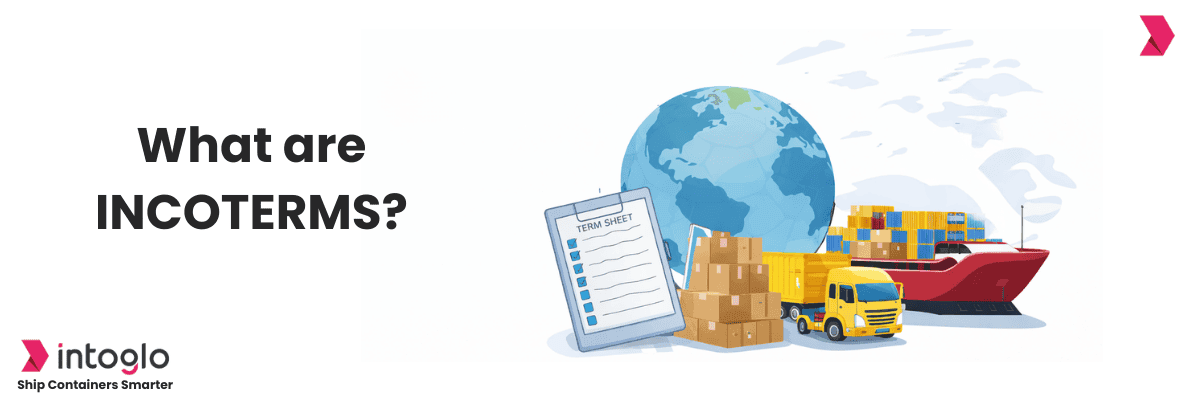
INCOTERMS make international trade easier by clearly explaining what the buyer and seller are responsible for in a shipment. This article breaks down what INCOTERMS are, explain the latest INCOTERMS 2020 rules, cover the terms used for transport modes, and also look at what these rules do not include - so you have a clear understanding before choosing one for your trade.
International trade involves many steps. Goods move between countries, and there are costs and risks at each stage. If responsibilities are not clear, disputes can happen.
INCOTERMS help avoid this confusion by clearly defining what the buyer and seller must do during a shipment.
What are INCOTERMS?
INCOTERMS (International Commercial Terms) are standard trade rules created by the International Chamber of Commerce (ICC). First introduced in 1936, they are updated regularly to match changes in global trade.
They explain who is responsible for transport, costs, risk, and customs clearance in international shipments.
The latest version, INCOTERMS 2020, provides updated guidelines that help businesses trade smoothly and avoid confusion worldwide.
INCOTERMS for Any Mode of Transport

These INCOTERMS work for shipments by land, air, or sea, showing who handles costs, risks, and delivery.
| Term | Seller Responsibility | Buyer Responsibility | Best For |
| EXW (Ex Works) | Makes goods available at their place | Handles all transport and risk | Buyers who want full control |
| FCA (Free Carrier) | Delivers goods to a carrier chosen by buyer | Risk passes from that point | Exports arranged by buyer |
| CPT (Carriage Paid To) | Pays for transport to destination | Risk passes once handed to first carrier | Buyers wanting freight covered |
| CIP (Carriage and Insurance Paid To) | Pays transport + insurance | Risk passes once handed to first carrier | Buyers wanting insurance included |
| DAP (Delivered at Place) | Delivers to a specific place | Handles unloading and import duties | Buyers preferring door-to-door delivery |
| DPU (Delivered at Place Unloaded) | Delivers and unloads at destination | Handles import duties | Buyers wanting goods unloaded |
| DDP (Delivered Duty Paid) | Covers all costs including duties | Just receives goods | Buyers wanting hassle-free delivery |
To understand how each INCOTERMS directly influences logistics costs & planning, read our detailed article on How INCOTERMS Affect Logistics Cost.
INCOTERMS Rules for Sea and Inland Waterway Transport
These INCOTERMS apply only to shipments that move by sea or inland waterways and are commonly used for bulk or containerized cargo.
1. FAS (Free Alongside Ship)
- Seller’s responsibility: Delivers goods next to the ship at the port.
- Buyer’s responsibility: Handles loading, freight, and import costs.
- Best for: Buyers managing their own shipping from the port of origin.
2. FOB (Free on Board)
- Seller’s responsibility: Covers costs until goods are loaded onto the vessel.
- Buyer’s responsibility: Takes over risk once the goods are on board.
- Best for: Buyers who want control over the ocean freight.
3. CFR (Cost and Freight)
- Seller’s responsibility: Pays for transport to the destination port.
- Buyer’s responsibility: Handles unloading, import duties, and final delivery.
- Best for: Buyers who prefer freight costs included but can handle customs and inland transport.
4. CIF (Cost, Insurance, and Freight)
- Seller’s responsibility: Pays for transport and insurance to the destination port.
- Buyer’s responsibility: Handles unloading, import duties, and final delivery.
- Best for: Buyers who want added insurance coverage.
What INCOTERMS Do Not Cover
While INCOTERMS clearly define who handles costs, risks, and delivery, there are important areas they don’t cover.
- Ownership & Title: INCOTERMS define risk transfer, not legal ownership.
- Payment Terms: Pricing, payment methods, and timelines aren’t included.
- Contract Breaches: No coverage for late delivery or poor packaging issues.
- Cargo Insurance: Mandatory only under CIF and CIP; others need separate agreement.
- Customs & Compliance: Import/export licenses, duties, and regulations aren’t covered.
- Delays & Disruptions: No liability for port congestion, strikes, or unexpected delays.
Before finalizing any INCOTERM, exporters often compare freight costs and sailing schedules.
Intoglo provides Instant FCL Shipping Quotes for India–USA routes, along with updated India-USA sailing schedules, helping you plan shipments with cost accuracy and confidence.
To explore how Intoglo can transform your India-US FCL shipping, connect with us :
📩 contact@intoglo.com | 📞 +91 84697 08714
Conclusion
Understanding INCOTERMS is key to smooth international trade, helping avoid confusion over costs, risks, and responsibilities.
In our next article, we’ll explore practical logistics, cost implications, and how to choose the right INCOTERM for your shipments, making international shipping easier than ever.
FAQs
Are INCOTERMS legally binding?
INCOTERMS themselves are not laws, but they become legally binding when included in a sales contract. Once agreed, both buyer and seller must follow the responsibilities defined under the chosen INCOTERM.
Which INCOTERM is best for first-time exporters or importers?
For beginners, CIF (Cost, Insurance, and Freight) or DAP (Delivered at Place) are often easier because the seller handles most of the logistics, reducing complexity and risk for the buyer.
Can INCOTERMS be customized or modified?
INCOTERMS should not be modified, but parties can add additional clauses in their contract to clarify responsibilities such as insurance coverage, unloading terms, or documentation alongside the selected INCOTERM.
Do INCOTERMS apply to domestic shipments?
INCOTERMS are primarily designed for international trade, but they can also be used for domestic shipments if both parties agree to apply them in the contract.
What happens if INCOTERMS are not clearly defined in a contract?
If INCOTERMS are missing or unclear, disputes can arise over who is responsible for freight costs, insurance, customs clearance, or damages often leading to delays and unexpected expenses.
How often are INCOTERMS updated?
The International Chamber of Commerce typically updates INCOTERMS every 10 years to reflect changes in global trade practices. Businesses can continue using older versions if both parties agree.