Quick Overview
Shipping from India to the USA often costs more than expected because surcharges can quietly increase your final freight bill. This article explains the most common shipping surcharges, what triggers each one, and why they appear on your invoice. It also shows how Indian exporters can plan smarter, reduce surprises, and control landed costs more effectively.
If you've shipped goods from India - USA, you know base freight is only the starting cost. The rest of your invoice includes surcharges added for factors like fuel changes, currency movement, port congestion, security risks, and container shortages. Understanding these charges helps exporters avoid sudden cost hikes and price shipments correctly.
Want to understand EIS basics? Read our complete article on Emergency Imbalance Surcharge: Why Your Shipping Costs Suddenly Go Up?
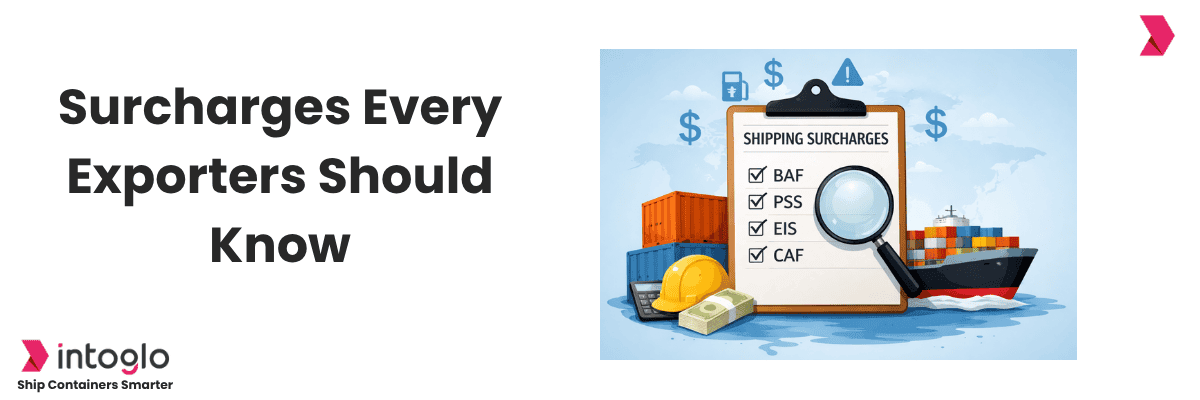
Shipping Surcharges Every Indian Exporter Must Know
Shipping involves multiple surcharges added on top of base freight, which can significantly increase the final invoice. Knowing these charges upfront helps exporters avoid last-minute surprises and plan landed costs accurately.
Standard Surcharges on Every Invoice
1. Bunker Adjustment Factor (BAF)
BAF is a fuel surcharge added to cover changes in bunker fuel prices. Since fuel rates fluctuate frequently, BAF can change month to month. Always confirm the latest BAF rate before booking.
2. Terminal Handling Charges (THC)
THC covers port handling work like loading, unloading, storage, and equipment usage. Each port sets its own THC, and it usually stays stable. Exporters should treat it as a fixed cost.
3. Customs Clearing Fees
Not technically a shipping line surcharge, but always part of your total logistics cost. These fees cover customs paperwork, inspections, and clearance handling. They are charged by clearing agents or forwarders. Using a forwarder with in-house customs support can reduce delays and extra costs.
Surcharges Driven by Supply-Chain Demand
4. Peak Season Surcharge (PSS)
PSS is charged when vessel space becomes limited during high-demand periods like August–November and January–February. Exporters shipping textiles, handicrafts, or D2C products to the USA are most affected. Booking 6–8 weeks early helps avoid higher rates.
5. Congestion Surcharge
This surcharge applies when ports face heavy delays due to backlogs and limited yard space. It is common at ports like Los Angeles/Long Beach, Colombo, and Singapore. To reduce impact, check congestion updates and consider alternate ports.
6. Equipment Imbalance Surcharge (EIS)
EIS is charged when containers are in surplus at the origin port but scarce at the destination port. It helps shipping lines move containers to where they are needed. Forwarders can sometimes offer lower EIS by choosing carriers with better container availability.
Surcharges Driven by External Factors
7. Currency Adjustment Factor (CAF)
CAF is charged when exchange rates change between the invoice and payment date. It is common when shipping lines bill in USD but incur costs in local currencies. Exporters should add a 2–4% buffer to protect pricing.
8. ISPS Security Surcharge
The ISPS surcharge covers mandatory port and vessel security measures like screening, surveillance, and access control. It applies to all international shipments and is usually a fixed per-container charge, so exporters can treat it as a standard cost.
9. War Risk / Emergency Risk Surcharge (ERS)
ERS applies when cargo moves through high-risk zones like the Red Sea or Strait of Hormuz, where extra insurance and security costs are involved. Exporters should confirm with their forwarder if the route passes through any risk zone.
Route-Based Surcharges
10. Canal Transit Fees
Shipping through the Suez or Panama Canal requires a fee. These canals save time and distance for ships, but the cost is passed to the exporter. Make sure your freight quote clearly states which canal, if any, is included.
11. Weather-Related Surcharges
Some routes may face storms, cyclones, or other extreme weather. This surcharge covers extra insurance or rerouting costs. It's not very common on India–USA shipments, but it can occur in cyclone-prone or Arctic areas.
Add-On Surcharges Based on Cargo Specifications
12. Non-Standard Package Fees
This fee applies when cargo is oversized or irregular and needs special handling, such as machinery or large furniture. Such shipments may require flat-rack or open-top containers. Confirm dimensions early to avoid extra charges later.
13. Container Cleaning Surcharges
Container cleaning charges apply when cargo leaves residue, such as spices, grain, chemicals, or agricultural products. Proper packaging and liner bags can help reduce or avoid this cost.
How to Plan for Shipping Surcharges: A Checklist for Exporters

Most surcharges can’t be removed completely, but smart planning can help you reduce surprises and control your final freight cost.
- Always request an itemised quote: Every surcharge should be shown clearly as a separate line item - not bundled into a vague “all-in” rate.
- Stay updated on peak season changes: Keep in touch with your forwarder for upcoming PSS announcements and book 6–8 weeks in advance to avoid peak season surcharges.
- Monitor fuel and currency markets: BAF and CAF move with global indices. Budget with a 5–10% buffer.
- Choose a forwarder with multi-carrier access: EIS and PSS vary significantly between shipping lines. Compare before you book.
- Review your cargo specs: Non-standard packaging and certain commodity types trigger avoidable add-on fees.
- Track geopolitical risk: War risk surcharges can appear suddenly. Stay informed on Red Sea and Strait of Hormuz developments.
To avoid last-minute invoice shocks, exporters need a freight partner who offers clear cost visibility from the start. Intoglo provides fully itemised surcharge breakdowns before booking, along with real-time tracking, in-house customs clearance, and reliable India–USA execution built specifically for exporters.
Get in touch with the Intoglo team for smooth India–USA shipping:
📩 contact@intoglo.com | 📞 +91 84697 08714
Conclusion
Shipping surcharges are not random - each one covers a real cost in the supply chain. Exporters who understand them can price shipments correctly and avoid invoice surprises. With the right planning and a transparent freight partner, these charges become predictable.
FAQs
Which surcharges are the most unpredictable on India–USA shipments?
BAF, EIS, and PSS are the most volatile - all three are market-driven and can change with 30 days' notice. CAF and ERS can also spike suddenly with geopolitical or currency events. Always budget a 10–15% buffer on top of your base freight when planning landed costs.
Are surcharges included in my FOB price?
No, FOB (Free on Board) covers costs only up to the port of loading. Surcharges are part of the sea freight and destination charges - typically the buyer's responsibility under FOB terms. Clarify this clearly in your sales contracts to avoid disputes with overseas buyers.
Can I reduce surcharges by choosing a different shipping route?
Yes, in some cases. Routing through a less-congested port can reduce congestion surcharges. Choosing a carrier with better container availability on your lane can lower EIS. Your freight forwarder should present routing options with a full cost comparison - not just base freight.
How do I know if all surcharges are properly listed on my invoice?
Request an itemised quote before booking - every charge should be a separate line item with its name and amount. Red flags include vague 'miscellaneous' charges, lump-sum 'all-in' rates without a breakdown, or surcharges added after booking confirmation. A transparent forwarder will always show you the full picture upfront.