
Quick Overview
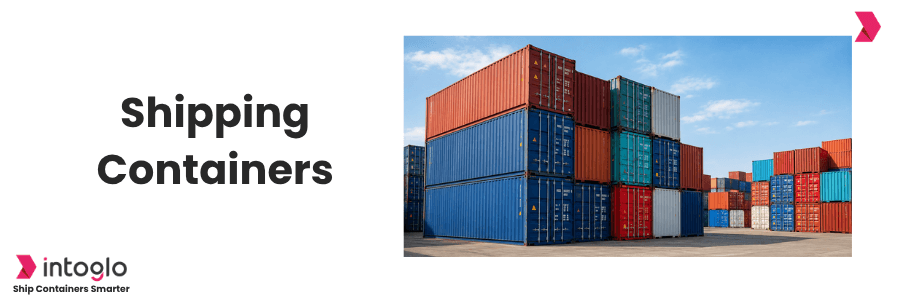
Understanding different types of shipping containers helps exporters select appropriate equipment, optimize cargo space, and lower transport costs.
Standard ISO container dimensions enable efficient multimodal transport across ocean, rail, and trucking networks worldwide.
For Indian exporters shipping FCL cargo to the US, choosing the right container prevents damage and avoids excess charges.
Key facts about types of shipping containers at a glance:
- 20ft standard containers offer 33.2 CBM volume and suit dense, heavy merchandise up to 28,200 kg payload.
- 40ft High Cube containers provide 76.3 CBM volume, standing 9'6" tall for light, bulky cargo.
- ISO equipment specs follow standards enforced by the International Organization for Standardization (ISO).
- Temperature-sensitive cargo requires refrigerated reefer units operating between -30°C and +30°C.
- Heavy machinery requires open top or flat rack units compliant with International Maritime Organization (IMO) rules.
- Proper container selection helps prevent unexpected fees and port inspection delays.
Standard ISO Container Sizes and Capacities
Standard ISO containers form the foundation of global ocean shipping, Carriers offer several standard lengths built for general dry cargo.
| Container Model | External Dimensions (L × W × H) | Internal Volume (CBM) | Max Payload Capacity |
|---|---|---|---|
| 20ft Standard (20GP) | 6.06m × 2.44m × 2.59m | 33.2 CBM | 28,200 kg |
| 40ft Standard (40GP) | 12.19m × 2.44m × 2.59m | 67.7 CBM | 28,800 kg |
| 40ft High Cube (40HC) | 12.19m × 2.44m × 2.90m | 76.3 CBM | 28,560 kg |
| 45ft High Cube (45HC) | 13.72m × 2.44m × 2.90m | 86.1 CBM | 27,600 kg |

Specialized Equipment for Unique Cargo Types
Certain commercial products require specialized container designs for safe transport, Ocean carriers provide custom equipment monitored under Directorate General of Shipping (DGS) oversight.
In addition, improper container choices risk inspection by the U.S. Customs and Border Protection (CBP).
| Specialized Equipment | Core Design Feature | Ideal Cargo Category |
|---|---|---|
| Reefer Container | Active cooling (-30°C to +30°C) | Pharmaceuticals, seafood, & fresh produce |
| Open Top Container | Tarpaulin roof for top loading | Tall machinery & over-height equipment |
| Flat Rack Container | Collapsible end walls, open sides | Heavy vehicles, steel coils, & construction gear |
| ISO Tank Container | 20ft frame stainless steel vessel | Bulk liquids, chemicals, & food-grade oils |
Selecting the Right Container for Your Cargo
Choosing equipment depends on cargo density, total weight, and overall dimensions, For example, heavy dense items reach weight limits inside 20ft units before filling total volume.
However, light bulky goods maximize savings inside 40ft High Cube containers, Exporters should review terminal handling protocols by checking our guide on container yard operations.
In addition, understanding terminal intake locations helps clarify CY, CFS, and ICD differences.
| Operational Requirement | Recommended Container Type | Key Selection Reason |
|---|---|---|
| Heavy Dense Merchandise | 20ft Standard Container | Hits max weight limit before wasting volume |
| Voluminous Light Goods | 40ft High Cube Container | Provides 13% extra height for pallet stacking |
| Bulk Liquid Transport | 20ft ISO Tank Container | Meets World Customs Organization (WCO) safety standards |
Challenges and Solutions
| Export Operational Challenge | Strategic Logistics Solution |
|---|---|
| Overweight container fines at origin or destination ports | Calculate cargo density and choose 20ft units for heavy items. |
| Cargo damage from improper temperature settings | Rent audited reefer containers with continuous data logging. |
| Loading difficulties for oversized industrial equipment | Utilize flat rack or open top containers with crane loading access. |
How Intoglo Helps
Intoglo handles end-to-end FCL freight forwarding from India to the USA - container transportation, customs coordination, documentation, and final delivery, all through one platform with transparent pricing and real-time tracking.
Planning your next shipment to the USA? Get a quote from Intoglo.
Stay informed about carrier announcements, freight rates, and trade regulations by joining our free 30-minute monthly India-USA Trade Pulse webinar.
📩 contact@intoglo.com 📞 +91 84697 08714
Conclusion
Selecting appropriate types of shipping containers ensures cargo safety and optimizes total shipping costs across India-USA trade corridors. By matching product density to 20ft, 40ft High Cube, or specialized equipment, exporters eliminate wasted space and avoid weight penalties. Evaluating cargo specifications early helps Indian exporters protect profit margins and maintain smooth supply chain operations throughout 2026.
FAQs
What are the most common types of shipping containers?
The most common types are 20ft standard, 40ft standard, and 40ft High Cube dry containers, alongside reefer and flat rack units.
What is the difference between a 40ft standard and a 40ft High Cube container?
A 40ft High Cube stands one foot taller (9'6" external height) than a 40ft standard container, offering ~13% more internal volume.
How much weight can a 20ft standard shipping container carry?
A standard 20ft shipping container has a maximum payload capacity of approximately 28,200 kg, depending on carrier and road weight limits.
What container type is best for temperature-sensitive goods?
Refrigerated containers (reefers) are designed for temperature-sensitive cargo, maintaining controlled internal temperatures from -30°C to +30°C during transit.
How do I know if my cargo requires specialized container equipment?
If your cargo is oversized, extremely heavy, liquid, or temperature-sensitive, you require specialized equipment like open top, flat rack, or ISO tank containers.