
Quick Overview
Inland Container Depots play an important role in connecting inland trade locations with seaports. This article provides a simple understanding of Inland Container Depots (ICDs), their key functions, how they manage exports and imports, the advantages they offer, and why they are essential for efficient trade in India.
Inland Container Depots (ICDs), defined by the Ministry of Commerce, are land-based facilities that provide cargo handling, storage, and customs clearance closer to businesses. They reduce port congestion, speed up exports and imports, and strengthen the efficiency of inland trade.
What is an Inland Container Depot (ICD)?
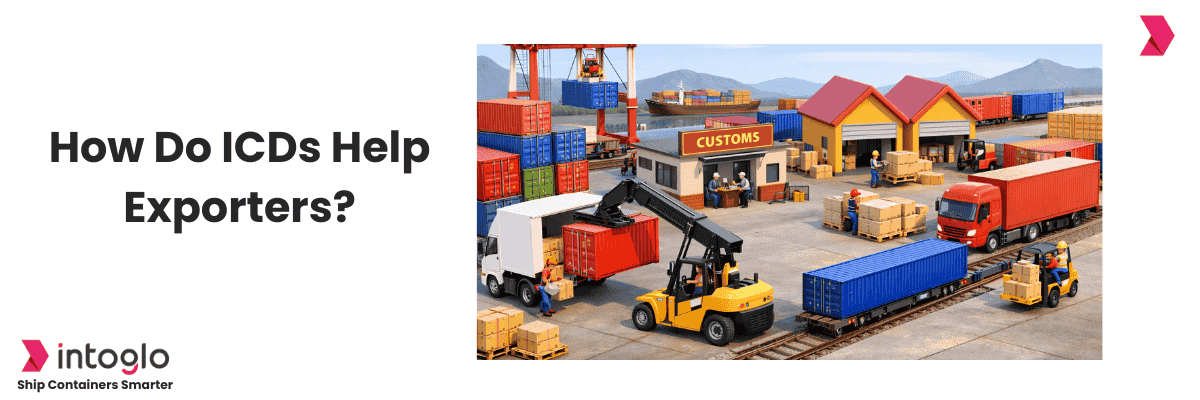
An Inland Container Depot (ICD) is a land-based facility that functions as an extension of a seaport, offering cargo handling, storage, and customs clearance under Customs supervision.
Unlike seaports, ICDs are located away from the coast and serve interior trade regions.
Functions of Inland Container Depots
Inland Container Depots (ICDs) perform several important functions that support the smooth movement of goods between inland locations and seaports.
- Cargo Handling and Storage: ICDs load, unload, and temporarily store containers, keeping cargo safe before it moves to ports or final destinations.
- Customs Clearance and Documentation: They operate under Customs supervision, allowing importers and exporters to complete inspections and paperwork closer to their business locations.
- Consolidation and Deconsolidation: ICDs combine smaller shipments into full containers or split large consignments into smaller lots to reduce transport costs.
- Transshipment Services: They transfer cargo between different modes of transport, such as rail and road, ensuring smooth movement across regions.
- Distribution and Warehousing: ICDs provide warehousing and support the efficient distribution of goods to nearby markets.
How Inland Container Depots Work?

The smooth working of Inland Container Depots depends on good coordination between inland transport, customs clearance, and port schedules. Freight forwarders like Intoglo play a key role by planning routes, arranging inland transport, and aligning ICD operations with vessel schedules at seaports
Export Process at ICDs
1. Collect goods from suppliers or manufacturers and transport them to the ICD.
2. Pack, label, and prepare cargo for shipment.
3. Complete customs inspections and documentation on-site.
4. Load cleared containers onto trucks or trains for transport to seaports.
Import Process at ICDs
1. Receive containers arriving from seaports via road or rail.
2. Unload and inspect cargo to ensure it matches shipping documents.
3. Complete customs clearance and regulatory formalities.
4. Store goods in warehouses or dispatch them to their final destinations.
Advantages of Inland Container Depots
Inland Container Depots (ICDs) offer multiple benefits that improve trade efficiency and support regional logistics.
- Reduced Port Congestion: Handle part of the cargo away from seaports, lowering traffic and wait times.
- Cost Savings: Consolidate shipments and reduce transport and port handling charges, saving businesses money.
- Improved Customs Efficiency: Provide on-site customs clearance and documentation, speeding up import and export processes.
- Better Connectivity: Link seaports with road and rail networks, ensuring smooth cargo movement across regions.
- Environmental Benefits: Optimize transport routes, reduce long-distance haulage, fuel consumption, and carbon emissions.
These benefits are maximized when exporters work with experienced freight forwarders like Intoglo, who coordinate ICD handling, inland transport, and port operations as a single, streamlined process.
To understand how Intoglo helps in smoother India–US FCL shipping, you can connect with us:
📩 contact@intoglo.com | 📞 +91 84697 08714
Conclusion
Inland Container Depots (ICDs) are essential for modern supply chains, ensuring faster cargo movement, reducing port congestion, and improving trade efficiency across India.
By providing storage, customs clearance, and connectivity between ports and inland regions, ICDs help businesses save time and costs.
Read our next article, “CFS, ICD, or Dry Port: Which One Should Exporters Choose?”, to understand which shipping option is best for your business.
FAQs
What is the difference between an ICD and a dry port?
A dry port is a type of inland terminal specifically linked to seaports to handle containerized cargo, often offering extended customs services. All dry ports can function as ICDs, but not all ICDs are classified as dry ports.
Who regulates Inland Container Depots in India?
ICDs operate under the supervision of Customs authorities and are regulated by the Ministry of Commerce. Some private ICDs may also follow additional approvals from local trade and transport authorities.
Do ICDs charge fees for their services?
Yes, ICDs charge for services like cargo handling, storage, customs processing, and transshipment. Fees vary based on container type, cargo volume, and services used.
Can SMEs (small and medium enterprises) use ICDs?
Absolutely. ICDs are designed for businesses of all sizes, allowing SMEs to consolidate shipments, save on transport costs, and access customs services without needing direct port facilities.
How has technology improved ICD operations?
Modern ICDs use digital tracking, online customs filing, and inventory management systems, which help businesses monitor shipments, reduce errors, and improve efficiency.